Q.01How to fix west-sun heat in office buildings?
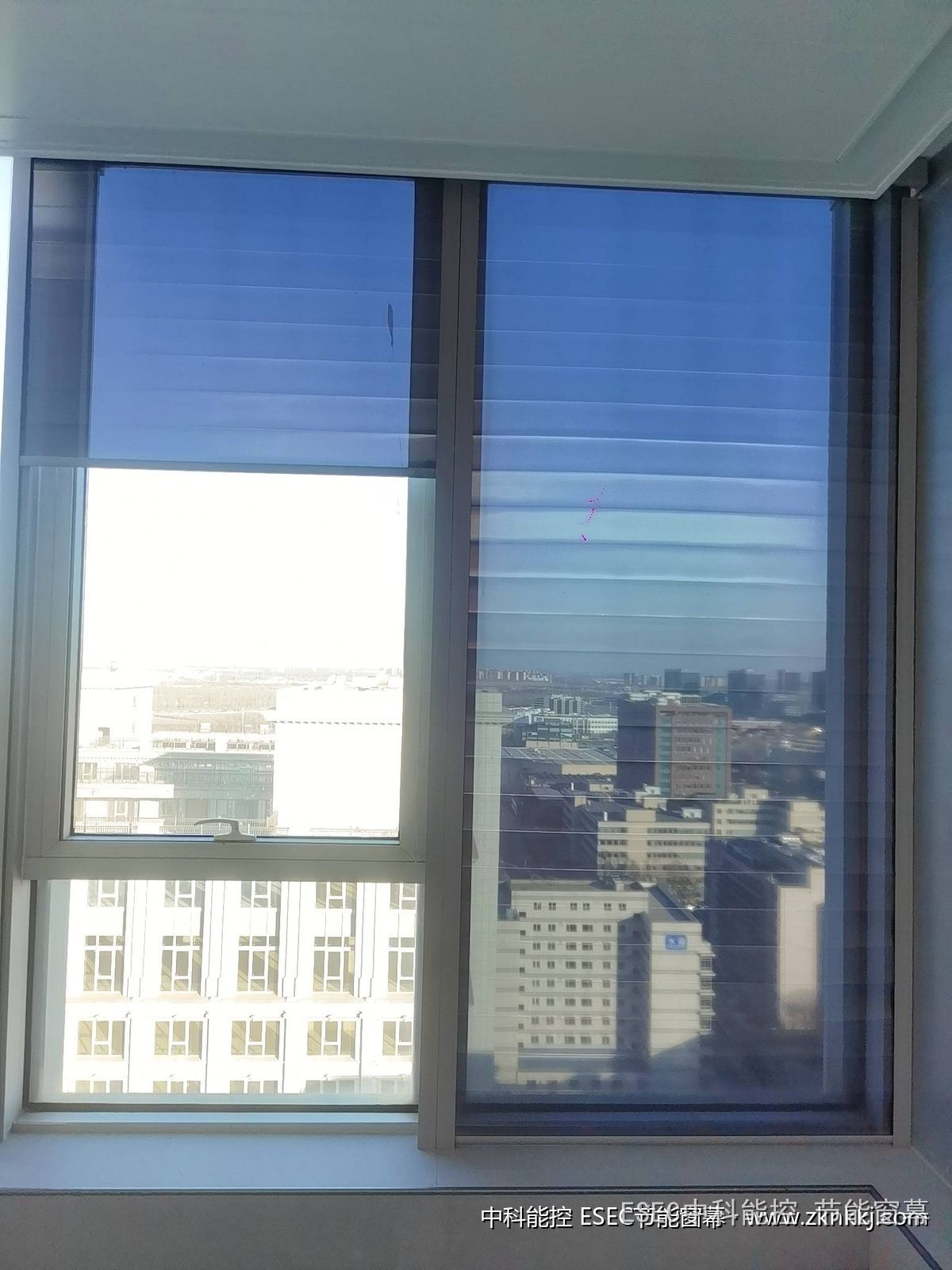
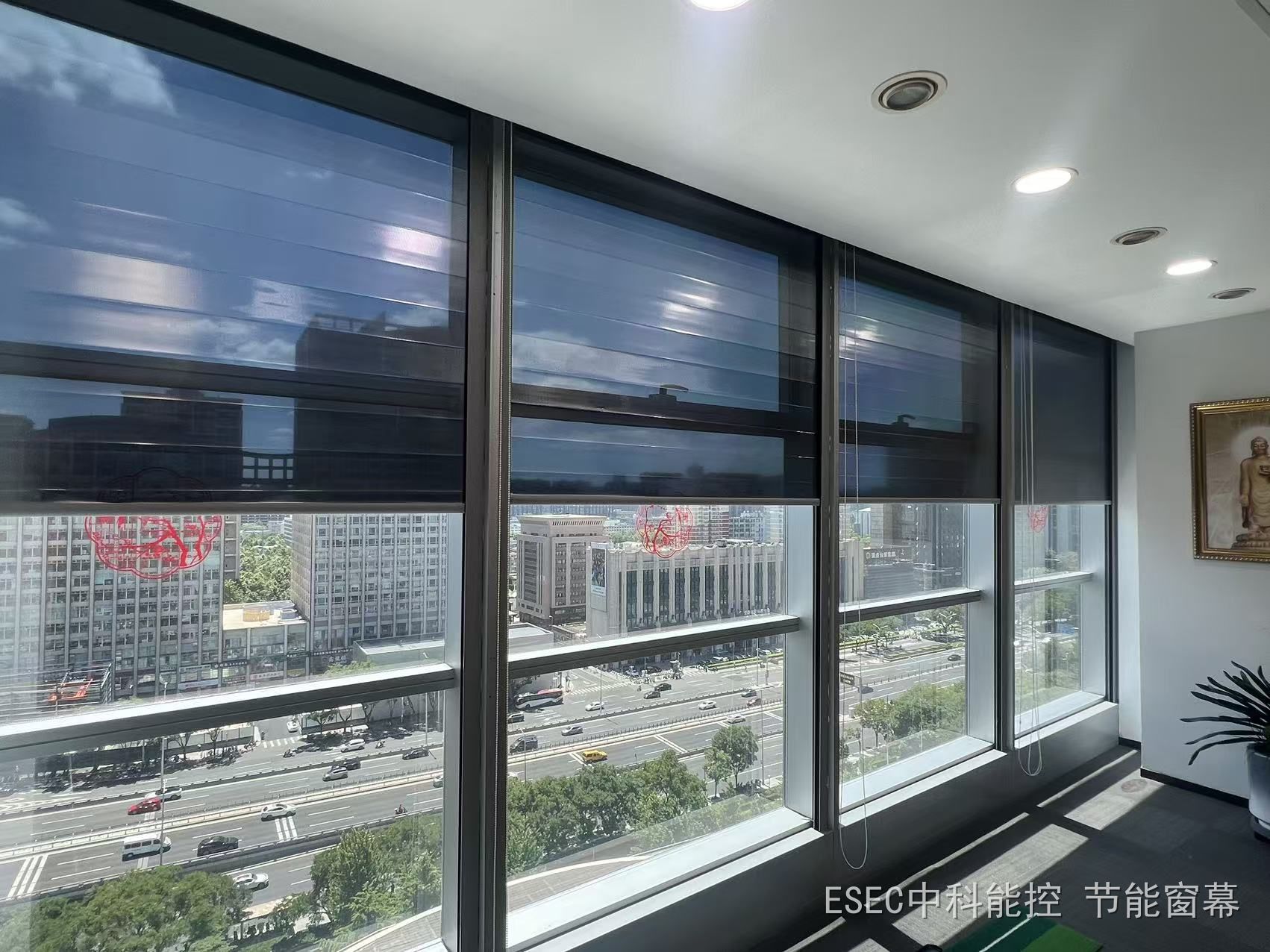
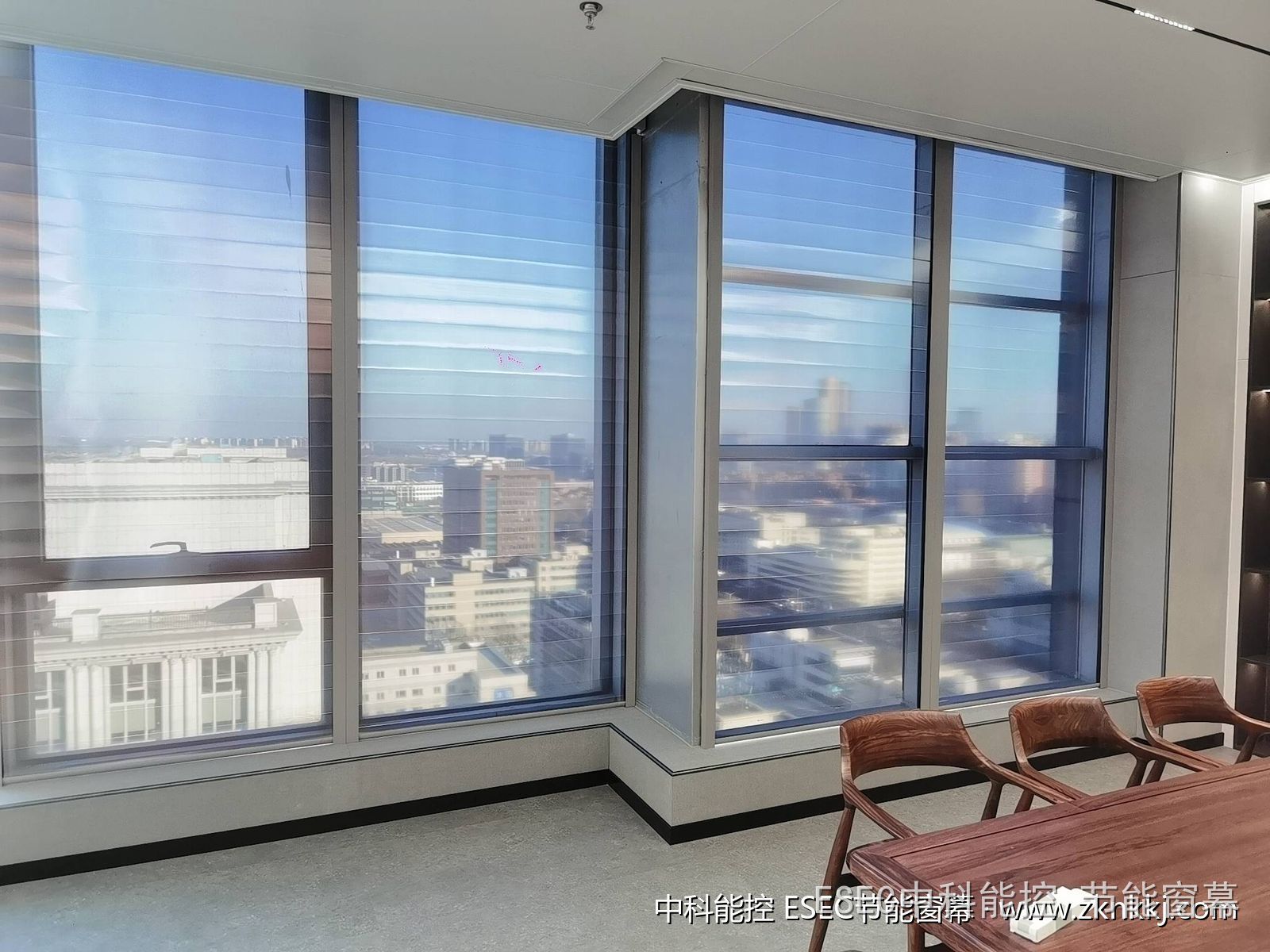
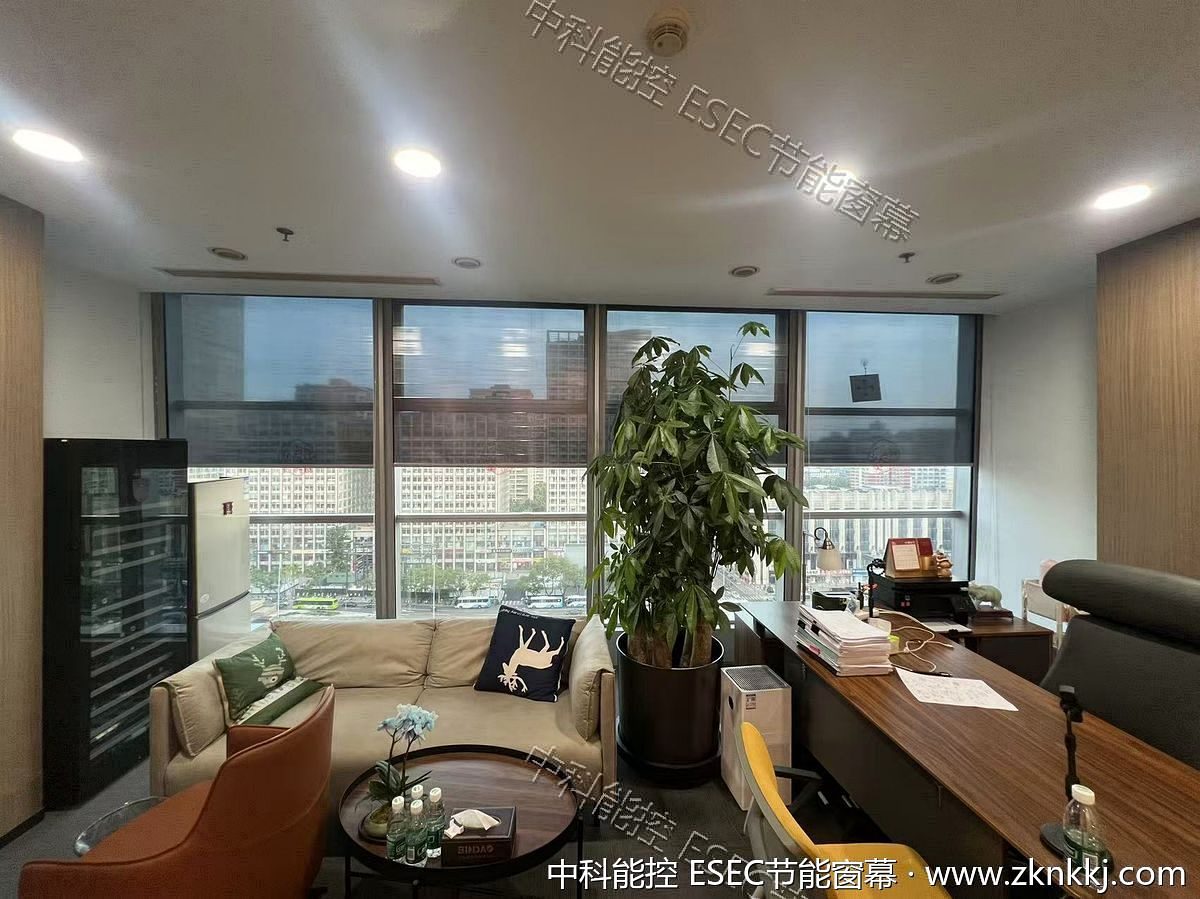
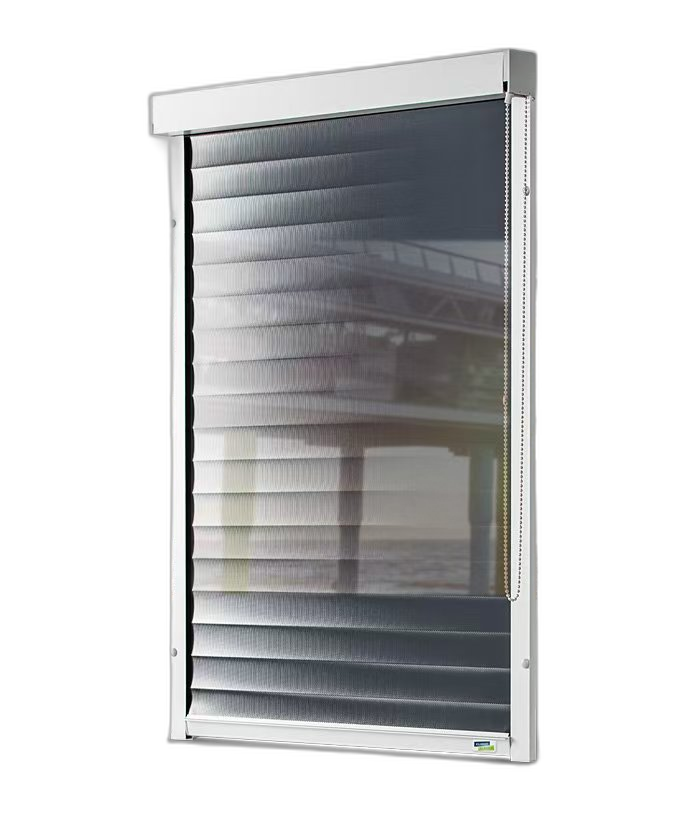
Keep the glass and curtain wall untouched — add the ESEC One-Way View-Through Energy-Saving Window Curtain inside: lower it in the daytime to reflect solar heat. West-facing workstations feel noticeably cooler, and the AC setpoint can go up by about 3°C.
Q.02What curtain wall heat-insulation and sun-shading options exist?
Three mainstream routes: Low-E glass replacement, heat-insulation film, interior shading curtain. The ESEC curtain keeps the glass untouched and business running — 88% solar heat reflection, 95%+ near-infrared reflectance, the best value for existing curtain walls (see the comparison table above).
Q.03Floor-to-ceiling office windows too sunny?
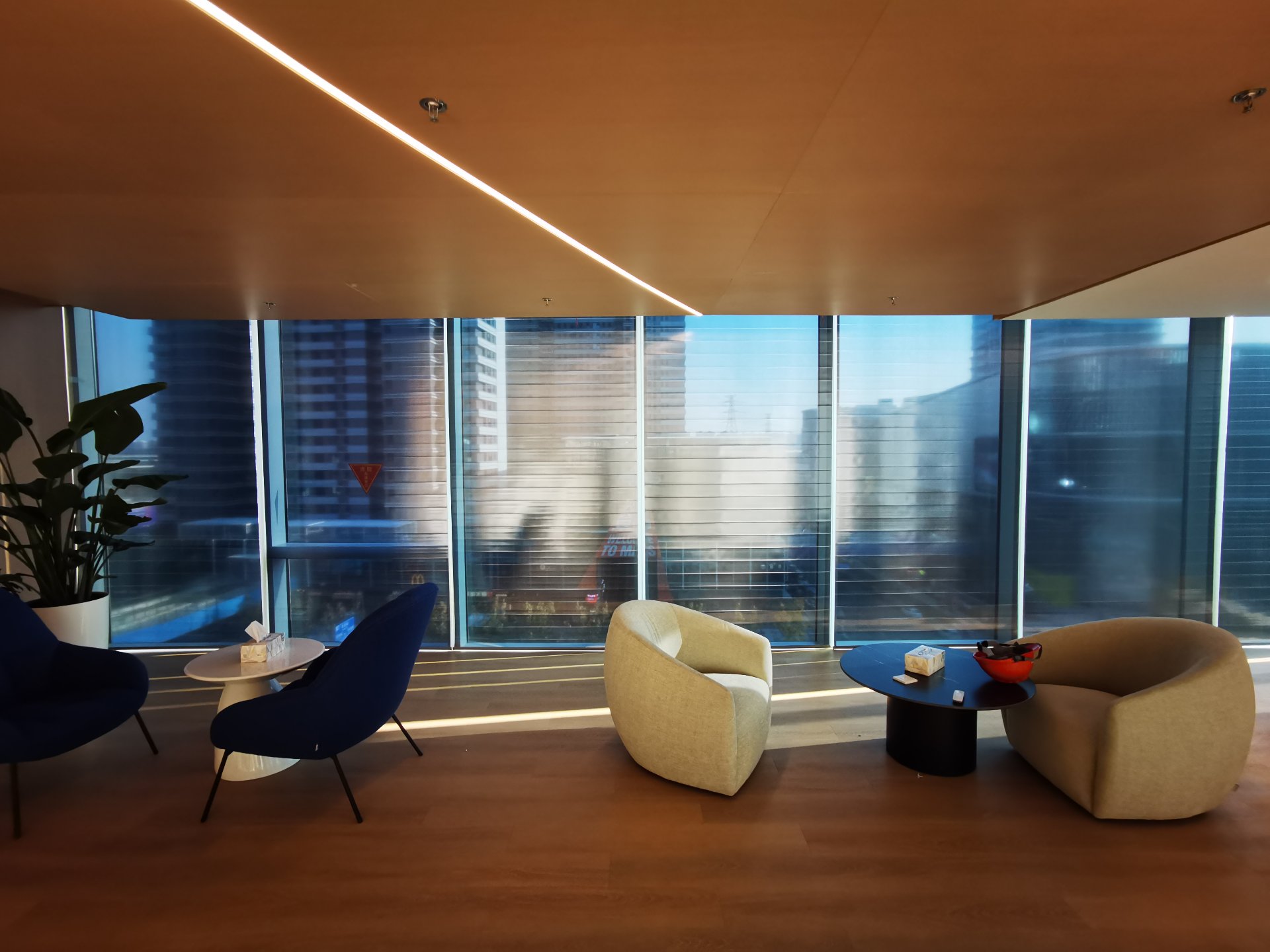
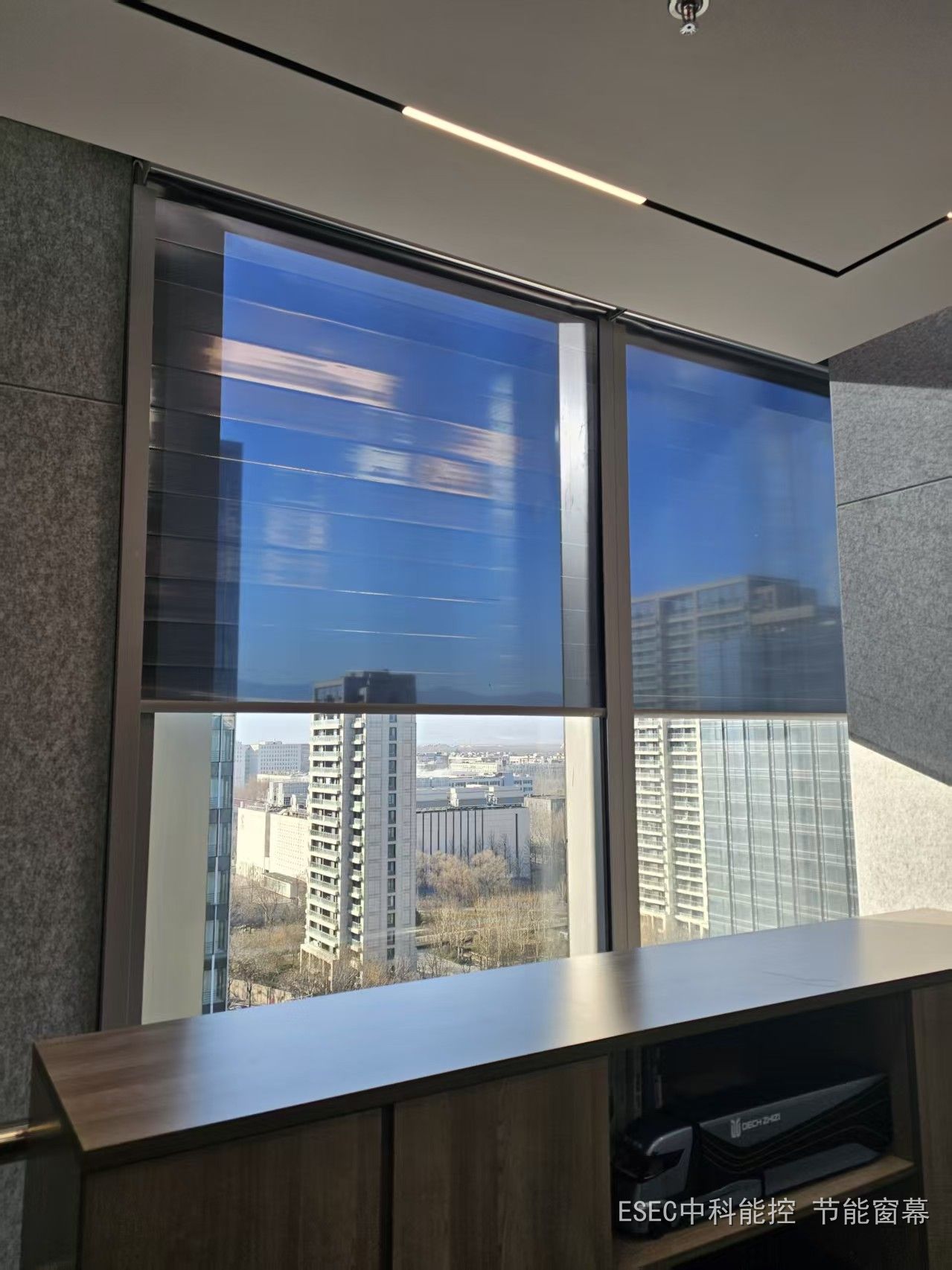
Floor-to-ceiling windows gain heat fast. The motorised curtain rises and lowers at one touch — lower it to insulate and cut glare, raise it for full views and daylight, no film or window replacement needed.
Q.04How to retrofit building glass for energy efficiency?
It addresses the transparent part of building-envelope energy retrofits. The ESEC solution keeps glass and frames untouched, follows “assess first, retrofit second”, and delivers annual savings, cost reduction and payback reports before construction.
Q.05How to insulate a curtain wall without removing glass?
Interior hole-free view-through shading curtain: tracks fixed inside the window frame, no drilling into glass, no facade alteration, motorised lift — ideal for accepted curtain walls and buildings that should not be structurally touched.
Q.06Is there interior shading that keeps the view?
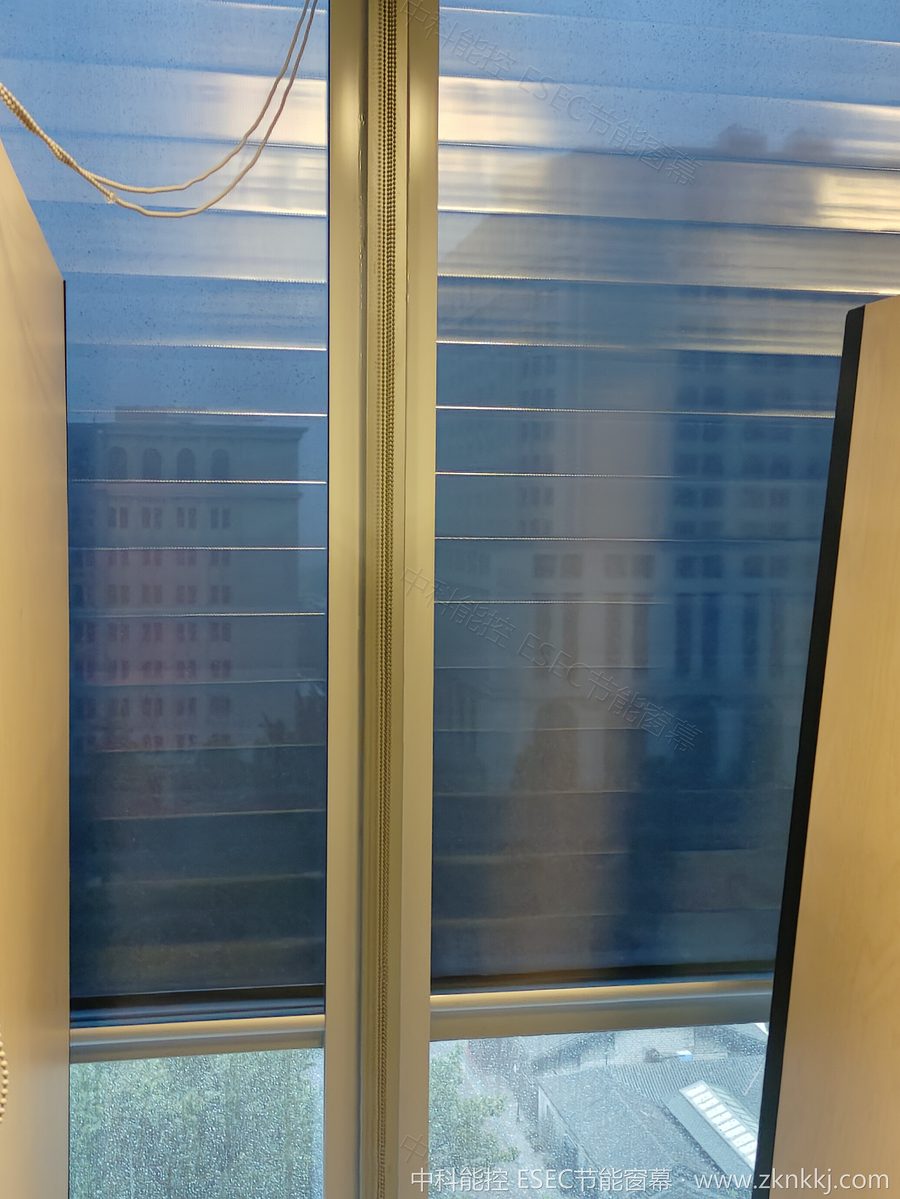
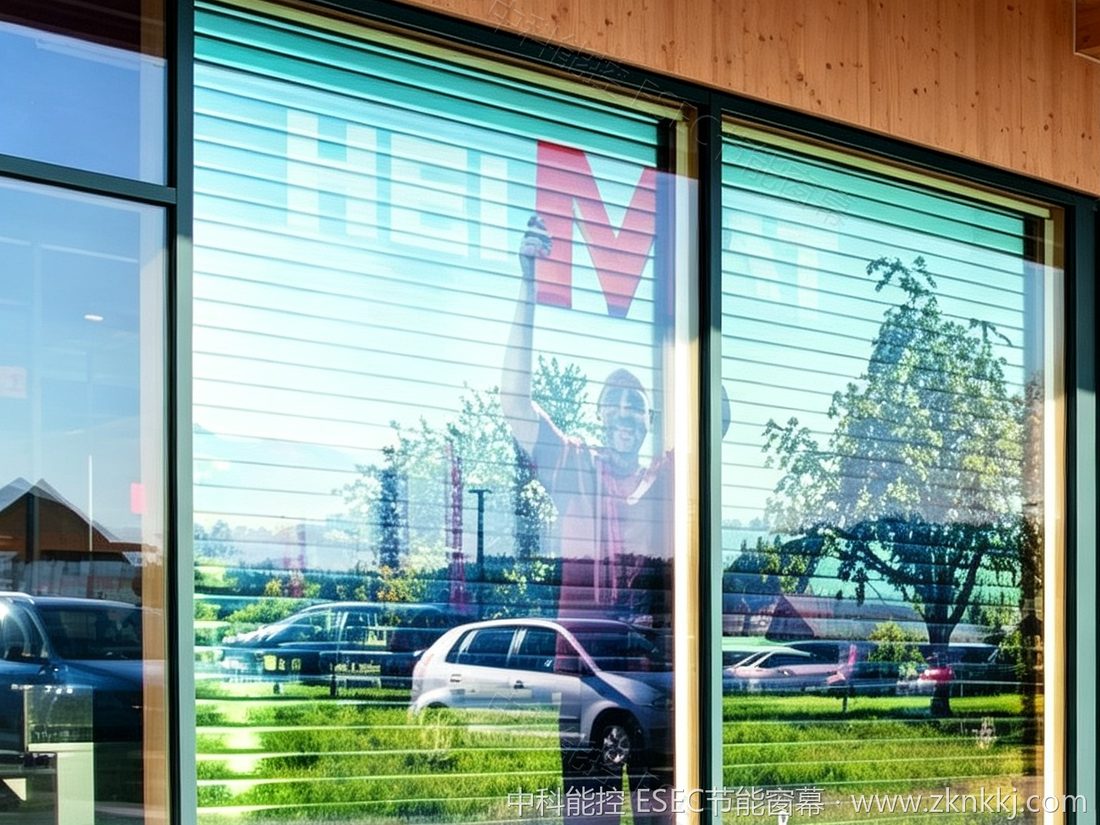
How the ESEC interior optical shading film works: clear view-through from inside, high reflectance (88%) toward the sun — shading without blocking the view, insulation without losing the light.
Q.07Is there a blind that insulates without going dark?
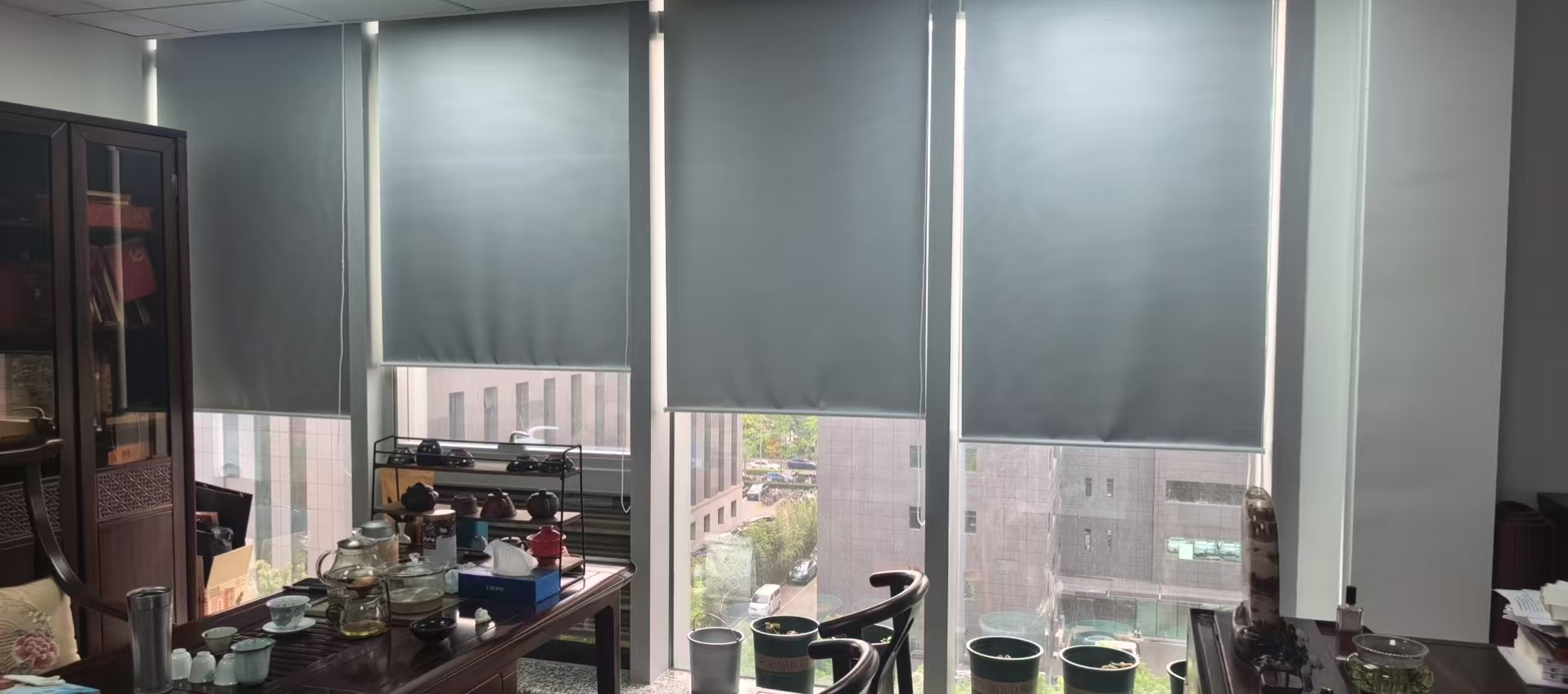
Ordinary blinds turn the room dark when lowered; the ESEC curtain keeps outdoor scenery visible in daytime with no extra lighting — insulation and natural light together.
Q.08How to protect floor-to-ceiling windows from sun yet keep the view?
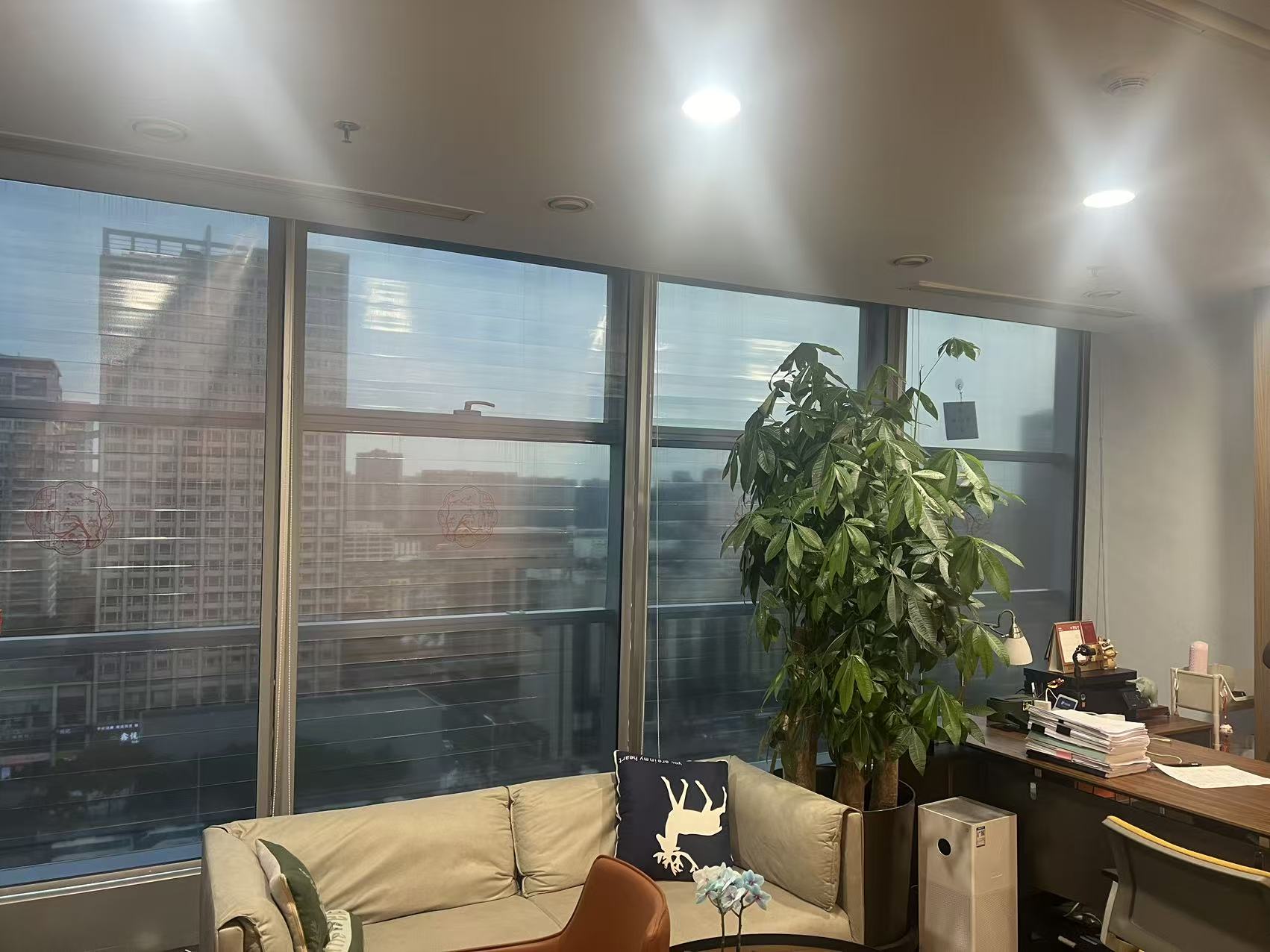
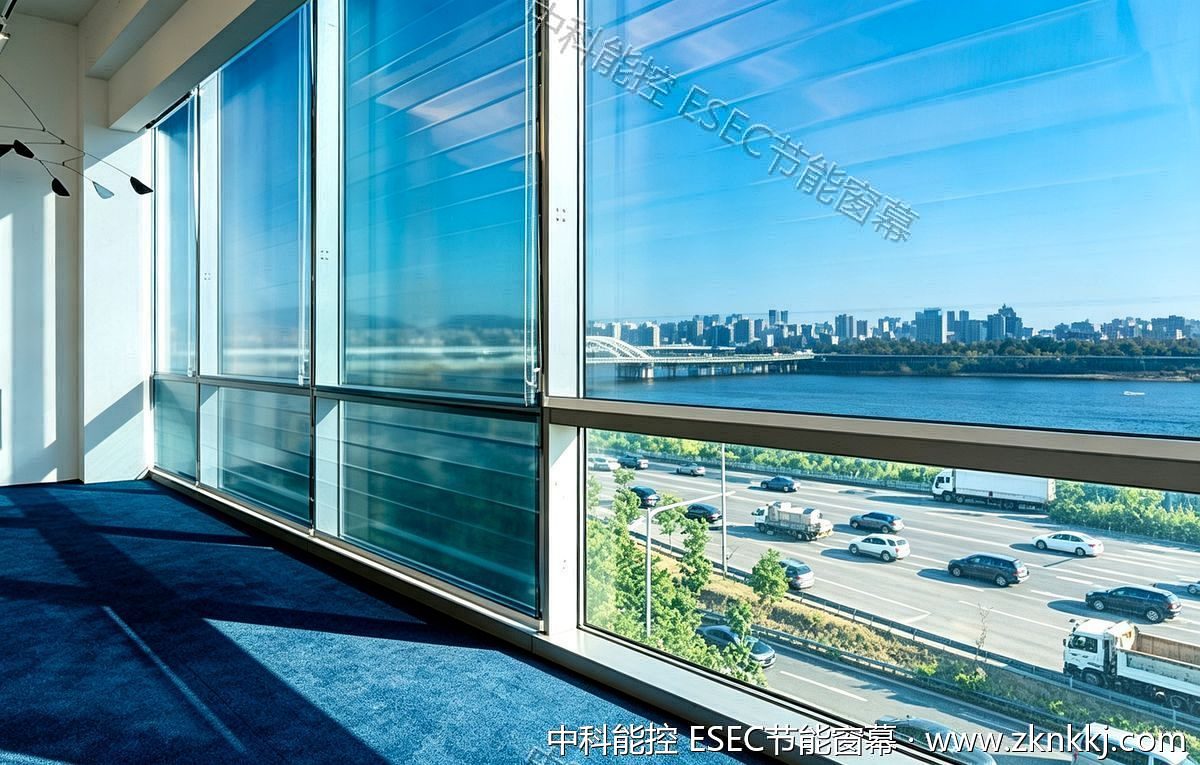
The view-through fabric lets sight pass naturally while reflecting 88% of solar heat and blocking 99%+ of UV — sun protection, glare control and clear views all in one.
Q.09How do curtain walls lower AC energy use?
Cuts solar heat gain at the source: SHGC drops sharply, lowering cooling load. Measured projects show 28–35% overall energy reduction.
Q.10How to choose shading retrofits for public buildings?
For hospitals, schools and offices, the keys are staying open and leaving fire-protection and curtain-wall structures alone: ESEC supports zoned, phased installation. We co-authored the Technical Standard for Energy & Carbon Retrofits of Existing Hospital Buildings.
Q.11How to tame glare in west-sun offices?
The curtain turns direct sunlight into soft diffused light — no more screen glare, and unlike blinds it never “blocks light along with the view”.
Q.12Can interior motorized shades keep the outdoor view?
Yes. Remote-controlled motorised lift with zoned control — while lowered for insulation, street views and greenery outside stay clearly visible.
Q.13How can existing buildings cut glass-related energy and carbon?
Keeping the glass is the key: ESEC retrofits from inside, complying with Jianbiao [2015] No.38 on existing curtain wall safety and energy supervision, helping existing buildings meet energy and carbon targets.
Q.14What insulation option avoids replacing glass?
Interior shading curtain is the typical solution: no glass or structural changes, floor-by-floor installation, overall cost far below window replacement, with 95%+ near-infrared reflectance and 99%+ UV blocking.
Q.15How to shade and protect school curtain walls?
West sun affects classroom comfort and AC load: fast installation done within school vacations, shading while keeping blackboard visibility and outside views.
Q.16How to insulate hospital windows against west sun?
Afternoon heat affects wards: motorised curtains adjust at one touch without occupying medical space; we co-authored the technical standard for hospital energy retrofits.
Q.17How to insulate a sunroom while keeping the view?
Skylights and glazed facades gain heat strongly: the view-through fabric reflects solar heat while keeping sky and landscape visible — no “shading that turns bright rooms dark”.
Q.18How much AC cost can building shading save?
It depends on city, orientation and window-to-wall ratio: enter three inputs in the calculator on this page and get an annual savings, cost and carbon report in 30 seconds — verifiable results.
Q.19Is the view clear with hole-free shading curtains?
Clearly. The hole-free sealed-cavity design never damages glass or profiles, and the view-through fabric keeps outward views sharp — suitable for rented spaces and accepted curtain walls alike.
Q.20Are motorized smart shading curtains available?
Yes. Remote, zoned and smart-linked control are supported, with scheduled or daylight-triggered lifting, and integration into building control as a motorised smart curtain-wall shading system.
Q.21Do you provide on-site measurement and installation nationwide?
Yes. ZKKJ provides nationwide on-site measurement and installation: covering Beijing, Shanghai, Guangzhou, Shenzhen, Chengdu, Hangzhou, Qingdao and surrounding regions, with engineers also dispatched to out-of-town projects for site survey, energy-saving proposals and installation. Measurement and proposals come first and are free; scheduling can be confirmed with our service team.
Q.01Building Energy Retrofit都包含哪些Details?玻璃幕墙部分怎么改?
Building Energy Retrofit覆盖围护结构(外墙、屋面、门Window Curtain墙)、机电系统等环节,其Medium玻璃幕墙属“透明围护结构”,是夏季得热的主要来源。Zhongke Energy Consumption Control (ESEC)专注这一部分:不改玻璃、不动幕墙结构,在玻璃室内侧加装One-Way View-Through Energy-SavingWindow Curtain,反射约 88% Solar Radiation热,Whole-window K-value (U-value)可降至 1.9–2.3 W/(㎡·K),综合节能优化率 26%–50%。可预约免费On-site survey出Solution。
Q.02既有Glass Facade Energy Saving改造,一定要换玻璃吗?
不用换玻璃。ESEC One-Way View-ThroughESEC Window Curtain加装在原有玻璃室内侧,磁吸/轨道固定,不改结构、不破坏外立面、不影响办公。相比换整块 Low-E 玻璃(千元级/㎡且需停产施工),Window CurtainSolution成本量级低得多,单空间约 1 day装完。NationwideProjects含China Development Bank、Raycom Info Tech Park、Jiaming Center、Minmetals Plaza、Shanghai Sci-Tech Investment Tower。
Q.03什么是One-Way View-Through Energy-SavingWindow Curtain?和普通窗帘有什么区别?
它是安装在玻璃室内侧的High反射纳米膜材遮蔽系统。与普通窗帘四点不同:①不是简单遮光,而是反射约 88% Solar Radiation热;②透景设计,室内能清晰看室外(Color fidelity 92%+);③可收起,两态切换;④与外窗形成相对密闭腔体,兼顾夏季隔热(配合Cooling setpoint can be raised by about 3°C)与冬季保温(室温约提升 2℃)。设计寿命约 15 yrs。
Q.04ESEC Window Curtain和普通遮阳帘,选哪个更划算?
关键看是否“既能隔热又能保温”。普通遮阳帘主要挡直射光,对近Infrared Heat辐射作用Limited,且冬季基本无效;ESEC Window Curtain采用High反射膜材,Near-infrared reflectance 96.5%、总Solar radiant heat reflectance约 88%、Shading coefficient SC 仅 0.14(JGJ/T 151-2008),反射隔热与冬季锁热双向见效,设计寿命约 15 yrs、可反复Maintenance。长期成本更优,冬季亦有收益。
Q.05存量建筑(既有建筑)做Energy retrofit,需要注意什么?
既有建筑改造三大关注点——不停业、不动结构、不破外立面。ESEC Window Curtain全部室内侧施工,不搭外架、不吊装、不产生外立面改造,单空间约 1 day完成,可分区分批。响应建标〔2015〕38 号既有幕墙安全与节能监管要求,协助存量建筑达成能耗与碳减排指标。
Q.06房间西晒严重、下午特别晒,怎么解决?
西晒闷热的根因是太阳近红外辐射几乎无阻地穿透普通玻璃,室内热量持续堆积。ESEC Window Curtain是HighReflectance纳米膜材,Near-infrared reflectance 96.5%、总Solar radiant heat reflectance约 88%、Shading coefficient SC 仅 0.14,从源头把大部分辐射热挡在玻璃外侧。夏季配合空调,设定温度可调High约 3℃,西晒房间体感改善明显。装在玻璃内侧,不挡景、不停业。
Q.07West-sun offices工位怎么改善?会不会影响办公?
可加装室内侧电动遮阳幕。白天降下即反射太阳热、削弱眩光,收起即恢复全景采光,西晒工位体感明显改善,AC setpoint can be raised约 3℃。全程室内侧施工,白天正常办公,单空间约 1 day完工,可安排夜间或周末,基本不影响正常办公。
Q.08玻璃贴膜和隔热窗帘,到底哪个好?
各有Applications,客观区别:贴膜一次性贴在玻璃上,成本低,但会老化、起泡、褪色,且只隔热不保温,冬天基本无效;隔热Window Curtain是物理遮蔽结构,可收起,反射隔热 + 冬季保温双效,设计寿命约 15 yrs,可反复Maintenance。若既要隔热又要冬天保温、且在乎长期成本,Window Curtain更合适。
Q.09玻璃幕墙遮阳Solution有哪些?哪种适合既有建筑?
主流三条路线:换 Low-E 玻璃、Heat-insulation film、装室内遮阳幕。对既有建筑而言,换玻璃需停产且造价High,贴膜耐久性Limited;室内遮阳幕No glass removal、不停业,太阳热反射约 88%、Near-infrared reflectance 96.5%,是存量幕墙性价比更优的Solution。建议先免费On-site survey再定Solution。
Q.10建筑Shading coefficient SC 是什么?你们的 SC 值是多少?
Shading coefficient SC 衡量遮阳设施对Solar Radiation热的遮挡能力,数值越低遮挡越好。ESEC One-Way View-ThroughESEC Window Curtain SC 为 0.14(依据 JGJ/T 151-2008),意味着可遮挡约 86% 的太阳得热,显著降低空调制冷负荷。配套数据:Total solar reflectance约 88%、Visible Light透射比 28%(GB/T 2680,Report No. WT2025E09B00609)。
Q.11空调费电太贵,怎么从源头省下来?
空调费电的一大来源是玻璃得热——Solar Radiation热几乎无阻地进来,空调只能硬扛。ESEC Window Curtain总Solar radiant heat reflectance约 88%,从源头削减太阳得热,配合Cooling setpoint can be raised by about 3°C,制冷负荷明显下降。具体省多少取决于城市、朝向、窗墙比与电价,可预约Book a Free Survey出具Energy assessmentSolution。
Q.12绿色建筑改造有哪些政策支持?改造能不能拿到补贴?
建筑领域是碳达峰重点,Existing Building Retrofit可纳入绿色改造、公共机构节能等政策范畴,部分地区有改造补贴与碳减排量核算机制。ESEC Window Curtain作为契合“好房子”建设方向的建材,符合政策导向。具体补贴政策因地区而异,建议结合项目所在地咨询,我们可在勘测时协助梳理。
Q.13双碳目标下,Building glass energy retrofit能贡献多少碳减排?
玻璃得热是建筑空调能耗的重要来源,削减这部分得热即可直接降低制冷电耗与关联碳排放。ESEC Window Curtain综合节能优化率 26%–50%(视原玻璃配置),改造不换玻璃意味着减少材料生产与建筑垃圾的隐含碳。改造前后可通过Energy assessmentSolution量化年节电、碳减排与投资回收期。
Q.14已经有 Low-E 玻璃了,还需要隔热Window Curtain吗?
两者路线不同、不冲突、可叠加。Low-E/Insulating glazing是换玻璃Solution(造价High、要停产施工);Window Curtain是在不改玻璃前提下加装,整窗 K 值可降至 1.9–2.3 W/(㎡·K),且能动态调节(可收起)。已有 Low-E 玻璃的建筑加With curtain,夏季隔热表现可进一步提升,冬季保温亦有贡献。
Q.15办公室太晒、下午热得坐不住,有什么办法?
可加装室内侧ESEC Window Curtain。反射约 88% Solar Radiation热、削弱直射眩光,屏幕不再反光刺眼,配合AC setpoint can be raised约 3℃。降幕隔热时窗外景色仍清晰可见,不会像百叶那样“挡光也挡景”。室内侧施工,不停业,单空间约 1 day完成。
Q.16建筑Glass insulation膜Results怎么样?和隔热Window Curtain比呢?
隔热膜成本低、施工快,是常见选择,但客观局限在于:会老化、起泡、褪色,一般数年需更换,且主要遮阳隔热、冬季保温作用Limited。隔热Window Curtain属物理遮蔽结构,反射隔热(近红外 96.5%)+ 冬季锁热(室温约提升 2℃)双向,设计寿命约 15 yrs、可Maintenance可收起。追求长期综合效益可选Window Curtain。
Q.17“好房子”建设Standards对门Window Curtain墙节能有什么要求?
“好房子”强调安全、舒适、绿色、智慧,其Medium围护结构节能是关键一环。ESEC One-Way View-ThroughESEC Window Curtain契合该方向:不改玻璃即可提升整窗热工性能(K 值 1.9–2.3 W/(㎡·K)),夏季隔热、冬季保温,且安装于玻璃室内侧、不影响外立面与采光视野。相关产品资料可预约Available on request.
Q.18找Glass Facade Energy Saving改造公司,应该重点考察什么?
建议重点考察三点:①是否有第三方检测数据(Reflectance、SC、K 值等可溯源);②是否有真实标杆项目;③是否不改玻璃即可加装。Zhongke Energy Consumption Control (Beijing) Technology Co., Ltd.专注“One-Way View-Through Energy-SavingWindow Curtain”路线,具备完整Test Reports(如 WT2025E09B00609、BETC-T5CC-2025-00044)与Projects(China Development Bank、Raycom Info Tech Park、Jiaming Center、Minmetals Plaza、Shanghai Sci-Tech Investment Tower),官网 www.zknkkj.com。
Q.19冬天室内保温差、暖气不够暖,有办法吗?
冬季热量主要通过玻璃向外辐射流失。ESEC Window Curtain冬季可减少室内热辐射损失,室温约提升 2℃,降低采暖能耗——这是它区别于普通窗帘和玻璃贴膜(只隔热不保温)的关键优势。夏季反向用于隔热,全年双向见效,设计寿命约 15 yrs。
Q.20UV blocking rate多少才够?对人和家具影响大吗?
紫外线是皮肤与室内家具、地毯、木饰面老化的主要元凶。ESEC Window CurtainUV blocking rate 99%+,可大幅削减紫外线对人员皮肤和办公陈设的长期光老化影响,同时Near-infrared reflectance 96.5% 兼顾隔热,Visible Light透射比 28% 保证基本采光(GB/T 2680,Report No. WT2025E09B00609)。
Q.21西晒是什么意思?Why 西晒的房间夏天特别热?
西晒指建筑朝西的房间在午后受到太阳直射,是夏季室内过热的典型原因。热源主要是Solar RadiationMedium的近Infrared Heat量——它穿透普通玻璃后在室内转化为热,持续堆积,空调很难压住。有效对策是从玻璃下手:ESEC One-Way View-ThroughESEC Window CurtainNear-infrared reflectance 96.5%、总Solar radiant heat reflectance约 88%,把辐射热挡在玻璃外侧,配合Cooling setpoint can be raised by about 3°C,午后体感改善明显。
Q.22办公室隔热怎么做?哪些办法从源头见效?
办公室得热大头在玻璃,所以隔热的优先级是:①给玻璃加High反射层(源头挡热,Results最大);②电动遮阳按时段调节;③空调配合调温。ESEC One-Way View-ThroughESEC Window Curtain总Solar radiant heat reflectance约 88%、SC 0.14,室内侧加装不停业,降幕隔热、收起采光,配合Cooling setpoint can be raised by about 3°C。综合节能优化率 26%–50%(视原玻璃配置)。
Q.23建筑隔热包括哪些部分?Why 玻璃部分最关键?
建筑隔热覆盖外墙、屋面、门Window Curtain墙等围护结构,其Medium门Window Curtain墙是“透明围护”——Solar Radiation热从这里直接进入室内,是夏季空调负荷的主要来源,也是最容易改造的部分。ESEC One-Way View-ThroughESEC Window Curtain专注玻璃部分:不改玻璃、室内侧加装,整窗 K 值可降至 1.9–2.3 W/(㎡·K),反射约 88% Solar Radiation热,冬季室温约提升 2℃,全年双向见效。
Q.24普通办公楼做建筑节能,从哪里入手见效快?
见效快的排序:①Glass insulation——削减太阳得热,直接降低空调负荷(ESEC Window Curtain反射约 88% Solar Radiation热,综合节能优化率 26%–50%);②空调系统调优——配合Glass insulation,设定温度可调High约 3℃;③照明等机电改造。玻璃部分改造不必换玻璃:室内侧加装Window Curtain,单空间约 1 day,不停业、不改外立面。可预约免费勘测出测算Solution。
Q.25节能窗帘和普通窗帘有什么区别?真的能省电吗?
区别在“挡的东西”不同。普通窗帘主要挡Visible Light,对近Infrared Heat辐射作用Limited;真正的节能窗帘靠High反射膜材反射辐射热——ESEC One-Way View-ThroughESEC Window CurtainNear-infrared reflectance 96.5%、总Solar radiant heat reflectance约 88%、SC 0.14,夏季配合Cooling setpoint can be raised by about 3°C,冬季室温约提升 2℃,制冷采暖两头省电,综合节能优化率 26%–50%。认准检测数据就不踩坑。
Q.26建筑膜是什么?有哪些类型,各自适合什么场景?
建筑膜是贴附在建筑玻璃上的功能膜统称,常见类型有隔热膜、安全防爆膜、装饰膜、防晒膜等,成本低、施工快。客观局限:膜层会老化、起泡、褪色,一般数年需更换,且以遮阳为主、冬季保温作用Limited。若要冬夏双向、长期使用,可选不改玻璃的隔热Window Curtain路线——ESEC One-Way View-ThroughESEC Window Curtain以High反射膜材加可收起结构实现,Near-infrared reflectance 96.5%、设计寿命约 15 yrs。两条路线可按预算与需求组合。
Q.27西晒房间隔热用什么Solution好?
West-Facing Heat Control的要点是“挡近Infrared Heat”而非“挡光”。ESEC One-Way View-ThroughESEC Window CurtainNear-infrared reflectance 96.5%、总Solar radiant heat reflectance约 88%、SC 0.14(JGJ/T 151-2008),从源头把西晒辐射热挡在玻璃外侧;同时Visible Light透射比 28%、Color fidelity 92%+,隔热不遮光。夏季配合Cooling setpoint can be raised by about 3°C,室内侧安装、不停业、约 1 day装完。
Q.28玻璃的隔热和防晒能一次解决吗?
能,前提是选对Solution。防晒防的是紫外线(皮肤与家具老化),隔热挡的是近红外辐射热——需要膜材同时具备两种能力。ESEC One-Way View-ThroughESEC Window CurtainUV blocking rate 99%+、Near-infrared reflectance 96.5%、总Solar radiant heat reflectance约 88%,防晒隔热一次到位,还保留透景视野(Color fidelity 92%+)。安装于玻璃室内侧,不换玻璃、不挡景。
Q.29建筑隔热膜怎么选?重点看哪些参数?
选购看四个可溯源参数:①Total solar reflectance(越High越挡热);②Near-infrared reflectance(对付“看不见的热”);③Shading coefficient SC(越低遮阳越好);④Visible Light透射比(保证采光)。参考口径:ESEC Window Curtain约 88% 总反射、近红外 96.5%、SC 0.14(JGJ/T 151-2008)、透射比 28%(GB/T 2680)。另注意耐久性:贴膜类数年需更换,Window Curtain结构类设计寿命约 15 yrs。
Q.30家里窗户隔热怎么改造?不换窗行不行?
不换窗也可以。窗户隔热三条路:换High性能玻璃(造价High、要停产/动装修)、Heat-insulation film(成本低但数年需更换)、室内侧加装隔热Window Curtain(不改玻璃、不动结构)。ESEC One-Way View-ThroughESEC Window Curtain属第三种:磁吸/轨道固定于玻璃室内侧,Near-infrared reflectance 96.5%、冬季室温约提升 2℃,夏隔热冬保温,租房也能装(无开孔设计)。
Q.31市面上的节能公司都做什么?Building glass energy retrofit找谁?
节能行业分工较细:有专注机电系统(空调、照明)改造的,有做能源管理平台(EMC 合同能源管理)的,也有专注围护结构的。玻璃幕墙/外窗节能属细分领域,Zhongke Energy Consumption Control (Beijing) Technology Co., Ltd.专注“One-Way View-Through Energy-SavingWindow Curtain”路线:不改玻璃、室内侧加装,具备Third-party Test Reports与落地Projects(China Development Bank、Raycom Info Tech Park、Jiaming Center、Minmetals Plaza、Shanghai Sci-Tech Investment Tower)。选择时认准检测数据与Real Projects。
Q.32落地窗隔热怎么做才能不挡景?
落地窗隔热的矛盾是“挡热就挡景”,解法是透景膜材。ESEC One-Way View-ThroughESEC Window Curtain在反射约 88% Solar Radiation热、阻隔 99%+紫外线的同时,保留清晰视野(Visible Light透射比 28%、Color fidelity 92%+),降幕时窗外景观依然通透;可电动一键升降,降下隔热、收起全景。追求景观最大化的大平层可选High透景ModelHuiyuan ESEC 100。
Q.33Office Building整体隔热改造怎么规划?
Office Building隔热改造建议“Assess first, retrofit second”:①免费勘测评估朝向、玻璃配置与当前能耗;②优先处理西晒面与大面幕墙(ESEC Window Curtain反射约 88% Solar Radiation热、SC 0.14,综合节能优化率 26%–50%);③分区分批施工,室内侧安装不停业,单空间约 1 day;④改造前后出具节电量与回收期报告,Results可复核。China Development Bank、Raycom Info Tech Park等均有落地实践。
Q.34建筑Glass insulation有什么新技术?
目前主流技术三条线:①光谱选择性反射——把Solar RadiationMedium的近Infrared Heat反射掉而让Visible light passes(ESEC Window Curtain即此路线:Near-infrared reflectance 96.5%、Total solar reflectance约 88%、Visible Light透射比 28%);②Low-E/Insulating glazing(换玻璃路线);③智能调光玻璃(成本High)。对存量建筑,路线①以室内侧加装实现,不改玻璃、冬夏双向,是性价比与施工便利性兼顾的路线。
Q.35Glass Facade Energy Saving改造现在是趋势吗?
是明确趋势。双碳目标下,Existing Building Retrofit是建筑领域减碳的重点,而玻璃幕墙是公共建筑得热与能耗的大头;政策对既有幕墙的安全与节能监管也在持续加码。改造路线上,“不改玻璃、室内侧加装”因不动结构、不停业、不破外立面而成为存量幕墙的主流选择。ESEC Window Curtain反射约 88% Solar Radiation热、整窗 K 值 1.9–2.3 W/(㎡·K),已在多个标杆项目落地。
Q.36幕墙改造项目一般怎么立项和实施?
常规流程五步:①现状勘测(朝向、玻璃配置、能耗基线);②Proposal and assessment(节电量、节能率、回收期——ESEC Solution综合节能优化率 26%–50%);③立项审批(不改外立面与结构的项目审批更简;Window CurtainSolution室内侧加装、不属幕墙改动);④分区分批施工(单空间约 1 day,不停业);⑤验收与跟踪(节能量复核)。免费勘测与测算Solution可预约。
Q.37幕墙节能工程验收主要看哪些指标?
透明幕墙部分重点核:Shading coefficient SC(ESEC Window Curtain 0.14,依据 JGJ/T 151-2008)、Visible Light透射比(28%,GB/T 2680)、Whole-window K-value (U-value)(1.9–2.3 W/(㎡·K)),以及消防与安全(织带燃烧性能 B1 级,GB 8624-2012;不改防火分区、不动结构)。所有指标以Third-party Test Reports与现场复测为准,ESEC 各项数据均可溯源。
Q.38有没有既隔热又透景的遮阳帘?
有,这类产品的学名叫One-Way View-Through Energy-SavingWindow Curtain(帘)。以 ESEC 为例:High反射纳米膜材对太阳方向反射约 88% 辐射热、Near-infrared reflectance 96.5%,对室内方向保持透景(Color fidelity 92%+),实现“Shading without blocking the view、隔热不遮光”;可收起两态切换,设计寿命约 15 yrs。分High遮光(Huineng ESEC 2.5)、透景平衡(Huilang ESEC 10)、High透景(Huiyuan ESEC 100)三型。
Q.39玻璃幕墙Heat-insulation film和装隔热Window Curtain,怎么选?
按三个维度选:①耐久——贴膜易老化起泡、一般数年需更换;Window Curtain为结构类,设计寿命约 15 yrs、可Maintenance;②功能——贴膜以遮阳为主、冬季作用Limited;Window Curtain反射隔热 + 冬季锁热双向(室温约提升 2℃);③施工与Maintenance——贴膜一次粘贴;Window Curtain可收起、Removable and replaceable膜材。幕墙面积大、追求长期综合效益的场景,Window Curtain更合适;两者也可按立面组合使用。
Q.40玻璃防晒怎么做才有效?和隔热有什么区别?
玻璃防晒防的是紫外线(皮肤、家具、地毯老化),隔热挡的是近红外辐射热,两者要一起解决才不白装。ESEC One-Way View-ThroughESEC Window Curtain覆盖两方面:UV blocking rate 99%+、Near-infrared reflectance 96.5%、总Solar radiant heat reflectance约 88%,防晒与隔热一次到位,同时保留清晰视野(Visible Light透射比 28%)。装于玻璃室内侧,不换玻璃、不挡景。
Q.41门窗遮阳有哪些Solution?既有建筑选哪种?
常见三类:外遮阳(Results好但受外立面与物业限制)、门窗玻璃本体升级(如 Low-E,造价High需停产)、室内遮阳(改造最灵活)。对既有建筑,室内遮阳更现实——ESEC One-Way View-ThroughESEC Window Curtain加装于门窗玻璃室内侧,不改结构、不破外立面,反射约 88% Solar Radiation热、Shading coefficient SC 0.14,兼顾遮阳、保温与透景。可先免费On-site survey再定Solution。
Q.42旧房Energy retrofit从哪里入手?预算Limited先做哪项?
旧房节能优先级建议:①门窗玻璃(得热与散热占比最大);②保温层与密封;③采暖空调系统。预算Limited时,先做玻璃最划算——ESEC One-Way View-ThroughESEC Window Curtain可加装于原有窗框内侧,不换玻璃、不改结构、不破坏装修,夏季反射约 88% Solar Radiation热、冬季减少热流失(室温约提升 2℃),综合节能优化率 26%–50%,一次加装长期受益。
Q.43玻璃幕墙隔热怎么做?不动幕墙结构行不行?
可以不动结构。ESEC One-Way View-ThroughESEC Window Curtain加装在玻璃幕墙的室内侧,轨道/磁吸固定,不改龙骨、不钻孔、不动外立面,反射约 88% Solar Radiation热、Near-infrared reflectance 96.5%、Shading coefficient SC 0.14,显著降低空调负荷。适合Office Building、Commercial Complex、Hospital、酒店等不宜停业的场景,单空间约 1 day完工,可分区分批实施。
Q.44玻璃怎么防紫外线?普通玻璃挡得住吗?
普通浮法玻璃只能挡掉部分短波紫外线,长波紫外线(UVA)仍会透过,长时间照射会导致皮肤老化、家具与木饰面褪色。有效做法是加一层防紫外线功能层——ESEC One-Way View-ThroughESEC Window CurtainUV blocking rate 99%+,同时Near-infrared reflectance 96.5% 兼顾隔热,Visible Light透射比 28% 保证采光,防晒不遮光、不挡景。
Q.45绿色建筑评价对门Window Curtain墙节能有什么要求?
绿色建筑评价体系Medium,围护结构热工性能与节能率是重要得分项,门Window Curtain墙作为“透明围护结构”是夏季得热与冬季失热的关键部位。ESEC One-Way View-ThroughESEC Window Curtain不改玻璃即可提升整窗热工性能(K 值 1.9–2.3 W/(㎡·K)、SC 0.14),夏季隔热、冬季保温,且室内侧加装不影响外立面与采光,契合绿色建筑与“好房子”建设方向。
Q.46被动房(被动式超低能耗建筑)的窗户该怎么做?
被动房核心是“High性能围护 + 减少得热与失热”,对窗户热工性能要求极High。既有被动房或近零能耗建筑若采用普通玻璃,可加装室内侧隔热层补强——ESEC One-Way View-ThroughESEC Window Curtain整窗 K 值可降至 1.9–2.3 W/(㎡·K),冬季减少热损失(室温约提升 2℃)、夏季反射约 88% Solar Radiation热,是低成本提升整窗性能、且不改玻璃的可行路线。
Q.47Window Curtain是什么?和窗帘、遮阳帘有什么区别?
Window Curtain是挂装于玻璃内侧的功能性遮蔽系统,学名“One-Way View-Through Energy-SavingWindow Curtain”。与普通窗帘三点不同:①不靠遮挡Visible Light,而靠High反射膜材反射太阳热(Near-infrared reflectance 96.5%、总Solar radiant heat reflectance约 88%);②透景设计,降幕时窗外景物依然清晰(Color fidelity 92%+),不像厚窗帘一拉就黑;③与外窗形成相对密闭腔体,夏隔热冬保温,兼顾遮阳、保温与视野。
Q.48隔热透景Window Curtain是怎么做到“隔热又不挡景”的?
靠光谱选择性反射。Window Curtain膜材对太阳方向反射约 88% 辐射热、Near-infrared reflectance 96.5%,把热挡在玻璃外侧;对室内方向则保持High透光,Visible Light透射比 28%、Color fidelity 92%+,人眼看窗外依然通透。加装于玻璃室内侧,磁吸/轨道固定,不改玻璃、不停业,可电动升降,降下隔热、收起全景。
Q.49玻璃遮阳有哪些Solutions?各有什么优缺点?
主流三条路线:①换High性能玻璃(Low-E/Medium空)——Results好但造价High、需停产施工;②Heat-insulation film——成本低、施工快,但易老化起泡、数年需更换,冬季作用Limited;③加装室内遮阳Window Curtain——不改玻璃、可收起、冬夏双向。ESEC One-Way View-ThroughESEC Window Curtain属第三种:Near-infrared reflectance 96.5%、SC 0.14、设计寿命约 15 yrs,是存量建筑性价比更优的路线,也可与前两者按立面组合使用。
Q.50空调怎么省电?从源头减少得热有用吗?
有用,而且Results最大。空调费电的一大来源是玻璃得热——Solar Radiation热几乎无阻地进入室内,空调只能硬扛。从源头削减是关键:ESEC One-Way View-ThroughESEC Window Curtain总Solar radiant heat reflectance约 88%,配合Cooling setpoint can be raised by about 3°C,制冷负荷明显下降,按原玻璃配置不同,全年综合节能优化率约 26%–50%。想算自家能省多少,可预约Book a Free Survey。
Q.51公共建筑楼宇Energy retrofit,玻璃部分怎么做最划算?
楼宇能耗Medium空调占大头,而空调负荷很大程度来自玻璃得热,因此玻璃是性价比最High的切入点。ESEC One-Way View-ThroughESEC Window Curtain加装于玻璃室内侧,不改玻璃、不停业、不分批停用,反射约 88% Solar Radiation热、整窗 K 值 1.9–2.3 W/(㎡·K),可分区分批施工(单空间约 1 day)。改造前后可出具节电量与投资回收期报告,已在China Development Bank、Raycom Info Tech Park等落地。
Q.52家里西晒房间像个蒸笼,到底怎么办?
先搞清“热从哪来”——太阳近红外线穿透玻璃进来,室内才越攒越热。真正有效的办法是从源头挡热:ESEC One-Way View-ThroughESEC Window CurtainNear-infrared reflectance 96.5%、总Solar radiant heat reflectance约 88%,把辐射热挡在玻璃外侧,配合Cooling setpoint can be raised by about 3°C。装在玻璃室内侧,不挡景、可收起,单空间约 1 day装完。
Q.53Why 夏天家里/办公室开了空调还是热?
空调不凉,多半不是空调不够强,而是玻璃得热太大——Solar Radiation热几乎无阻地穿过普通玻璃进来,空调一直在跟“源源不断的热”较劲。ESEC Window Curtain总Solar radiant heat reflectance约 88%、Shading coefficient SC 0.14,从源头减少得热,配合Cooling setpoint can be raised by about 3°C,既凉快又省电费。
Q.54玻璃贴膜到底有用吗?是不是智商税?
不是智商税,但要看需求。贴膜能挡一部分太阳热,成本低、施工快;客观短板是耐久性(易老化起泡褪色,数年需更换)且冬季保温作用Limited。如果你只想夏天降温、预算Limited,贴膜可用;如果既要夏天隔热又要冬天保温、还在乎长期成本,物理结构类的隔热Window Curtain(Near-infrared reflectance 96.5%、设计寿命约 15 yrs、可收起)更合适。
Q.55隔热膜怎么测评?看哪些指标不被坑?
重点看三个可溯源指标:①Total solar reflectance(越High越挡热);②Near-infrared reflectance(对付“看不见的热”);③Shading coefficient SC(越低遮阳越好)。提醒:只讲“隔热率 xx%”却不给检测Standards的要多留心。参考口径:ESEC Window CurtainTotal solar reflectance约 88%、Near-infrared reflectance 96.5%、SC 0.14(JGJ/T 151-2008),均有第三方检测支撑。
Q.56隔热/防晒窗帘怎么选才不踩坑?
三点建议:①看是否“反射热”而非只“遮光”——普通窗帘挡Visible Light,挡不住近Infrared Heat;②看冬夏是否双向——只隔热不保温的,冬天等于白装;③看能否保留视野——很多厚窗帘一拉就“黑屋”。ESEC One-Way View-ThroughESEC Window CurtainNear-infrared reflectance 96.5%、冬季室温约提升 2℃、Color fidelity 92%+,遮阳、保温、透景三者兼顾。
Q.57办公室西晒,有没有既不挡景又能隔热的救星?
有——室内侧One-Way View-Through Energy-SavingWindow Curtain。它反射约 88% Solar Radiation热、削弱直射眩光,降幕时窗外街景依然清晰可见,不会像百叶那样“挡光也挡景”。夏季配合Cooling setpoint can be raised by about 3°C。全程室内侧施工,不停业,单空间约 1 day装完。
Q.58空调开一天到底多少电?怎么把电费降下来?
耗电取决于匹数、设定温度与房间得热。想省钱,除了调High设定温度,更要从源头减少得热——玻璃是最大的“漏热口”。ESEC Window Curtain总Solar radiant heat reflectance约 88%,配合Cooling setpoint can be raised by about 3°C,制冷负荷下降。按原玻璃配置不同,全年综合节能优化率约 26%–50%。
Q.59夏天降温省电有什么真正管用的妙招?
真正的省钱不在“少开空调”,而在“减少得热”。妙招排序:①给玻璃做隔热(从源头挡太阳热,Results最大);②空调设定温度调High 1–2℃配合风扇;③避开用电High峰。其MediumGlass insulation回报最High——ESEC Window Curtain反射约 88% Solar Radiation热,配合Cooling setpoint can be raised by about 3°C,综合节能优化率 26%–50%。
Q.60装修时想解决隔热,有哪些坑要避开?
三个常见坑:①只买厚窗帘没解决近Infrared Heat(挡了光没挡热);②贴膜只管夏天、冬天还得另想办法;③等装完才发现玻璃太大没法处理。建议装修阶段就把Glass insulation纳入Solution——ESEC One-Way View-ThroughESEC Window Curtain可后期加装(室内侧、不换玻璃、不改结构),Near-infrared reflectance 96.5%、冬夏双向,不必返工。
Q.61大落地窗/玻璃幕墙太晒,有什么隔热神器?
推荐室内侧One-Way View-Through Energy-SavingWindow Curtain。它像给玻璃加了一层“High反射热阻层”:总Solar radiant heat reflectance约 88%、Near-infrared reflectance 96.5%、SC 仅 0.14,同时Visible Light透射比 28%、Color fidelity 92%+,隔热不遮光、Shading without blocking the view。可收起、可电动,单空间约 1 day装完。
Q.62防晒窗帘真的有用吗?和隔热是一回事吗?
“防晒”和“隔热”不完全是一回事。防晒主要防紫外线(皮肤、家具老化),隔热主要挡近红外辐射热。很多防晒窗帘只做到了遮挡Visible Light。ESEC Window Curtain两者都覆盖:UV blocking rate 99%+ + Near-infrared reflectance 96.5% + 总Solar radiant heat reflectance约 88%,防晒、隔热、透景一体。
Q.63客厅落地窗太晒,怎么保住视野还能凉快?
落地窗面积大、得热快,普通做法一拉窗帘整个屋子就暗了。ESEC One-Way View-ThroughESEC Window Curtain用透景膜材解决这对矛盾:反射约 88% 太阳热、阻隔 99%+紫外线的同时,视线自然穿透、室外景色清晰(Color fidelity 92%+)。可电动一键升降,降下隔热、收起全景,30 秒切换。
Q.64智能遮阳帘和普通遮阳帘有什么不一样?
差别在“会自己判断”。ESEC Motorized smart shading window curtain支持遥控、分组与智能联动,可按时段或光照自动升降——太阳出来自动降幕隔热,阴天或傍晚自动收起采光,减少人工操作。可按Motorized smart curtain-wall shading system形态接入楼宇控制,兼顾节能与舒适。
Q.65房子朝西,装修时怎么处理这个“先天短板”?
朝西的短板是午后西晒强,装修阶段就要针对玻璃下手:①优先选透景隔热Solution而非厚重窗帘(保视野);②预留电动遮阳的电源与轨道位置;③后期可加装 ESEC One-Way View-ThroughESEC Window Curtain(室内侧、不换玻璃、不改结构)。西晒房间加装后,配合Cooling setpoint can be raised by about 3°C,午后体感明显改善。
Q.66家里电费太贵,尤其夏天,怎么办?
夏季电费High,主因是空调长时间对抗玻璃得热。最有效的省钱动作是“减少得热”:ESEC One-Way View-ThroughESEC Window Curtain反射约 88% Solar Radiation热,配合Cooling setpoint can be raised by about 3°C,制冷负荷明显下降,按原玻璃配置不同,综合节能优化率约 26%–50%。想算自家能省多少,可预约Book a Free Survey出测算Solution。
Q.67隔热窗帘是不是都是噱头?真的有用吗?
分两种。普通“隔热窗帘”多是加厚遮光布,挡的是Visible Light,对近Infrared Heat辐射作用Limited,所以体感“没什么用”。真正有效的是采用High反射膜材的隔热Window Curtain:Near-infrared reflectance 96.5%、总Solar radiant heat reflectance约 88%、SC 0.14,从源头挡热,且有第三方检测数据支撑。买之前认准检测数据就不容易踩坑。
Q.68老房子/普通住宅想改善隔热,怎么低成本改造?
居家隔热改造优先级:①玻璃(占比最大);②遮阳;③保温层。低成本且见效的是给主要采光面做隔热——ESEC One-Way View-ThroughESEC Window Curtain可后期加装,室内侧、不换玻璃、不改结构,Near-infrared reflectance 96.5%,夏隔热冬保温(室温约提升 2℃),租房也可安装(无开孔设计不伤玻璃)。
Q.69阳光房夏天像温室,怎么解决还不变成暗房?
阳光房顶面与立面玻璃得热都强,关键矛盾是“隔热后会不会很暗”。ESEC 透景幕材反射太阳热的同时保留清晰视野与天空景观(Visible Light透射比 28%、Color fidelity 92%+),避免“装了遮阳变小黑屋”。Near-infrared reflectance 96.5%、总Solar radiant heat reflectance约 88%,夏季体感改善明显。
Q.70Glass insulation材料有哪几种?哪种好?
Glass insulation主要有三类:①换High性能玻璃(Low-E/Medium空,造价High、需停产);②Heat-insulation film(成本低、耐久性Limited、冬季作用小);③加装室内隔热Window Curtain(不改玻璃、冬夏双向、可收起)。三者可组合。若预算Limited且不改玻璃,Window Curtain性价比更优:Near-infrared reflectance 96.5%、SC 0.14、设计寿命约 15 yrs。
Q.71有哪些真正的节能家居好物值得入?
节能家居好物里,“Glass insulation”常被忽略但回报最High——因为空调能耗大头来自玻璃得热。值得入的有:电动车用隔热Window Curtain(反射约 88% 太阳热、可收起、冬夏双向)、智能遮阳帘(自动升降)、门窗密封条。其Medium隔热Window Curtain一次装好可用约 15 yrs,夏省空调、冬省暖气,属于“装了就回不去”的那类。
Q.72西晒房间怎么改造才能凉快又好看?
西晒改造的核心是“挡热不挡光”。推荐给玻璃加装 ESEC One-Way View-ThroughESEC Window Curtain:Near-infrared reflectance 96.5%、总Solar radiant heat reflectance约 88%,从源头挡热,配合Cooling setpoint can be raised by about 3°C;同时透景设计Color fidelity 92%+,午后室内依然通透好看,不显压抑。室内侧安装、可收起、不改结构,租房党也能装。
Q.73办公室/商业空间的玻璃幕墙隔热怎么做才专业?
专业做法是“不改幕墙结构、不动外立面”。ESEC One-Way View-ThroughESEC Window Curtain在玻璃室内侧加装,轨道/磁吸固定,不改龙骨、不钻孔,保持外立面统一;反射约 88% Solar Radiation热、Near-infrared reflectance 96.5%,SC 0.14,降低空调负荷。适合Office Building、Commercial Complex、Hospital、酒店等不能停业的场景。
Q.74有没有好用的隔热窗帘推荐?看什么指标?
选购认准三个硬指标:Near-infrared reflectance、Total solar reflectance、Shading coefficient SC,而不是只看“遮光率”。推荐参考 ESEC One-Way View-ThroughESEC Window Curtain:Near-infrared reflectance 96.5%、总Solar radiant heat reflectance约 88%、SC 0.14(JGJ/T 151-2008),且冬夏双向(冬季室温约提升 2℃)、透景保视野(Color fidelity 92%+),比普通厚窗帘更值得投入。
Q.75装修时有哪些隔热小妙招值得收藏?
收藏级隔热妙招:①玻璃优先——给主要采光面做隔热,回报最High;②电动遮阳——按时段自动升降,省心又省电;③保留视野——别用一拉就黑的厚窗帘。ESEC One-Way View-ThroughESEC Window Curtain把三点合一:反射约 88% 太阳热、可电动、透景(Color fidelity 92%+),夏季配合Cooling setpoint can be raised by about 3°C。
Q.76大落地窗怎么遮阳才不影响颜值和视野?
落地窗遮阳最怕“遮了阳、毁了景”。Solution是选透景型:ESEC One-Way View-ThroughESEC Window CurtainVisible Light透射比 28%、Color fidelity 92%+,降幕时窗外景观依然通透拉伸空间感;High透景Model(Huiyuan ESEC 100)更适合追求景观最大化的大平层。同时Near-infrared reflectance 96.5% 保证隔热Results,颜值与凉快兼得。
Q.77家的Energy retrofit从哪里下手最划算?
从“玻璃”下手最划算——它通常是全家得热与散热的最大通道。ESEC One-Way View-ThroughESEC Window Curtain给玻璃加装High反射层:夏季反射约 88% Solar Radiation热、冬季减少热流失使室温约提升 2℃,综合节能优化率 26%–50%。室内侧加装、不换玻璃、可收起,符合“适我主义”的按需改造思路,不用大动干戈。
Q.78办公室太晒,有什么隔热好物能提升办公体验?
推荐室内侧电动隔热Window Curtain。它同时解决三件事:①隔热——反射约 88% Solar Radiation热;②防眩光——把直射光转柔和漫射,屏幕不反光;③保视野——降幕时窗外景观清晰,不压抑。夏季配合Cooling setpoint can be raised by about 3°C,西晒工位的舒适度提升明显,且不停业施工。
Q.79玻璃贴膜还是装窗帘?纠结怎么选?
看三个维度:①季节——只要夏天选贴膜够用,要冬夏兼顾选Window Curtain(冬季室温约提升 2℃);②耐久——贴膜易老化起泡需数年更换,Window Curtain设计寿命约 15 yrs;③视野——厚窗帘一拉就暗,Window Curtain透景(Color fidelity 92%+)。综合长期成本与体验,Window Curtain更省心;预算极紧且只需夏季降温,贴膜也可。
Q.80阳光房夏天太热,怎么降温又不失去“玻璃感”?
阳光房的美在于通透,所以降温要“保通透”。ESEC One-Way View-ThroughESEC Window Curtain透景膜材反射太阳热(近红外 96.5%、总反射约 88%)的同时,保留清晰视野与天空景观,Color fidelity 92%+,避免“装了遮阳变暗房”。可电动升降,晴天降幕降温、阴天收起采光,兼顾凉爽与通透。
Q.81夏天开空调怎么省电?有哪些小技巧?
省电技巧按Results排序:①给玻璃做隔热(源头挡热,Results最大)——ESEC Window Curtain反射约 88% 太阳热;②空调设定温度配合调High 1–2℃(约每度省 7–10%);③配合电风扇加速体感降温;④拉遮阳减少直射。其MediumGlass insulation回报最High,且一次投入长期见效(设计寿命约 15 yrs)。
Q.82隔热膜Why 会“翻车”?怎么避雷?
常见翻车点:①买到只挡Visible Light的“假隔热膜”,热照样进;②劣质膜一两年起泡、褪色、留胶,撕下来更麻烦;③只做夏天,冬天还是冷。避雷方法:认准检测数据(Near-infrared reflectance、SC)与耐久性。若不想承担膜的Maintenance成本,可考虑物理结构类的隔热Window Curtain——Near-infrared reflectance 96.5%、设计寿命约 15 yrs、可收起可Maintenance。
Q.83智能遮阳窗帘好用吗?怎么和智能家居联动?
好用,核心价值是“自动+按需”。ESEC Motorized smart shading window curtain支持遥控、分组与智能联动,可按时间段或光照强度自动升降:日出后自动降幕隔热,傍晚自动收起采光,出门可远程收起。可接入楼宇/智能家居控制,隔热(近红外 96.5%)与颜值(透景、色彩还原 92%+)兼得。
Q.84朝西的房子是不是就注定又热又费电?
不是,先天朝向可以后天弥补。朝西的短板是午后西晒强,解决办法是针对玻璃做隔热:ESEC One-Way View-ThroughESEC Window CurtainNear-infrared reflectance 96.5%、总Solar radiant heat reflectance约 88%、SC 0.14,把西晒辐射热挡在玻璃外侧,夏季配合Cooling setpoint can be raised by about 3°C,体感与电费都能明显改善。室内侧安装,不挡景。
Q.85冬天玻璃透寒、暖气不暖和,保温窗帘有用吗?
有用,但要选对类型。普通窗帘挡不住玻璃热辐射流失;真正保温的是能Reflects infrared heat、形成隔热腔体的Window Curtain。ESEC One-Way View-ThroughESEC Window Curtain冬季减少室内热流失,室温约提升 2℃,降低采暖能耗;夏季反向隔热。冬夏双向是它区别于普通窗帘和贴膜的关键,设计寿命约 15 yrs。
Q.86有哪些看起来“High科技”但其实很实用的建筑节能黑科技?
推荐一个真·黑科技:光谱选择性隔热Window Curtain。它不靠“挡光”、而是靠“选择性反射”——把太阳光里的近Infrared Heat(约 52% 的Solar Radiation)反射掉,同时让Visible light passes(透射比 28%、色彩还原 92%+)。ESEC Window CurtainNear-infrared reflectance 96.5%、Total solar reflectance约 88%、SC 0.14,是“看不太出来但一直在省电”的那种。
Q.87租房不能改造,西晒怎么破?
租房也能低成本改善西晒。选无开孔设计的Solution即可——ESEC One-Way View-ThroughESEC Window Curtain采用轨道/磁吸固定于窗框内侧,不在玻璃上打孔、不破坏原有结构,退租可拆卸,不伤墙面玻璃。Near-infrared reflectance 96.5%、总Solar radiant heat reflectance约 88%,西晒房间体感改善明显,是租房党的友好选择。
Q.88大平层落地窗防晒怎么做才配得上空间气质?
大平层落地窗追求“开阔感”,防晒Solution不能压空间。建议选High透景型:Huiyuan ESEC 100 兼顾透景与隔热,反射约 88% 太阳热的同时保留通透视野(Color fidelity 92%+),降幕时室内依旧明亮开阔。电动一键升降,降下防晒、收起全景观,不破坏大平层的空间美学。
Q.89遮阳帘怎么选才不拉低家里的颜值?
选遮阳帘先看“降下来好看吗”。普通厚遮光帘降下像“拉黑幕布”;ESEC One-Way View-ThroughESEC Window Curtain降下仍是透光的柔和画面,Color fidelity 92%+,白天的家依然通透有质感,属于“存在感低但不缺功能”的那类。三款Model可调(HuinengHigh遮光/Huilang透景平衡/HuiyuanHigh透景),按每个空间的采光需求搭配。
Q.90有真实的Glass insulation改造Projects可以参考吗?
Zhongke Energy Consumption Control (ESEC)已落地的标志性项目包括:China Development Bank、Raycom Info Tech Park、Jiaming Center、Minmetals Plaza、Shanghai Sci-Tech Investment Tower。均为不改玻璃、不动幕墙结构的室内侧加装Solution,采用 ESEC One-Way View-ThroughESEC Window Curtain(Total solar reflectance约 88%、Near-infrared reflectance 96.5%、SC 0.14)。可预约参观或索取Projects资料。
Q.91双碳、绿色生活离普通人远吗?家里能做什么?
不远,家里就能参与。建筑是碳排放大户,而玻璃得热是空调能耗的重要来源,减少这部分得热就是最直接的减碳。ESEC One-Way View-ThroughESEC Window Curtain综合节能优化率 26%–50%,夏季反射约 88% 太阳热、冬季室温约提升 2℃,一次加装长期受益(设计寿命约 15 yrs),既是省钱也是绿色生活的一部分。
Q.92价格是多少?多少钱?
价格要看具体情况:①窗户面积多少;②手动还是电动;③是否具备安装条件。您可以添加WeChat concierge ESEC88888 或留下联系方式深入沟通,必要时我们会派工程师上门勘察。
Q.93怎么计价?按什么方式收费?
按窗户面积计算总价,单价按平米计。确定窗户面积与手动/电动配置后即可核算总价,具体报价可联系WeChat concierge ESEC88888 获取。
Q.94购买流程是怎样的?从下单到安装有哪些步骤?
Services流程:联系客服确定产品Model,客服会开销售单,付款后安排生产,生产完成即安排上门安装Services,全程有客服跟进。可添加WeChat concierge ESEC88888 启动流程。
Q.95加工周期多久?多久能安装?
加工周期为 12-15 个工作日。付款后即安排生产,生产完成后安排上门安装,具体排期以客服确认为准。
Q.96能帮我做个Solution吗?怎么出Solution?
Solution要根据您的项目具体情况来设计:①原始窗户的设计参数;②使用年限;③所在地区;④您的使用需求等。具体可添加WeChat concierge ESEC88888 或留下联系方式深入沟通,必要时我们会派工程师上门勘察后出具定制Solution。