Calculate first, retrofit second · Every energy-saving investment adds up clearly
Roughly 5.2 billion m² of existing glass curtain wall㎡,78% require energy-efficiency retrofits
A high proportion of glass curtain wall and concentrated west-facing sun exposure drive heavy summer cooling loads. By cutting solar heat gain, the window curtain allows the setpoint to be raised by 3°C, bringing down cooling power consumption and peak load together while easing glare at workstations next to the glass.
Patient wards and waiting areas demand a high standard of light environment and comfort, while energy consumption still has to be kept in check. As a core drafter of the Technical Standard for Energy-Saving and Carbon-Reduction Retrofitting of Existing Hospital Buildings, we provide a compliant retrofit path aligned with that standard.
Blackboards and screens suffer reflections, and afternoon west-facing sun makes classrooms stuffy. The window curtain eliminates glare and protects eyesight while lowering summer temperatures, improving both study and spectator environments.
Extensive glazing across atriums and curtain walls drives high cooling loads. The window curtain balances solar shading with visual clarity, cutting air-conditioning runtime and improving customer comfort.
Large-area skylights and sidewall glazing in industrial plants generate intense radiant heat. The window curtain lowers temperatures in the work zone, improves working conditions, and reduces year-round energy costs.
Guest rooms face different directions, and west-facing rooms draw the most complaints. The window curtain improves guest room comfort and privacy while reducing split-unit air-conditioning energy use and maintenance costs.
Different spaces, different orientations — the same window curtain, consistently soft light
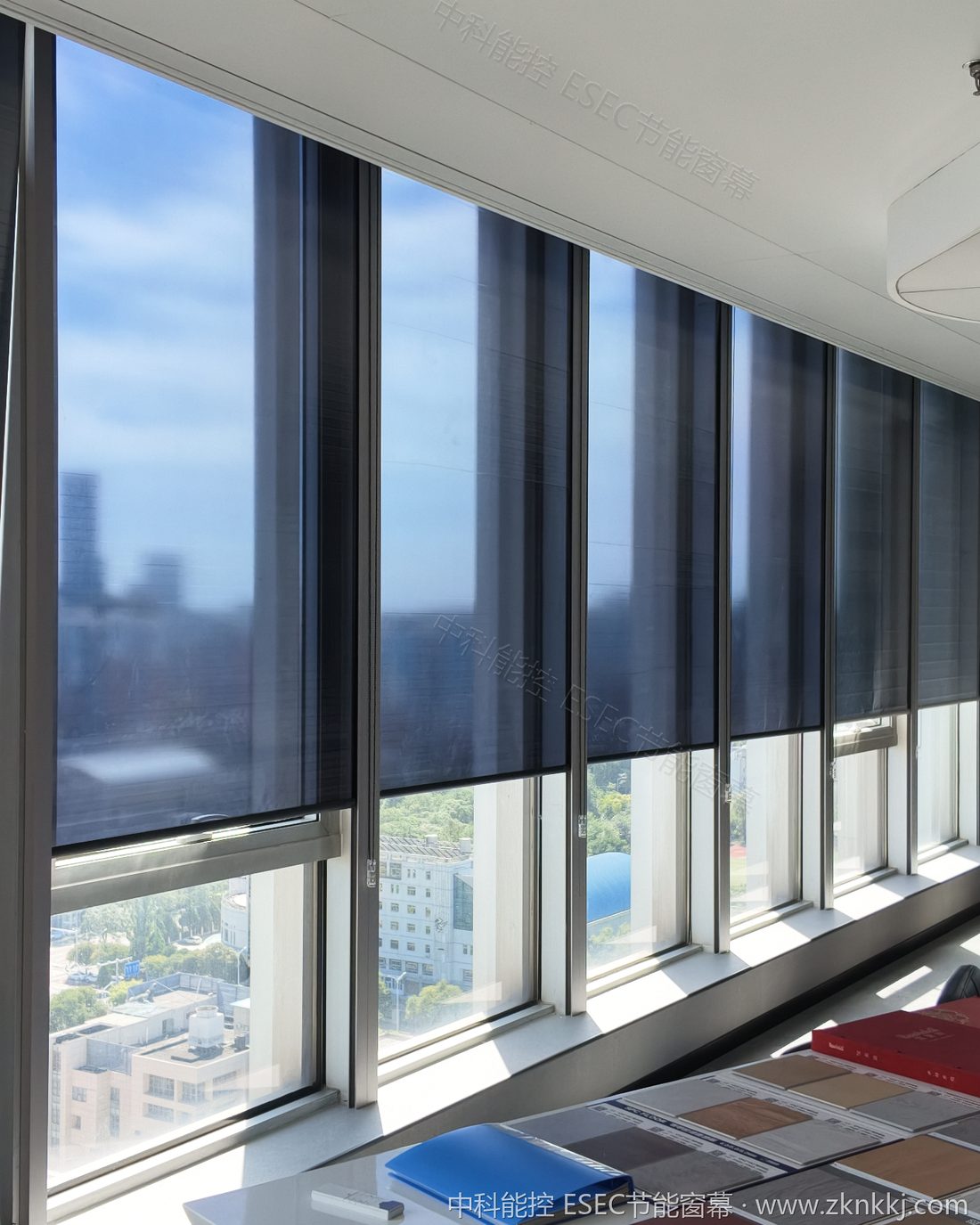

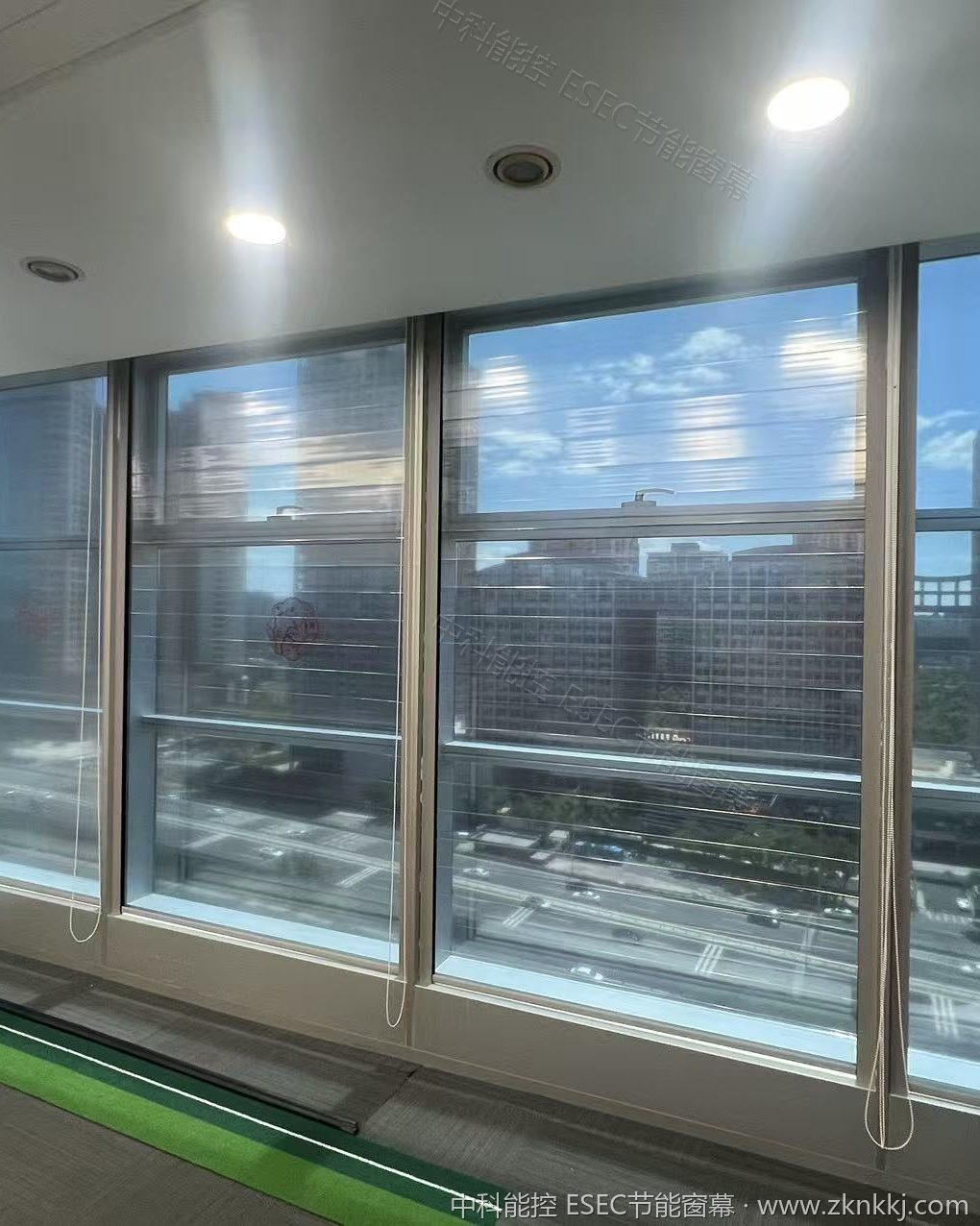
Book a visit to our Wangjing showroom in Beijing to experience the window curtain first-hand → Contact
One window curtain system: reflects solar heat in summer, blocks heat loss in winter
The window curtain reflects 88% of solar radiant heat, sharply cutting indoor heat gain and cooling load. The setpoint can be raised by about 3°C, or the system switched off altogether. Per ASHRAE benchmarks, every 1°C increase in the cooling setpoint saves roughly 6% of cooling energy.
Mounted on the outside of the glass, the window curtain creates an additional air layer and a highly reflective surface, lowering the window U-value and reducing heat loss through the glass. Indoor temperature rises naturally by about 2°C and the heating load drops accordingly.
The poorer the existing glazing specification (the higher the U-value), the greater the improvement the window curtain delivers — and the more pronounced the energy savings.
| Compared on | ESEC Window curtain retrofit | Replacing curtain wall glass | Heat-insulation film |
|---|---|---|---|
| Removal of existing windows | No removal — mounted on the exterior | Requires removal and reinstallation | No removal |
| Duration | 1 day per space | Weeks to months | 1–2 days |
| Solar reflectance | 88% | Depends on the glazing specification | Typically 30 years–70% |
| Reversibility | Removable and replaceable | Irreversible | Irreversible |
| Added functions | Anti-glare, UV protection, and privacy | Limited | Limited |
| Service life | 15 yrs | 20 years or more | 5–10 years |
We measure curtain wall area, orientation, and glazing specification, and collect thermal performance data.
You receive a report covering annual energy savings, electricity cost savings, carbon reduction, and payback period.
Custom-made to measured dimensions, lightweight, and no modification to the existing curtain wall structure.
Installed by a professional crew, typically completed in a single day for common spaces, with night-shift work available.
Enter your building parameters into the energy calculator and get energy-savings and payback estimates in 30 seconds