
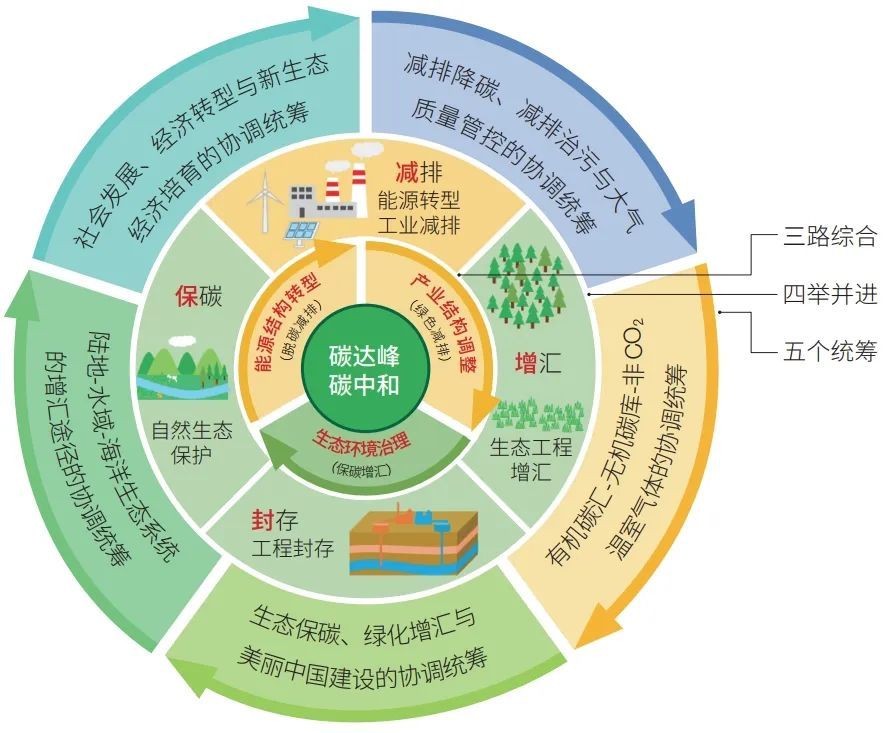
Achieving carbon peaking and carbon neutrality is a broad and profound systemic change in the economy and society. On April 23, in a speech at the Climate and Just Transition Leaders’ Summit, President Xi Jinping pointed out that “since I announced the carbon peaking and carbon neutrality goals five years ago, China has built the world’s largest and fastest-growing renewable energy system and the world’s largest and most complete new energy industrial chain.” At present, only five years remain before the 2030 carbon peaking target, and this is also an important task that must be accomplished during the “15th Five-Year Plan” period. As a boat in midstream meets more urgent waves, to steadily and prudently push the “dual carbon” goals to completion on schedule on the basis of current achievements, we must gain a deep understanding of the relationship between development and security in the “dual carbon” process, scientifically grasp a series of basic principles for steadily and prudently advancing the “dual carbon” work, and implement the “1+N” policy system for carbon peaking and carbon neutrality.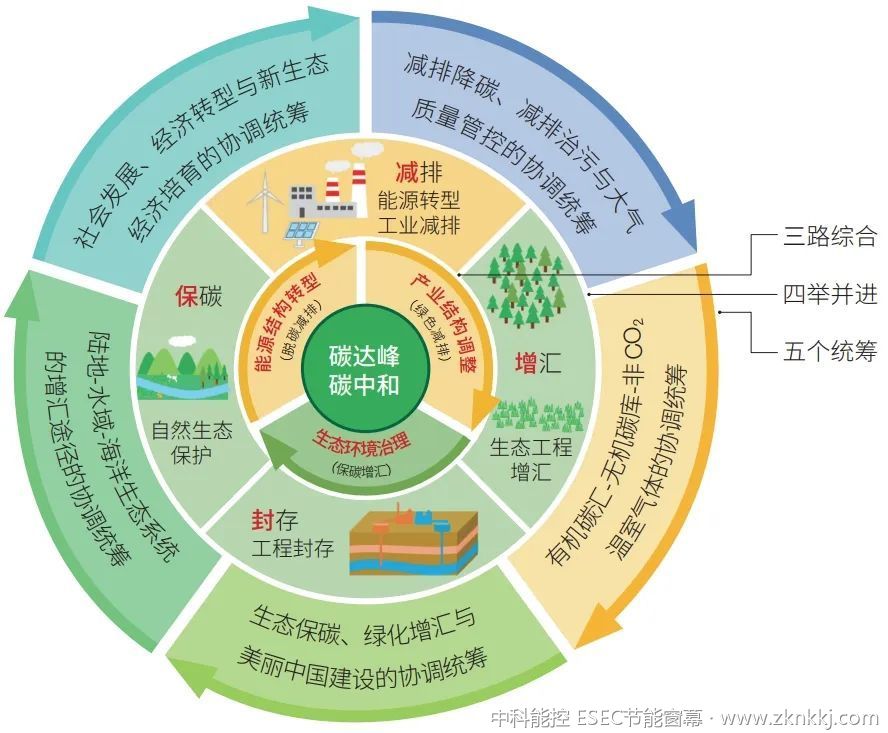
1. Deeply understanding the relationship between development and security in the process of steadily and prudently advancing “dual carbon”
President Xi Jinping pointed out in his speech at this summit that “green transition is the only way to respond to climate change, and it is also a new engine for economic and social development.” This important statement profoundly explains the relationship between development and security in the process of steadily and prudently advancing “dual carbon.” Since 2020, under the strong leadership of the Party Central Committee, China’s “dual carbon” work has been advanced in a solid and systematic manner and has achieved a series of remarkable results: promoting energy-saving and carbon-reduction retrofits in key industries and the development and utilization of new energy, with the share of non-fossil energy power generation approaching 40% of total power generation; launching the national greenhouse gas voluntary emission reduction trading market and expanding the industry coverage of the national carbon emission rights trading market; coordinating the promotion of carbon reduction, pollution reduction, green expansion and growth, with the level of comprehensive green transformation of economic and social development continuously rising; developing new quality productive forces in light of local conditions, with green and low-carbon new industries, new business forms and new models flourishing, and the export value of the “new three items” — new energy vehicles, lithium batteries and photovoltaic products — exceeding the one-trillion-yuan mark in 2024; China is also the country that has “greened” the fastest and the most in the world, contributing a quarter of the world’s newly added green area. China’s practice over the past five years shows that, in advancing the “dual carbon” process, development and security support each other and interact positively, and during the “15th Five-Year Plan” period we must continue to deepen and grasp the understanding of the relationship between the two.
First, a relationship of dialectical unity. Advancing carbon peaking and carbon neutrality requires promoting energy transition, the optimization and upgrading of the industrial structure, and green and low-carbon technological innovation, so as to realize the comprehensive green and low-carbon transformation of the economy and society and ultimately achieve high-quality development. At the same time, it requires improving a national security system that integrates economic security, social security, ecological security and resource security, especially the security of green transition, energy security, and industrial and supply chain security, so as to build security safeguards for achieving the “dual carbon” goals. Therefore, to steadily and prudently advance carbon peaking and carbon neutrality, we must deeply understand and grasp the dialectical unity between development and security, uphold development through emission reduction and carbon reduction with security guaranteed, and achieve a positive interaction between high-quality development and high-level security.
Second, a relationship of dynamic evolution. As China advances carbon peaking and carbon neutrality in depth and breadth, the relationship between development and security is also constantly evolving. On the one hand, the “dual carbon” work is promoting the green transformation of key industries and fields such as energy, industry, transportation and construction. China has built the world’s largest clean power generation system and the world’s largest and most complete new energy industrial chain. This has created new and better realistic conditions for China to coordinate the promotion of carbon reduction, pollution reduction, green expansion and growth and to accelerate the comprehensive green transformation of economic and social development, and it has also provided solid guarantees for China’s energy security, ecological security and economic security. On the other hand, the “dual carbon” work has brought profound changes in the energy structure, industrial structure, development model and technological system, and has put forward new governance requirements for development through emission reduction and carbon reduction with security guaranteed. During the “15th Five-Year Plan” period, we must accurately grasp this dynamic evolutionary relationship and reflect different emphases at different stages.
Third, a relationship of coordinated governance. At present, China is accelerating the construction and implementation of the “1+N” policy system for carbon peaking and carbon neutrality, which places higher demands on the policy coordination and joint progress of all fields, all departments and all parties. To steadily and prudently advance carbon peaking and carbon neutrality, we need to find a balance point between development and security and realize coordinated governance of the two. This requires that, when formulating and implementing relevant policies, we fully consider the interrelationships and influences among various factors and ensure the effectiveness and sustainability of the policies.
2. Scientifically grasping the basic principles for steadily and prudently advancing the “dual carbon” work
The “dual carbon” goals are leading the systemic change of China’s economy and society and the deep adjustment of its governance system. In advancing the “dual carbon” work, we should focus not only on the speed and scale of development, but also on its quality and sustainability; we should not only ensure security in energy, industrial and supply chains and ecology, but also continuously enhance our security safeguard capacity through innovation and technological progress. To steadily and prudently advance the “dual carbon” work during the “15th Five-Year Plan” period, we need to continue to uphold and grasp the following principles.
Uphold overall deployment and differentiated measures. In implementing the “1+N” policy system for carbon peaking and carbon neutrality, we should uphold overall deployment to ensure that the whole country forms a joint force and works together to achieve the “dual carbon” goals. At the same time, we should fully consider the differences among regions and industries and, in line with their actual conditions and characteristics, formulate differentiated policies to ensure their relevance and effectiveness. For example, steadily and orderly advance carbon reduction in high-emission sectors such as energy, industry and transportation; promote in a classified manner the adjustment and optimization of the industrial structure, energy structure and transportation structure in different regions, and avoid a “one-size-fits-all” approach. In addition, in the process of differentiated measures, we should also pay attention to the systematic integration of policies and to the actual results of reform, avoid conflicts between policies, and ensure that the “1+N” policy takes root.
Uphold systematic thinking and bottom-line thinking. The “dual carbon” goals, high-quality development and high-level security are essentially a unified whole. In advancing the “dual carbon” process, we need to further deepen the theoretical understanding that high-quality development is the absolute principle of the new era and unswervingly implement the overall national security outlook, strengthen systematic thinking, closely combine and coordinate the three aspects, and ensure the continuity and stability of “dual carbon”-related policies; establish and improve risk assessment and early-warning mechanisms for “dual carbon” governance, promptly identify and respond to various possible risks, and firmly hold the bottom line of not allowing systemic risks to occur.
Uphold pilot first and establish before breaking. As a major economy and a major developing country, China is striving to achieve the world’s largest reduction in carbon emission intensity and to complete the transition from carbon peaking to carbon neutrality in the shortest time in history, which places higher innovation requirements on China’s “dual carbon” policy system. We should summarize China’s practical experience in “dual carbon” governance over the past five years while drawing on the lessons of other countries in the process of carbon reduction, balance the strength of “breaking” against the speed of “establishing,” grasp well the rhythm and intensity of China’s carbon reduction, proceed step by step and make sustained efforts, and avoid falling into the dilemma of policy adventurism and the separation of development from security. Promote key regions, key industries and places with the right conditions to take the lead in carbon peaking and carbon neutrality, accumulate pilot experience and form a demonstration effect.
Uphold independence and controllability, and unimpeded internal and external flows. The “dual carbon” goals are not only a solemn commitment China has made to the world, but also an inherent requirement of China’s modernization process. China’s national conditions determine that China cannot take the old path of Western modernization. President Xi Jinping pointed out that “the ‘dual carbon’ goals we have committed to are unshakable, but the path and method, the rhythm and intensity of achieving this goal should and must be decided by ourselves, and must never be dictated by others.” We should strengthen key work such as core technology innovation, enhancing the stability and competitiveness of green and low-carbon industrial and supply chains, and establishing independent green and low-carbon standards. At the same time, we should actively strengthen cooperation with the international community, promote the effective coordination of China’s “dual carbon” policies with the development strategies, governance rules and technical standards of other countries, and form a sound international cooperation mechanism.
3. The focal points for steadily and prudently advancing the “dual carbon” process
On the whole, China’s “dual carbon” process is in a critical period of overlapping pressures and of moving forward under a heavy load, and it still faces many challenges and uncertainties. Facing the “15th Five-Year Plan,” we should make sustained efforts in three respects: the governance system, the policy system and the standards system.
Establish a governance system that integrates the “dual carbon” goals, new quality productive forces and overall national security into one. As China deepens its understanding of the laws governing “dual carbon” work and better practices the new requirements of developing new quality productive forces and of the overall national security outlook, it is necessary to establish such an integrated governance system, adjust and optimize it in line with key industries and fields such as the industrial structure, energy structure and transportation, and carry it through the entire chain of advancing carbon reduction, pollution reduction, green expansion and growth. In key work such as advancing energy transition, the optimization and upgrading of the industrial structure and the transformation of the economic development model, we should focus on cultivating new quality productive forces, shaping new momentum and new advantages for development, and forming governance effectiveness in which the “dual carbon” goals, high-quality development and high-level security are advanced in coordination.
Make overall plans for the “dual carbon” policy system in the “15th Five-Year Plan.” On the one hand, accurately grasp the overall rhythm of the “dual carbon” process, base ourselves on the timing requirements of carbon peaking by 2030 and carbon neutrality by 2060, and enhance the forward-looking nature and flexibility of the “15th Five-Year Plan” so as to cope with various possible challenges and uncertain factors — for example, properly preventing and defusing the internal and external risks and challenges facing the green transition, and effectively safeguarding ecological security, food security, energy security, and industrial and supply chain security, and so on. On the other hand, pay attention to policy innovation in the process of compiling and implementing the “15th Five-Year Plan” — for example, establishing and improving the system of dual control of carbon emissions, expanding the coverage of the national carbon emission rights trading market, comprehensively forming an industrial system, energy system and lifestyle characterized by green and low carbon, and improving the carbon emission target evaluation and assessment system, and so on.
Accelerate the building of a standards system in the “dual carbon” field that fits China’s development and security requirements. We should strengthen the overall deployment of the construction of the “dual carbon” standards system, give play to the coordinating, supervisory and technical coordination role of the national standards management body, strengthen the systematic integration of national standards, local standards and industry standards, pay attention to strengthening the evaluation and management of the formulation and implementation of standards in the “dual carbon” field, accelerate the updating and upgrading of standards for carbon governance in key industries and fields, and strengthen the incentive and constraint of national standards for development through emission reduction and carbon reduction with security guaranteed; attach more importance to technical research on “dual carbon” standards, concentrate efforts on supporting research into technical methods related to basic and general standards, the construction of data platforms and the development of application tools, promote joint efforts to tackle key problems in technical standards for carbon emission reduction and carbon removal, expand the supply of green product evaluation standards, support the digital-intelligent and green technological transformation and upgrading of industrial enterprises, strengthen the construction of the “dual carbon” standards measurement system, and strengthen the supporting and safeguarding role of standards and measurement for the “dual carbon” work.
(Authors: Liu Xu is a researcher at the National Academy of Development and Strategy of Renmin University of China and executive director of the International Energy Strategy Research Center; Wang Wanfa is a specially appointed researcher at the Research Center for the Theoretical System of Socialism with Chinese Characteristics in Anhui Province and a lecturer at Anhui University.)