

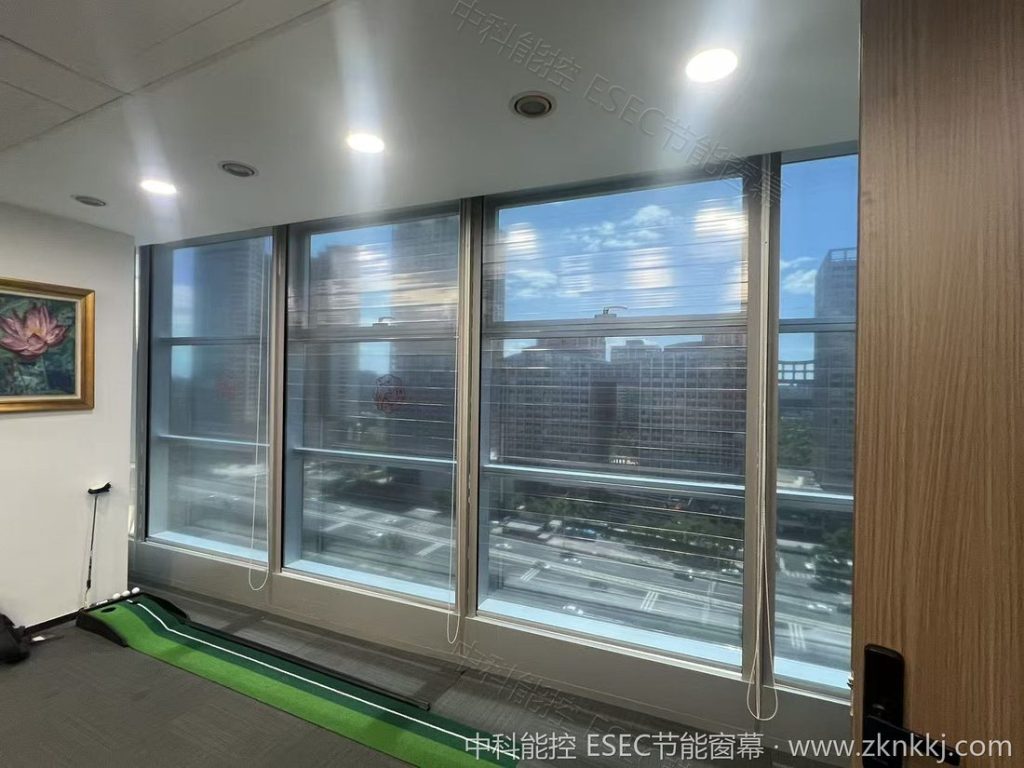
By late September, many northern cities have already started preparing for the heating season. Every year around this time we get the same kind of enquiry:‘The heating is fine indoors, but the moment I sit by the window it feels cold — where is the leak?’
The answer is usually not the heating but that thinnest of walls — the window. In this article we lay out the numbers for a glass insulation retrofit: where the heat escapes, how to choose among three technical routes, and how much one retrofit can save — all in figures you can check.
1. First, the Data: Where Does the Heat Escape in Winter?
How well a wall insulates is measured by its heat transfer coefficient (U-value) in W/(m2.K). The higher the U-value, the more heat escapes per unit time. The spread in U-values among common glazing types is far wider than most people imagine:
| Glass type | U-value W/(m2.K) | Typically found in |
|---|---|---|
| Single glazing | 5.8 | Pre-2000 buildings, older steel windows |
| Standard double glazing | 2.8 | The mainstream specification from 2000 to 2015 |
| Low-E double glazing | 1.8 | Energy-efficient buildings built after 2015 |
| Triple glazing | 1.5 | High-standard energy-efficient projects |
For comparison: single glazing loses heat about more than 3 times as fast as Low-E double glazing. And a conventional brick wall has a U-value of typically 0.5–1.0 — in other words,a piece of standard double glazing loses heat at 3–5 times the rate of a brick wall of the same area.
Now the totals. Using our energy-calculation model, the share of a building’s heating load lost through its windows is:
| Building type | Windows as a share of heating heat loss | Heating energy intensity (kWh/m2·yr, electricity equivalent) |
|---|---|---|
| Residential | About 30% | 32 |
| Office | About 35% | 22 |
| Hotel | About 30% | 28 |
| School / Hospital | About 30% | 25 / 28 |
| Retail | About 25% | 18 |
There are also two knock-on problems specific to winter that are more of a headache than a slightly higher heating bill:
- Condensation and mould: with a cold inner glass surface, indoor moisture condenses on the glass, runs down onto the sill and wall, and over time causes mould and flaking. It is most obvious in north-facing rooms and on poorly insulated older windows.
- Discomfort from cold radiation: when you sit by the window, radiant exchange between your body and the cold glass draws heat away, making it feel several degrees cooler than the room — this is the source of ‘the heating is fine but it is cold by the window’.
2. Three Technical Routes: Window Replacement, Film or Add-On Curtain?
There are three main routes for improving glass insulation. The difference is not whether they work, butwhether they touch the structure, how long they take, and whether you can change your mind:
| Option | Touches the original window structure | Programme | U-value improvement | Reversibility | Best suited to |
|---|---|---|---|---|---|
| Replace the whole window | Yes (remove the old, fit new) | Days to weeks; scaffolding or work at height | Largest | Irreversible | Older buildings, whole-building renovation |
| Apply heat-insulation film | No | 1–2 days | Limited (essentially shading/reflection; little insulation gain) | Peelable | Shallow needs driven mainly by summer west-facing sun |
| Add a heat-insulating, see-through window curtain | No (fitted window by window) | No disruption to work; progresses window by window | Marked (see the measured improvements below) | Removable and relocatable | Existing buildings, offices, schools, hospitals, homes |
If the building already has Low-E double glazing, the marginal return on window replacement is low and the cost very high; if the building is old, the glass poor, and the owner does not want to close, move out or touch the structure, adding a reversible insulation layer is usually the best value.
3. How Does the Curtain Insulate? Numbers You Can Check
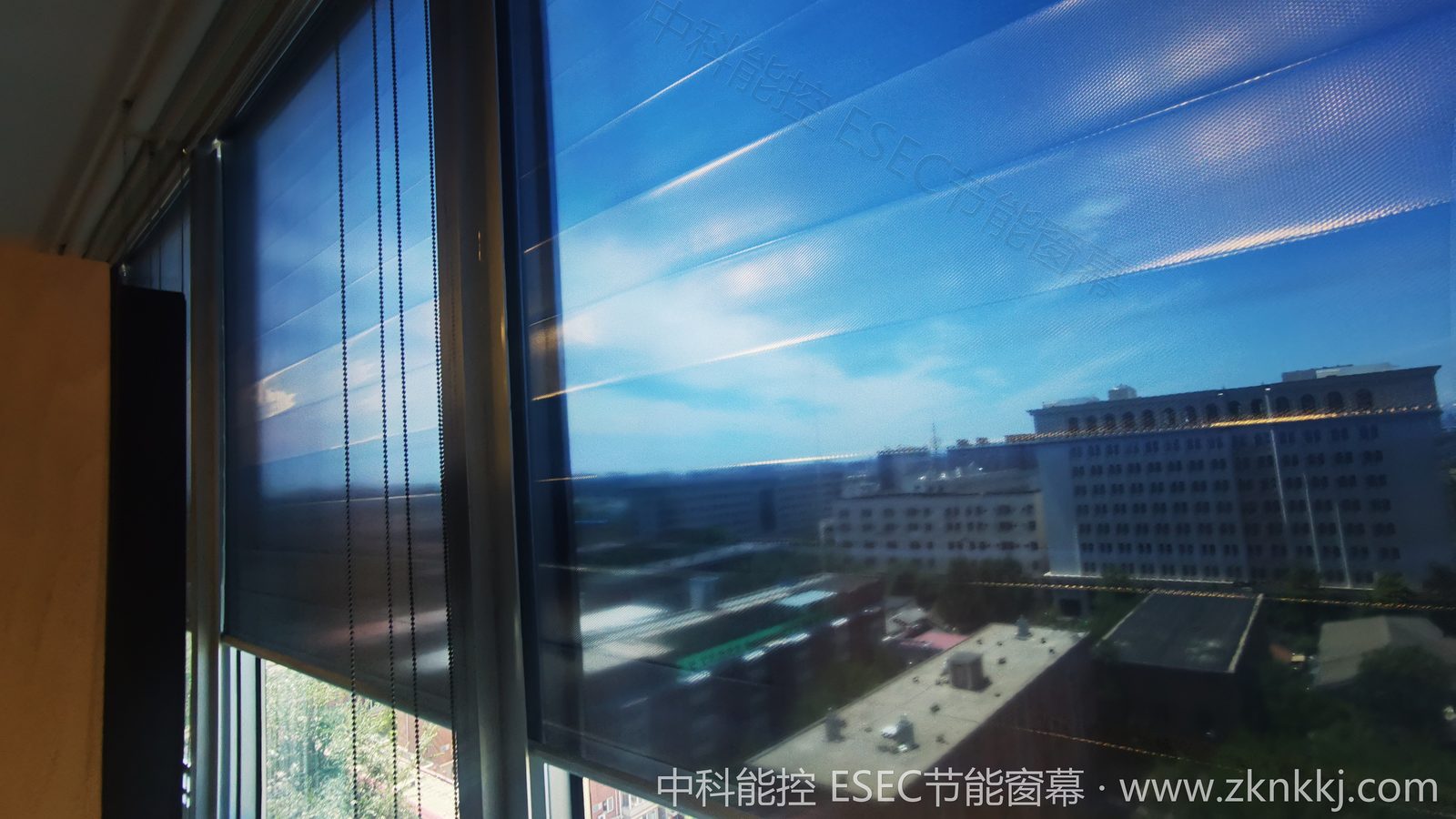
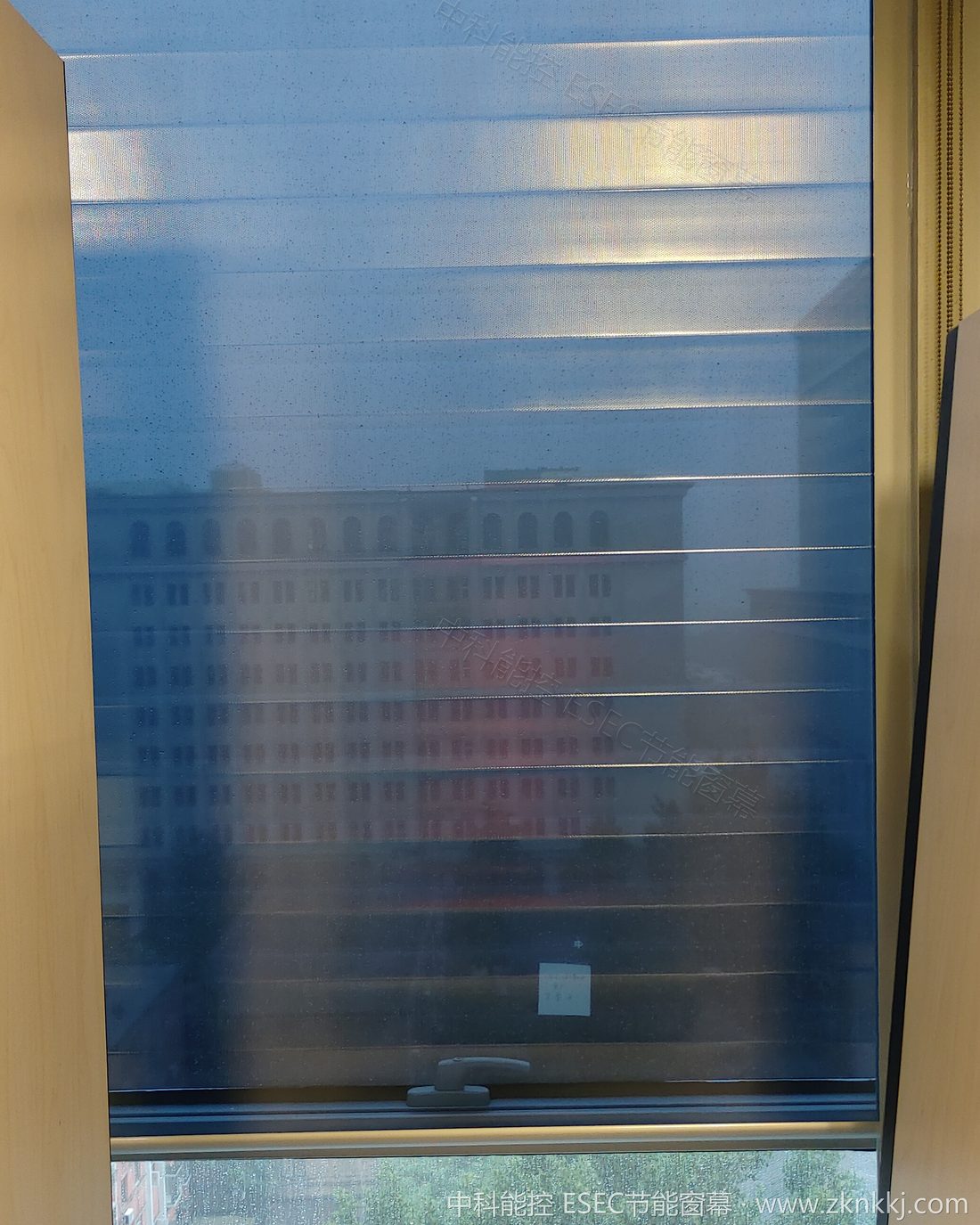
The ESEC One-Way View-Through Energy-Saving Window Curtain is fittedon the interior side of the original window, forming an air gap between the glass and the room; together with the highly reflective surface, it adds a layer of thermal resistance to the window.
The value of that additional thermal resistance isR = 0.2 m2.K/W (calibration basis: a U-value improvement of about 1.0 W/(m2.K) for standard double glazing). Converted into U-value improvements for each glass type:
| Existing glass | Existing U-value | U-value after the curtain (approx.) | Improvement |
|---|---|---|---|
| Single glazing | 5.8 | 2.7 | about -3.1 |
| Standard double glazing | 2.8 | 1.8 | about -1.0 |
| Low-E double glazing | 1.8 | 1.3 | about -0.5 |
| Triple glazing | 1.5 | 1.2 | about -0.3 |
The pattern is clear:the worse the existing glass, the greater the improvement. Older single glazing benefits most.
The third-party test reports can be verified under ‘Certifications’ on our website, including:heat transfer test report (aluminium window + curtain), shading coefficient and reflectance report, fire-safety test report, formaldehyde test report.
In terms of temperature, our model indicates that using the curtain in winter raises indoor temperature byabout 2 degrees C, and the inner glass surface warms with it — which is the direct reason it eases winter condensation and the cold-radiation discomfort by the window.
4. Three Sets of Numbers: Heating Cost, Comfort, Time
Number one: heating energy saved.Take a 1000 m2 office building in Beijing with standard double glazing (U = 2.8):
- Annual heating electricity use approx. 1000 m2 x 22 kWh/m2 =22,000 kWh
- of which window heat loss is about 35% approx.7,700 kWh
- After adding the curtain, U-value 2.8 to 1.8, window heat loss down about 35.7% approx.2,750 kWh
- At 0.85 yuan/kWh,annual heating electricity saving about 2,300 yuan
Now a home: 100 m2 in an older building with single glazing (U = 5.8), annual heating electricity about 3,200 kWh, window heat loss about 30%; after adding the curtain the U-value goes from 5.8 to 2.7, window heat loss falls about 53%,saving about 510 kWh a year in winter, or about 280 yuan.
Number two: comfort.A room temperature about 2 degrees C higher means the heating set point can be lowered by 2 degrees C, and industry experience suggests every 1 degree C reduction cuts energy use by 5%–8%. More importantly, it ends the cold draught by the window and reduces condensation and mould — for households with elderly people or children, and for office staff at window-side desks, this usually matters more than the electricity saving.
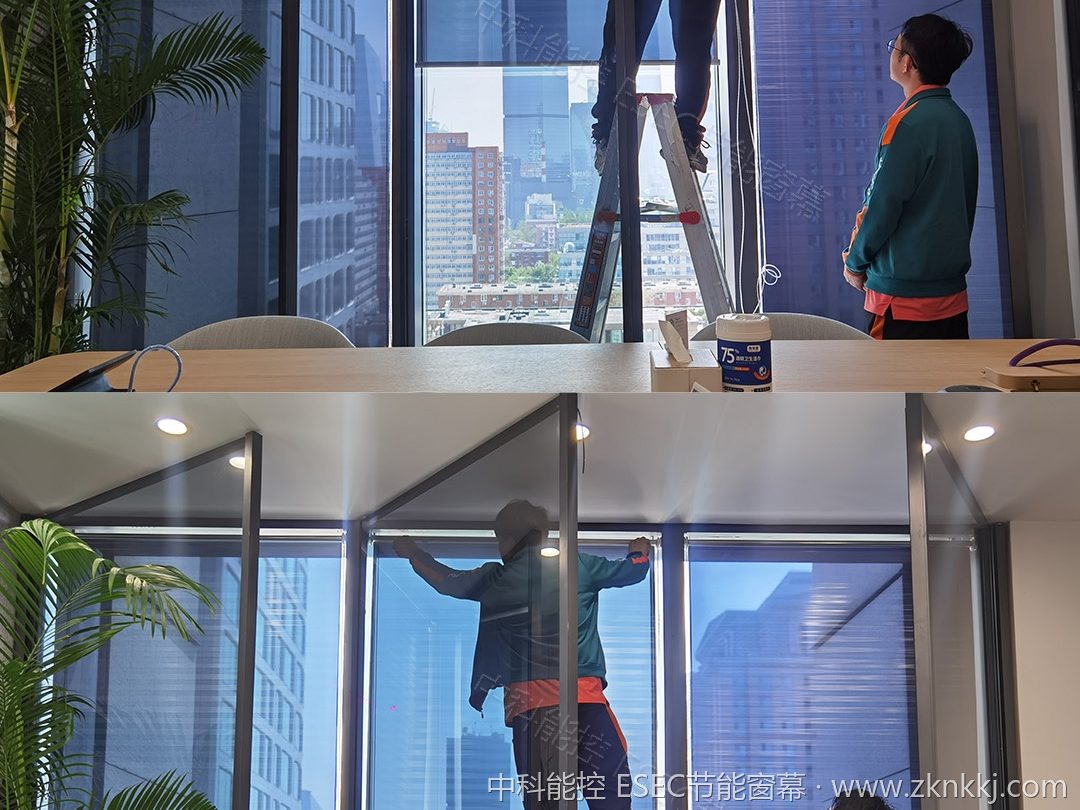
Number three: time.Installing the curtain requires no window removal, no external scaffolding and progresses window by window, with the space remaining in use. Finish before the heating season and the whole winter benefits; leave it until after November and the programme collides with the heating start and year-end maintenance.
To be honest:Taken on winter heating electricity alone, the payback period is not short — because the curtain’s largest returns come in summer (reflecting solar heat and cutting the cooling load), and only summer plus winter together is the complete picture. So our advice is always the same:calculate first, then decide.
Enter your orientation, area and existing glass type into the savings calculator on our website and in one minute you get three sets of figures: summer savings, winter insulation and payback period.
5. Who Should Act Before the Heating Season?
- Rooms with large glazing areas, north- or west-facing: high heat loss and a noticeable temperature difference;
- Single glazing or older double glazing in older buildings: the largest U-value improvement (up to 3.1);
- Hospitals, schools and offices that cannot close: replacing windows means touching the structure at prohibitive cost; an add-on solution is more realistic;
- Households with elderly people or infants: cold radiation and condensation affect health and wall condition more directly;
- Spaces with daylight requirements: the curtain is see-through by design, so the view and daylight remain after installation.
6. Run the Numbers First, then Decide
Whether a retrofit is worth it depends on the building type, the existing glass, the orientation and the area — there is no universal answer, but there is a reliable method.
- 📊One-minute online calculation:ESEC window, door and curtain wall energy-saving calculator
- 🔧Products and specifications:the full One-Way View-Through Energy-Saving Window Curtain range
- 🏢Solutions by scenario:glass curtain wall insulation / west-facing sun remediation / existing building retrofit
- 📞Free on-site measurement and proposal: Manager Guo, +86 186 1068 5811 (WeChat: ESEC88888)
There is one month left before the heating season — act now and you will benefit all winter.
Note: the U-values in this article are taken from typical values in JGJ 113 and the limits in GB 50189-2015; the heating energy intensity, window heat-loss share and room-temperature improvement are values from our own energy-calculation model. Actual results vary with building conditions; on-site measurement and project-specific calculation govern.