
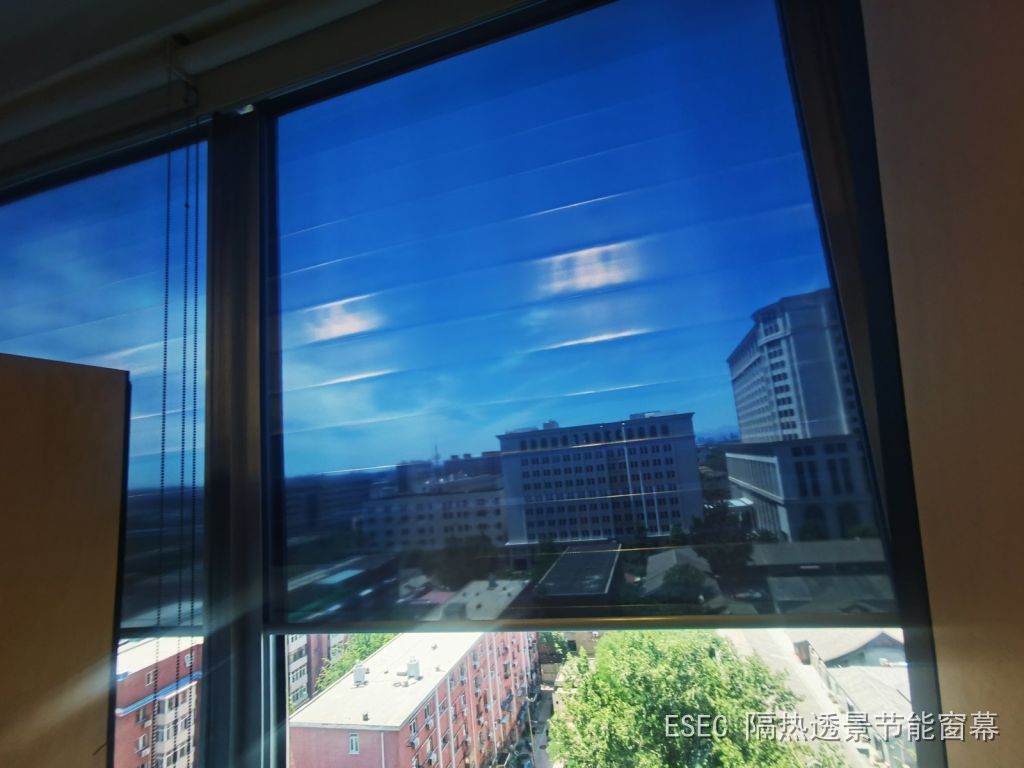
Retrofitting existing glass curtain walls for energy efficiency has been a stubborn problem for the industry for years: a large share of existing curtain walls perform poorly on thermal metrics, energy consumption stays high, and rooms are uncomfortable — too hot in summer, too cold in winter, with west-facing rooms overheating most severely.
A telling example: in one office building, the entire west façade is a glass curtain wall. To block the afternoon sun, occupants had no choice but to prop car sunshades against the inside of the glass. The heat problem was solved — but the façade looked patched together.
Replacing the glass means high cost, long lead times and knock-on effects across the whole façade. The industry’s usual alternatives include applied film, coatings, external shading and added glazing. In recent years, a different product has been drawing attention: the energy-saving window curtain.
1. One film, three layers, three jobs
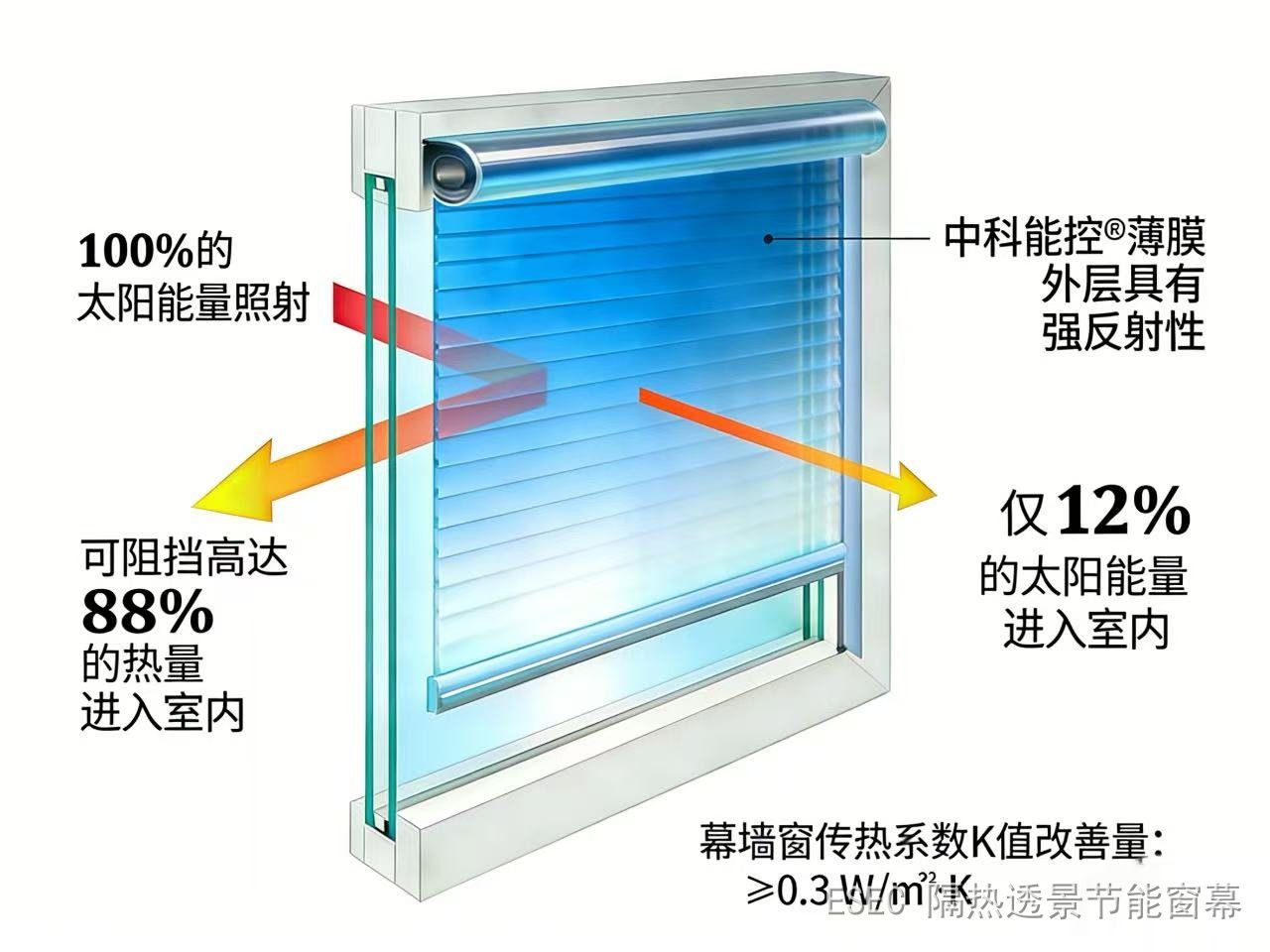
At the heart of the energy-saving window curtain is a heat-insulating film built from three laminated layers, each with its own role: the outer transparent polyester layer blocks over 99% of UV radiation, slowing the fading and ageing of interiors; the middle metallised polyester coating reflects solar heat back outside; the inner polyester film layer keeps visible light transmitting, so the room stays bright and the view stays clear.
In spectral terms, the film treats each band differently: reflectance of about 99% for UV light at 200–380 nm, about 70% for visible light at 380–780 nm and about 80% for near-infrared light at 780–2500 nm; the inner layer brings visible-light reflectance down to 30% and does not reflect infrared.
This division of labour — reflecting infrared while letting visible light through — is what allows the curtain to block most solar heat and cut the cooling load entering the room, while preserving daylight and the outward view.
2. Easy to install, easy to retract
There are currently two main ways of combining the window curtain with an existing curtain wall. The roller type works like a roller blind: the curtain is fixed at the top of the curtain wall and, when lowered, leaves a certain air gap around its edges. The track type runs the curtain inside a track fixed to the curtain-wall mullions, effectively separating the curtain wall from the interior space.

Control is equally flexible: manual units use a pull cord just like a conventional blind, while motorised units raise and lower by remote control and can also be integrated with smart-home platforms for automated operation. For public buildings, the curtain can be tied into the building automation system for centralised scheduling.
3. Shade in summer, admit in winter: an energy logic that “breathes”
Unlike applied film or replacement glazing — one-off fixes that lock performance in place — the greatest value of the window curtain is that it is dynamically adjustable. The same façade can follow completely different strategies by season and by time of day:
| Period | Curtain | How it works |
|---|---|---|
| Summer, daytime | Lowered | Reflects solar heat at 300–2500 nm and cuts direct transmission; some heat in the air cavity between curtain and glass moves back outdoors, reducing secondary heat transfer and lowering the solar heat gain coefficient to relieve the air-conditioning load |
| Summer, night | Raised | The cavity disappears and the U-value rises, so accumulated heat indoors dissipates outward faster |
| Winter, daytime | Raised | The solar heat gain coefficient recovers substantially so solar radiant heat is admitted as far as possible, cutting heating energy use and improving thermal comfort |
| Winter, night | Lowered | The cavity becomes an insulating layer (the more airtight, the better) — effectively turning single glazing into double glazing, or double into triple — and the U-value drops markedly |
According to publicly available industry calculations, adding the curtain to double glazing brings the combined shading coefficient down to 0.19 (an improvement of about 69%); in the winter night scenario, the U-value improves by roughly 26%.
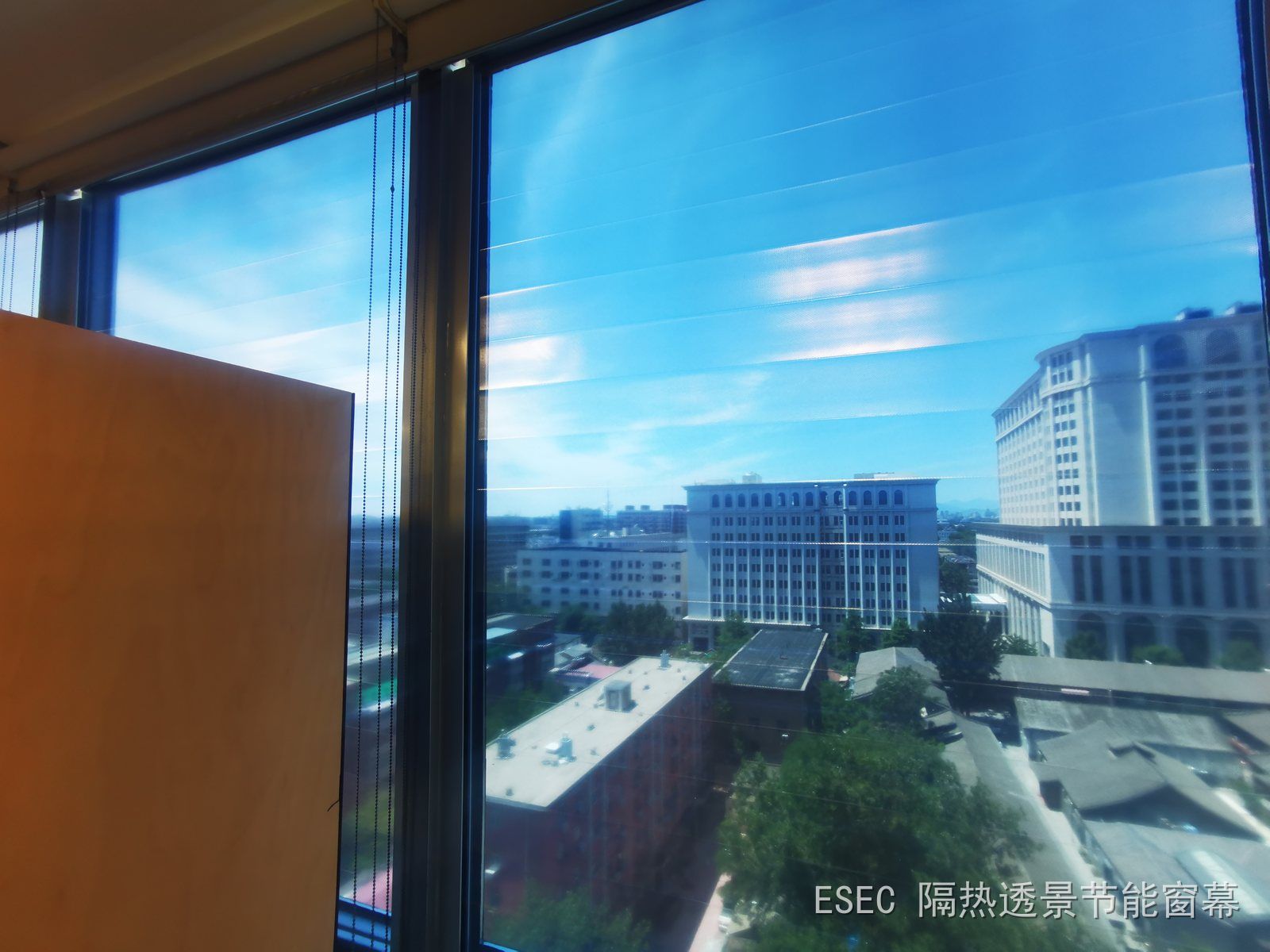
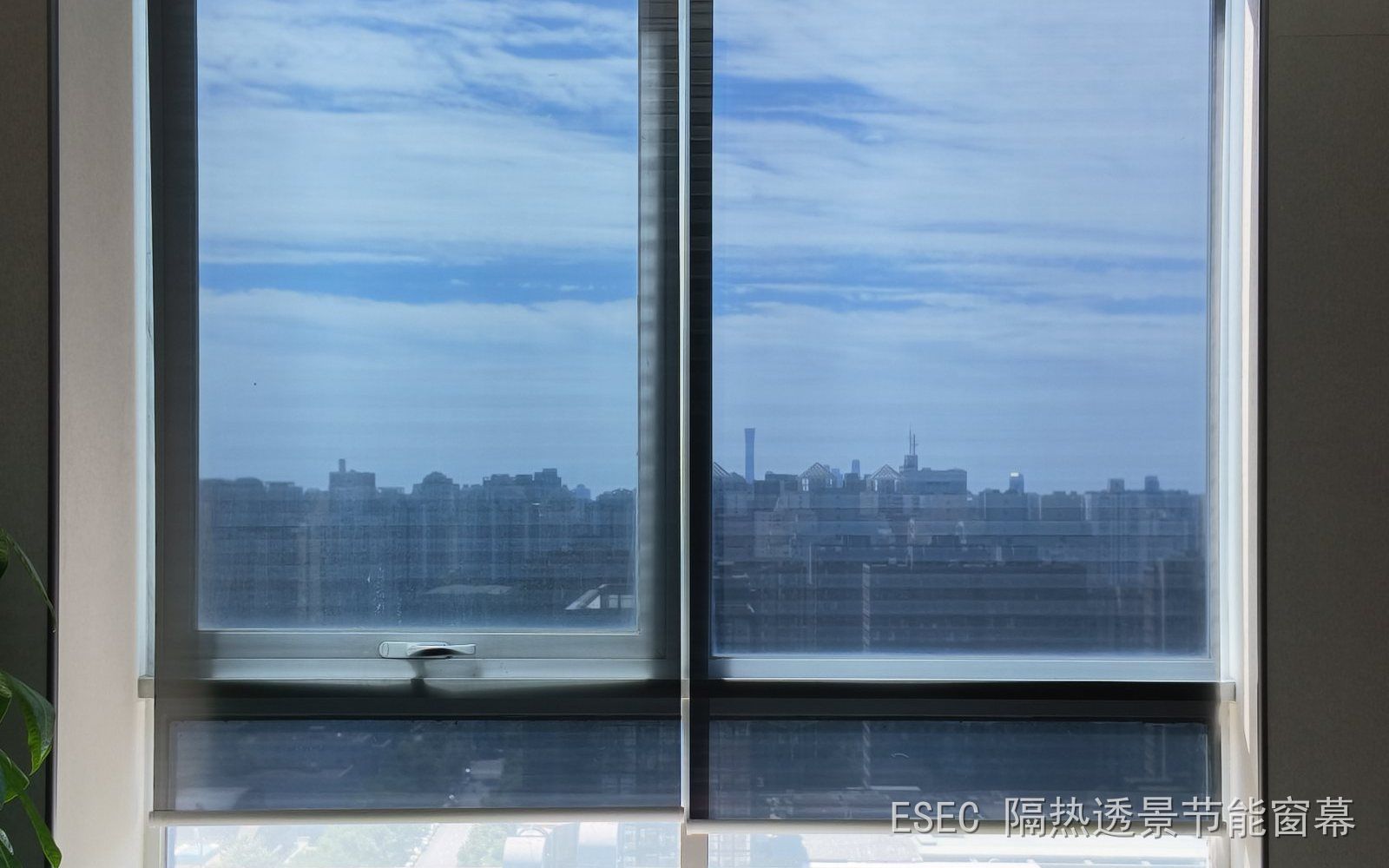
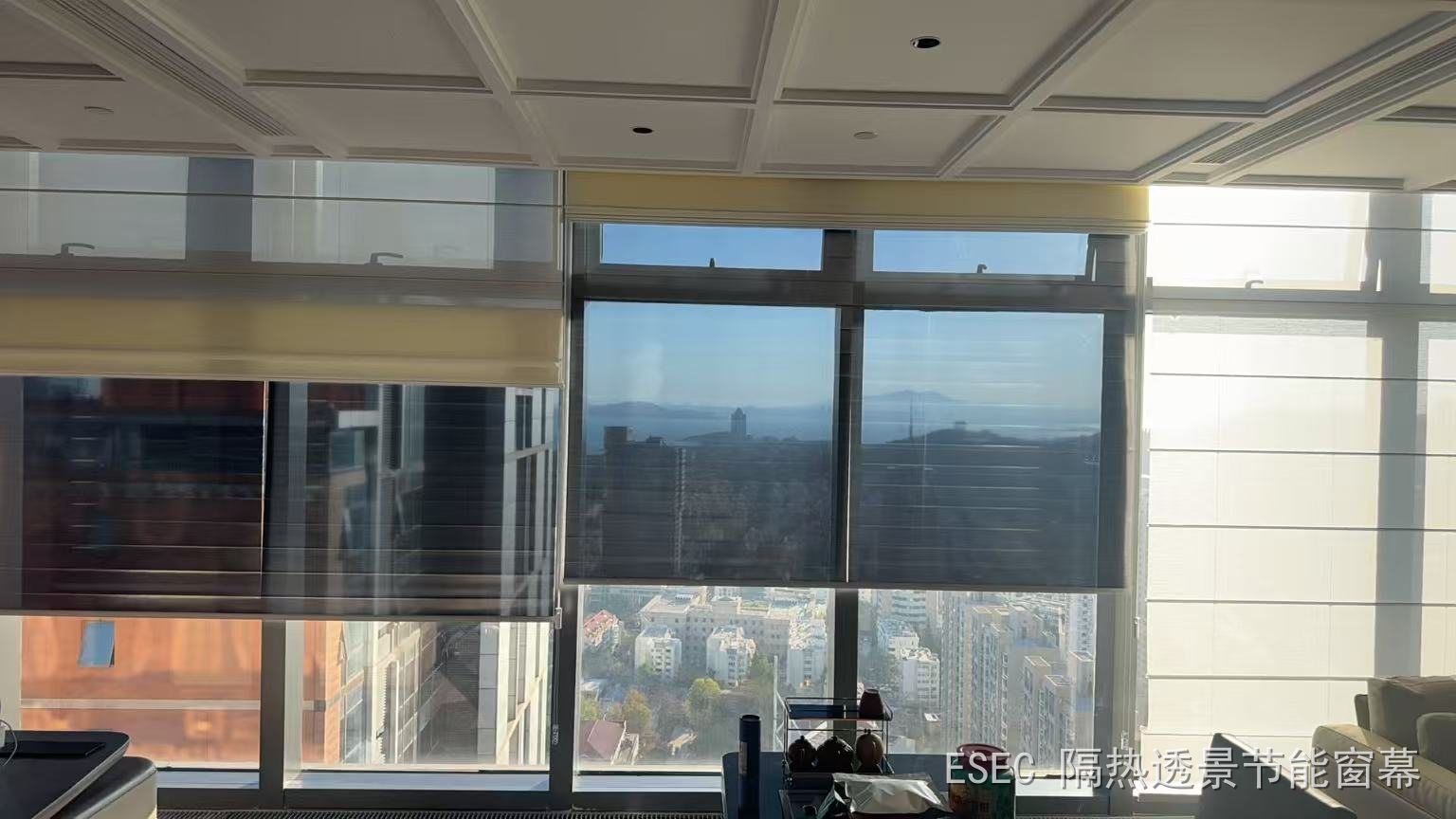
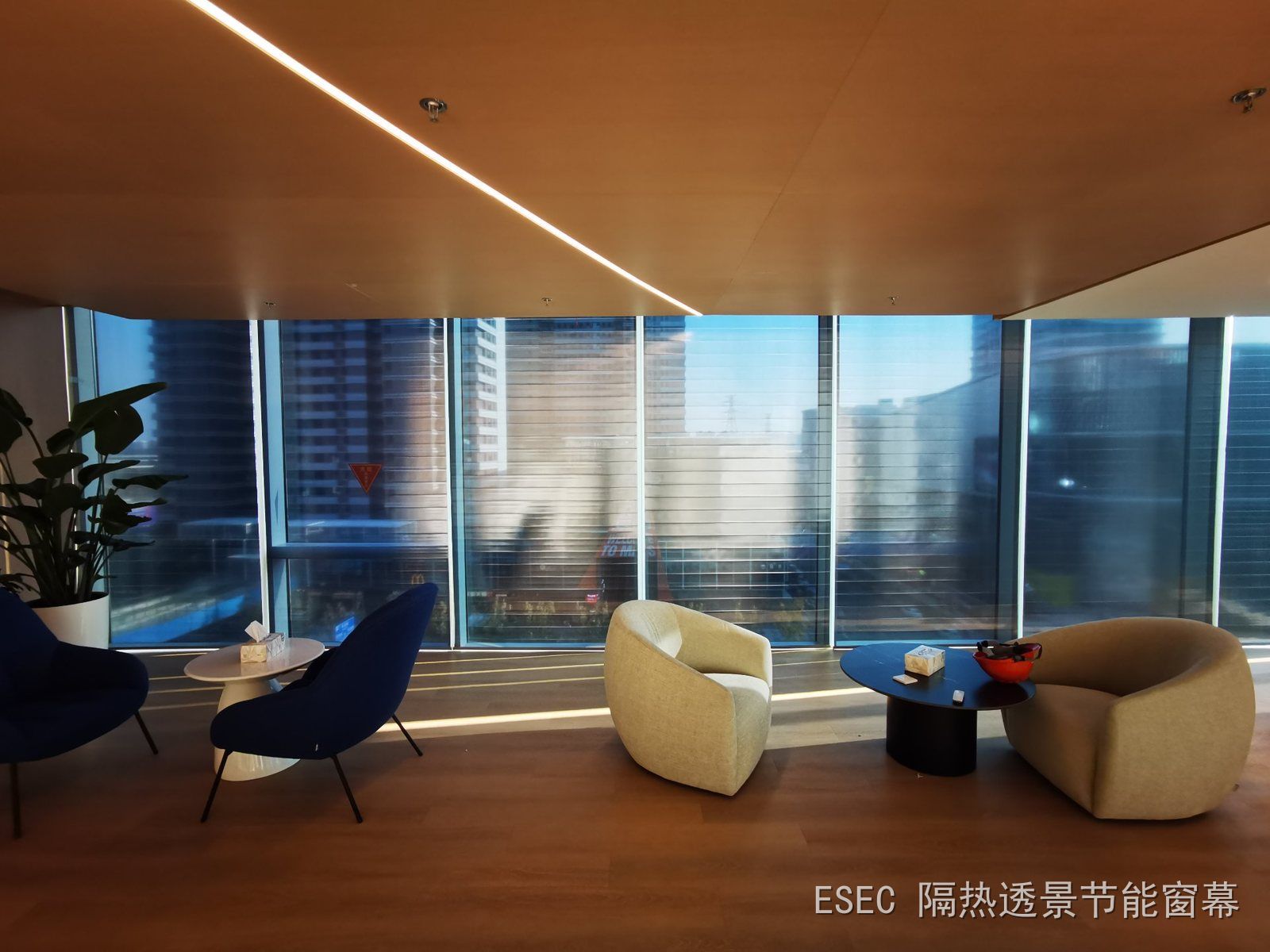
Lowering the curtain does not mean giving up the view — through the film, streets and buildings outside remain clearly legible. That is the essential difference between this curtain and a conventional shading fabric.
4. What performance does it deliver? Three sets of data
Laboratory testing: tested to GB/T 2680-1994, one window curtain film recorded a shading coefficient of 0.08 and a total solar energy transmittance of 6.9% (a solar heat gain coefficient of about 0.07) — a good level of thermal insulation for the industry (values vary between manufacturers).
On-site measurement: from 23 to 25 April 2024, a before-and-after comparison was carried out on the curtain-wall glazing of an office building in Beijing:
| Metric | Before | After |
|---|---|---|
| U-value, W/(m²·K) | 2.06 | 1.64 |
| Solar heat gain coefficient (SHGC) | 0.58 | 0.14 |
| Light transmittance reduction factor | 0.36 | 0.07 |
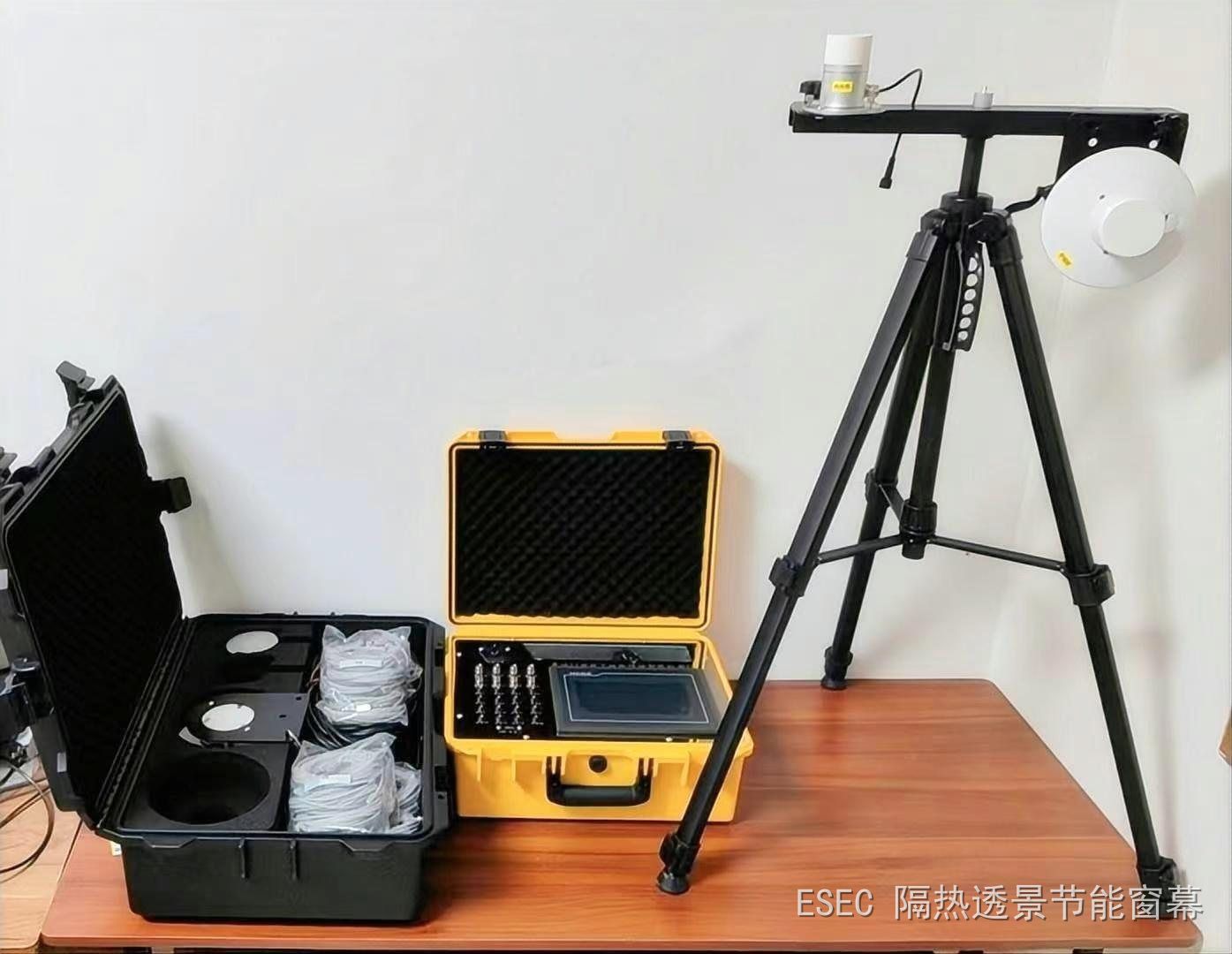
Note: this measurement method is still a research-grade test; results are for reference only.
Annual energy simulation: a north-south office building of 33,000 m² in Beijing (a cold-zone city) was modelled with DesignBuilder for hourly annual energy simulation (cooling season from 1 May to 30 September, heating season from 1 November to 31 March the following year); the thermal parameters for the curtain’s raised and lowered states were calculated with WINDOW — U-values of 1.74 and 2.70 W/(m²·K) and SHGC values of 0.22 and 0.70 for day and night respectively. The results:
| Scenario | Summer cooling load (10⁴ kWh) | Summer saving | Winter heating load (10⁴ kWh) | Winter saving | Annual load (10⁴ kWh) | Annual saving |
|---|---|---|---|---|---|---|
| Baseline | 258.50 | — | 148.69 | — | 407.19 | — |
| With the energy-saving window curtain | 156.83 | 39.33% | 141.44 | 4.88% | 298.27 | 31.58% |
With the curtain installed, the annual load falls by about 1.09 million kWh. Assuming a coefficient of performance of 3.0 for the air-conditioning system, that is roughly 363,000 kWh of electricity saved each year — about 11 kWh per square metre per year. Against a current office-building consumption level of around 100 kWh/(m²·a), that means around a 10% reduction in the building’s overall energy consumption.
5. More than energy: keeping the daylight
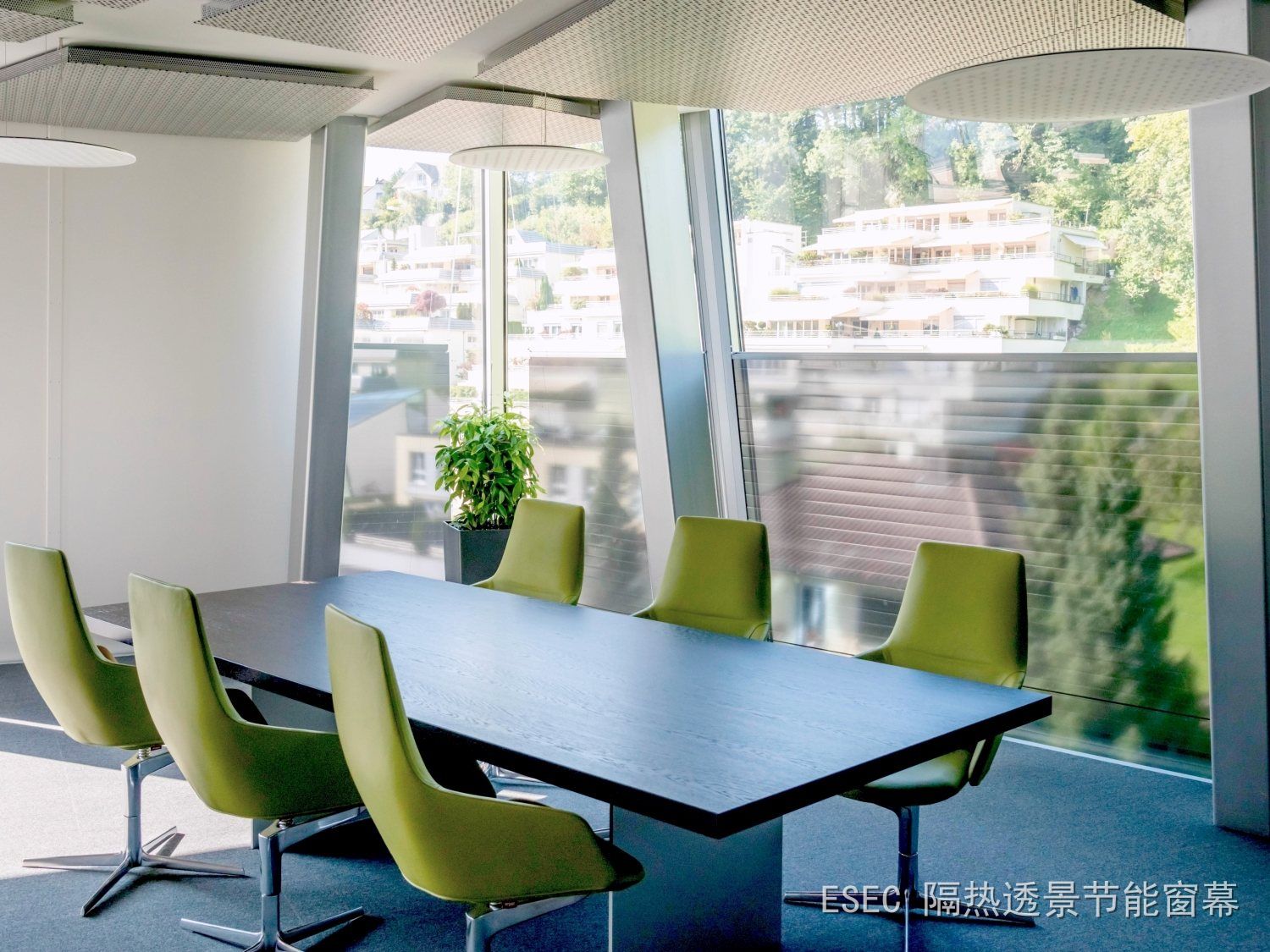
Conventional shading fabrics have low light transmittance, so rooms often need artificial lighting in daytime once the blind is down. The window curtain has higher visible-light transmittance: with the curtain lowered it blocks direct sunlight while still admitting good daylight. That is one reason it is gaining ground in office settings.
Conclusion
Moving from “fixed” to “adjustable”, the energy-saving window curtain offers a new approach to retrofitting existing glass curtain walls: spectrally selective reflection through a three-layer film, two mounting options to suit different curtain-wall constructions, and a day-night raise-and-lower routine that shades in summer and admits heat in winter — maximising energy savings while safeguarding indoor thermal comfort and daylight.
As a dynamically adjustable translucent envelope element, the window curtain turns the thermal performance of windows and curtain walls from a set of fixed numbers into a “live” performance that can be tuned to the scenario in real time. For the vast stock of existing glass curtain walls, this class of retrofit is worth watching.
Further Reading · ESEC Energy-Saving Window Curtain by Zhongke Energy
Zhongke Energy’s view-through energy-saving window curtain range (Huineng ESEC 2.5 / Huilang ESEC 10 / Huiyuan ESEC 100): 88% total solar reflectance, a UV blocking rate of 99% or above and 96.5% near-infrared reflectance; after retrofit the whole-window U-value is 1.9–2.3 W/(m²·K). Want to know how much your own curtain wall could save? Run the numbers with our online energy-saving calculator.
Source and notes: this article is an industry technology feature. Its core facts and data are adapted from the article “Energy-Saving Window Curtain: Lower Energy Consumption, Better Comfort” republished in the Industry News section of the Beijing Building Decoration Association website (originally from Door & Window Wan Yu); the data is not our own. All testing, measurement and simulation figures are third-party industry results provided for reference only and do not constitute a performance commitment; the performance parameters of Zhongke Energy products are those stated in the specifications tables and third-party test reports on this website.