

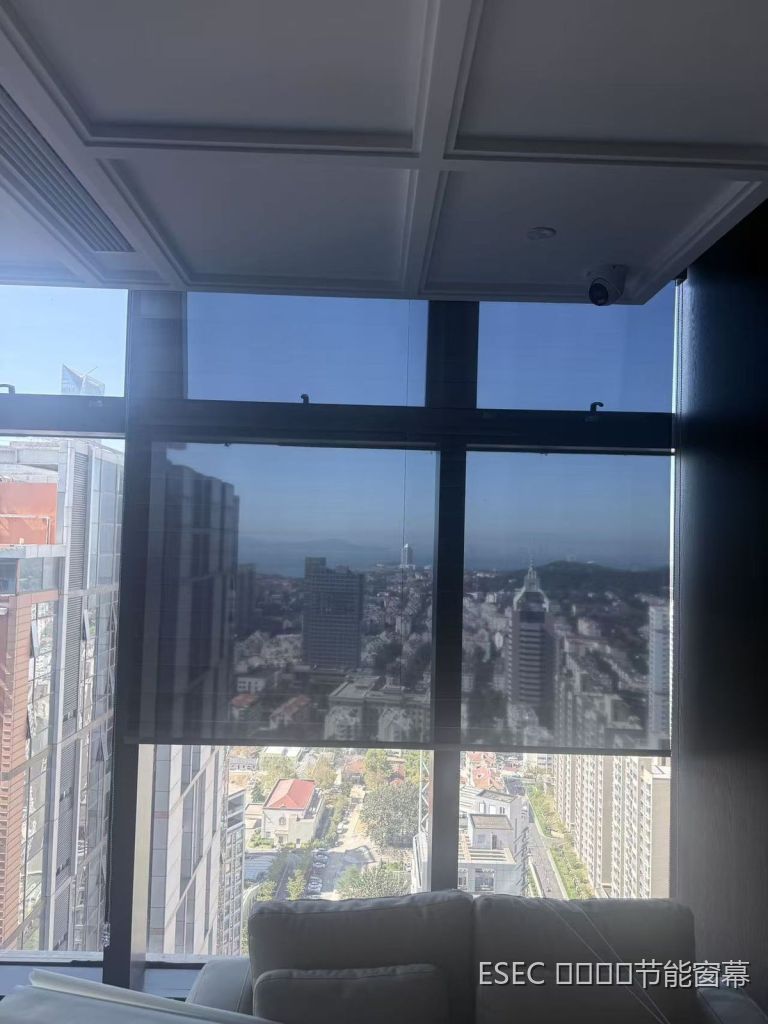
When it comes to retrofitting glass curtain walls, the industry talks a great deal of hype and shows very few test reports. Today we lay out the third-party test reports issued by a national building research institute and explain three numbers in plain language — master these three and you will have a firm basis for judging any supplier’s proposal.
Number One: Heat Transfer Coefficient (U-value)
The U-value measures a window’s insulation performance in W/(m2.K); the lower the value, the better the insulation. It is the main gate through which a building loses heat in winter and gains it in summer. According to our third-party test report (No. BETC-T5CC-2025-00044), adding the One-Way View-Through Energy-Saving Window Curtain can improve the whole-window U-value by 26%–50% — the plainer the existing glass, the greater the headroom: about 26% for triple glazing, about 35% for standard double glazing, and up to 50% for single-pane clear glass.
In plain terms: every step down in the U-value means a little less warmth escaping in winter and a little less heat coming in during summer.
Number Two: Shading Coefficient (SC)
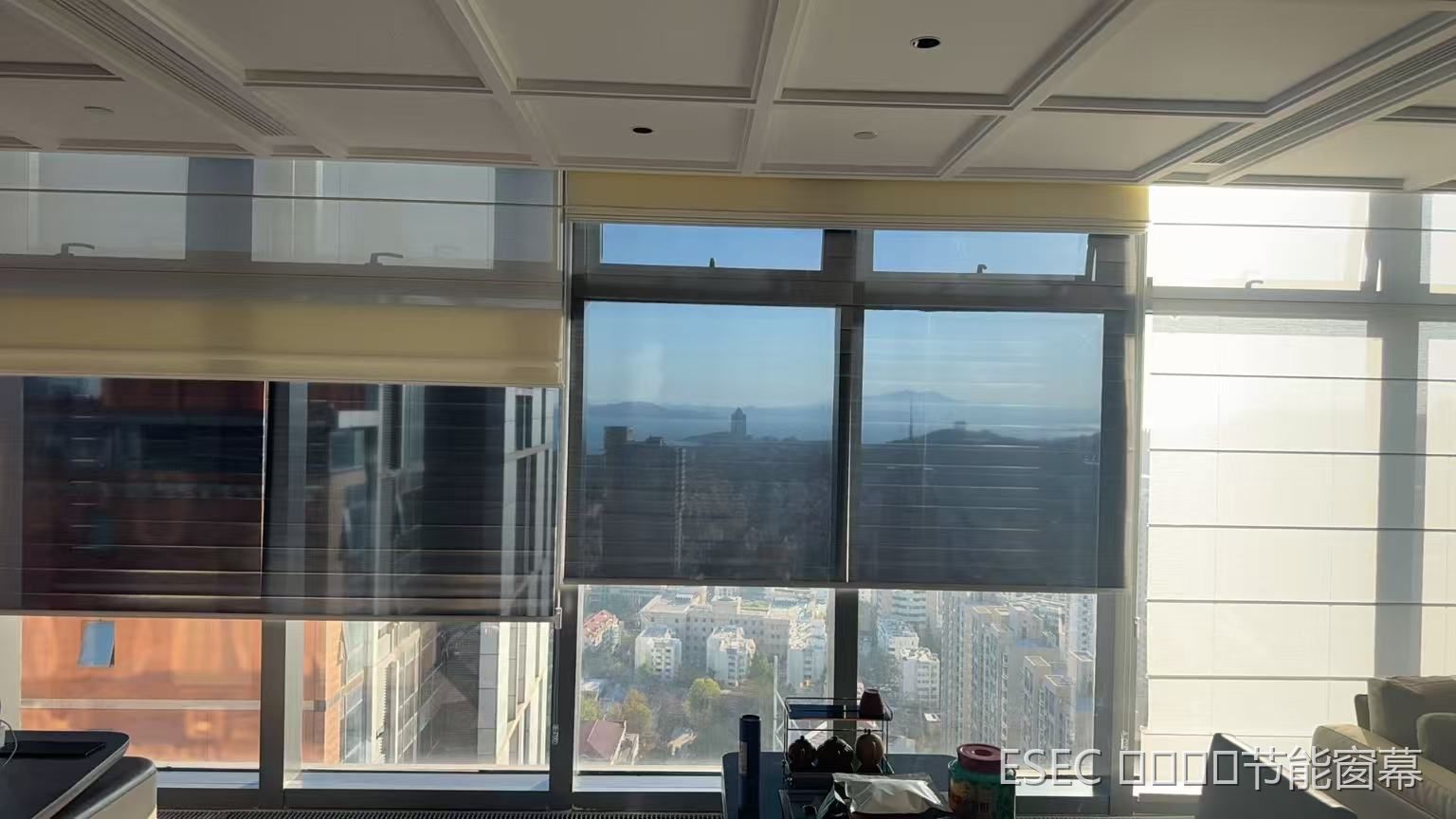
SC measures how much of the sun’s heat passes through the glass; the lower the value, the better the shading. Our tested figure is SC 0.14 (report WT2025E09B00609) — roughly nine-tenths of solar radiant heat is blocked before it enters, while visible light still comes through, so the view from your desk stays clear.
Number Three: 88% Total Solar Reflectance
This is the curtain fabric’s own capability: it reflects 88% of the solar energy striking its surface back outdoors (97% infrared reflectance and a 99.9% UV blocking rate, both third-party figures). Note one key point: the reflection happens on the fabric surface inside the glass, so heat is turned back before it ever enters the room — the essential difference between ‘block first, then dissipate’ and ‘let it in, then use the air conditioner to move it out’, the latter of which costs you electricity.
Why ‘third-party’ matters
All three reports come from laboratories within the national building research institute system, and the numbers can be checked and verified in full. Many figures on the market come from ideal laboratory conditions or from suppliers citing one another, leaving owners unable to verify them. We insist on quoting only what the test reports say: if we can give you the number, it stands up to questioning.
An Often-Overlooked Metric: Reversibility
This curtain is installed on the interior side of the glass. It does not remove the original windows and does not touch the curtain-wall structure; a typical floor is finished in a day, and it can be adjusted or removed at any time. For leased properties this is a low-cost way to trial a solution; for owners it is a lightweight retrofit that touches neither the structure nor fire-safety approvals.
Conclusion
To evaluate any curtain-wall energy-saving proposal, ask first for three things — a U-value test report, a shading-coefficient test report and a material reflectance test report — each with a report number. With the numbers in hand, the quality of a proposal is plain to see.