

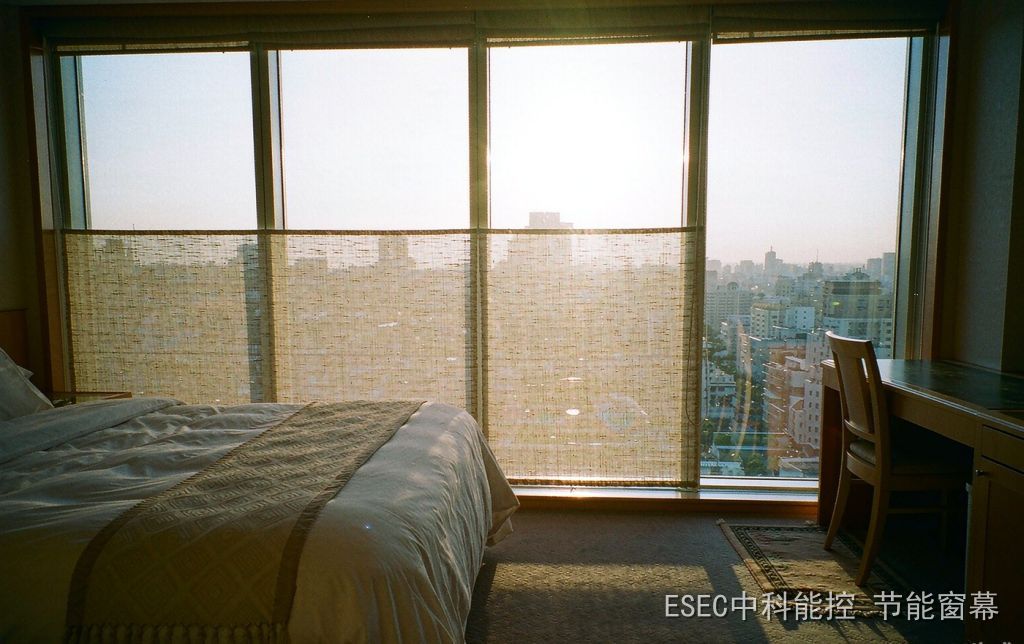
At the Monday morning meeting the director of operations put three screenshots on the wall. All three were guest reviews, all three below three stars, none of them long:
Back in the room at two in the afternoon and it was an oven. Air conditioning on the lowest setting made no difference.
Stuffy. Close the curtain and the room goes dark, open it and the sun comes in. You cannot have both.
Three nights here, and every afternoon I ended up sitting in the lobby.
Engineering pulled every air conditioning work order from those days: supply air at 12 degrees Celsius, filters just cleaned, refrigerant pressure inside the normal band, not one unit reporting a fault. The equipment was fine and the rooms were hot. Both statements being true at once is the hard part of this story.
1. The review dashboard speaks before the work order does
1.1 Three words, again and again
Rank two months of bad reviews by word frequency and strip out service, noise and breakfast, and what is left clusters on three words: hot, stuffy, afternoon. Put together, they point not at equipment but at orientation and time of day.
Huake Data Research Institute published a figure worth remembering: roughly 70 percent of negative reviews were already voiced during the stay. The guest told the front desk, made a phone call, or complained to a colleague in the corridor. Nobody caught it, and only after checkout did it become that public line of text. What the hotel lacks is usually not repair capacity but a mechanism for turning vague feedback such as “hot in the afternoon” into the language of building physics.
1.2 A work order that can find nothing wrong
The technician measures supply air temperature. The guest, sitting on the edge of the bed, receives radiant heat on the skin. There is a gap between those two measurements. Thermal comfort is governed largely by the temperature of the inner surfaces around you, and glazing inner surface temperature shifting by a few degrees is enough for a person to feel it. The article on inner surface temperature and comfort works through the mechanism; the conclusion is enough here: normal supply air does not mean a comfortable room.
So a loop forms. The guest reports heat, the front desk dispatches, the technician measures normal supply air, the ticket is closed, the guest stays hot, and the next review reads the same. The missing step is somebody standing at the window with the back of a hand against the glass for thirty seconds.
2. Translating three words into physics
2.1 Hot in the afternoon: the load comes through the window
The problem with a west-facing room is a problem of timing. In the morning the sun is on the east side and a west-facing room takes in almost nothing, the cooling load is low, everything behaves. After three in the afternoon the sun swings round, hits the glass square on, and solar heat gain stacks on top of the envelope load until the instantaneous figure can double. The air conditioning is not broken. Its opponent has changed.
This is often misread as an undersized unit, followed by a larger model or a new compressor. The money goes out and the afternoons stay hot. Shading is not insulation either: a curtain blocks visible light while the heat comes through regardless, because shading and insulation are not the same thing. Only two kinds of action work – keep the heat at or outside the glass surface, or carry away the heat that has already entered with more air movement. The first belongs to the envelope, the second to the equipment, and the two are routinely confused.
How large the difference can be was recorded hour by hour in a west-facing office on the day of its retrofit, from morning to dusk. That timeline serves as a reference here; this article does not repeat the measurement, it only borrows the finding: the same window is two different rooms before and after noon.
2.2 Stuffy: guests want more than cool
The second word is harder. A blackout curtain does stop direct sun, and the room goes dark at once, so the guest switches on the lights, and the lights add heat. The fabric sits tight against the glass, the air at the window stops moving, and anyone at the desk feels stuffy. It is a dead end: cool means dark, bright means sun. The trade-off between shading and view has never had a good answer, because conventional shading products can only pick one side of it.
There is a further cost that gets forgotten. Once a curtain seals the window, the temperature difference condenses moisture on the glass, especially in winter and in the plum-rain season. Sealing a window to keep heat out often buys a different complaint: water on the sill, beads on the pane.
2.3 One word, one quantity, one action
Put on paper, the translation from review language to engineering language looks like this. The point of the table is to make the front desk, engineering and operations read the same numbers instead of arguing from three sets of impressions.
| What the guest wrote | The physical quantity behind it | What can be done on site | What to track |
|---|---|---|---|
| “An oven at two in the afternoon” | Solar heat gain stacked on envelope load; the west window instantaneous load doubles in the afternoon | Measure inner surface temperature with the back of a hand, log an hourly curve from 14:00 to 17:00 | Same room, same hours, temperature difference before and after |
| “Close it and the room goes dark” | The conflict between visible light transmittance and shading coefficient | Use a shading layer that keeps the view, so daylight does not need electric light | Daytime lighting consumption; count of “too dark” complaints |
| “Lowest setting made no difference” | Normal supply air, but radiant heat never intercepted | Measure first, discuss equipment capacity afterwards | Air conditioning run hours; electricity per available room |
| “Every afternoon in the lobby” | Sellable hours in the room are compressed, so part of the day is unsellable | Locate the problem by floor, orientation and time band | Repeat business on that floor; share of time-specific complaints |

3. Why the solution landed on the room side
3.1 Replacing the glass: the numbers do not work
The most direct route is new glazing – double-silver low-e insulating units, or triple glazing. Technically it works. Commercially it usually does not. Replacing glass means dismantling curtain wall panels, and one bay costs at least two or three nights out of service; work a floor at a time and a month is gone. Room revenue is counted by the night, and a night out of service is a night of lost income, before counting the noise that disturbs guests on the same floor. Add a lease still running, a facade still inside its warranty, and structural calculations that cannot simply be revised, and the barrier turns out to sit in time and title rather than in engineering.
3.2 External shading: the facade will not let you in
External shading performs best because it stops heat outside the glass and saves even the heating of the pane itself. But fitting external shading to an existing high-rise means clearing facade management, fire and wind load reviews, and in many city centres even an external bracket is refused. Precast connections in older buildings may not carry the load either. The result: external shading is common on new-build drawings and rare in hotel retrofits.
3.3 The room side: no structure, no closure, fully reversible
What remains is a layer on the room side of the glass. Its technical requirement fits in two sentences: block solar heat, and keep the view. Blocking neither is pointless, and blocking the view means sealing the window, which earns a complaint the next morning. An earlier hotel installation in this programme was in a gym, and that record is about how the room felt. A guest floor is a different set of books – occupancy, reviews, room rate – so the measures below are all commercial.
This hotel chose a heat-insulating see-through shading screen. A low-e metallised fabric sits on the room side of the glass with a ventilated air gap between fabric and pane, no bonding and no sealant. A compression head rail, clamping side rails and a weighted bottom bar hold it in place: no drilling anywhere, nothing entering a curtain wall component. By day the fabric reflects around 88 percent of solar heat, rejects 96.5 percent of near-infrared, blocks more than 99 percent of ultraviolet, and passes 28 percent of visible light (GB/T 2680 test report), with a shading coefficient of 0.14 (JGJ/T 151-2008), colour rendition above 92 percent, B1 fire performance for the fabric (GB 8624-2012) and a 15-year design service life.
For a hotel the valuable property is not the data sheet but the installation method. A room takes two to three hours, so it can be sold the same day; nothing touches the facade or the structure, and at the end of the lease the whole width comes down, leaving the deposit and the handover untouched. The trade calls this reversible shading retrofit, and the logic was always about leaving the tenant and the operator a way back.
4. Three tables to watch after the retrofit
4.1 The energy table: what gets saved sits inside the mix
In an October 2026 article in China Tourism News, Wang Zhiyong, dean of the Wanda Hotel Design and Research Institute, gave a reference energy mix for hotels: air conditioning typically accounts for 40 to 60 percent of energy cost, hot water 15 to 25 percent. His recommended sequence was energy audit first, sub-metering second, equipment last. That order is worth copying, because almost every hotel starts with the equipment.
There is also a widely used industry estimate: in summer, each degree Celsius added to the setpoint cuts consumption by roughly 6 to 8 percent. That is a range, sources differ, and it should be read as an order of magnitude rather than a promise. What matters is not the percentage but the load curve for the same room in the same hours before and after: the area between the two lines is the electricity this layer saves. Converting that area into money follows the cost calculation done for 1000 square metres of facade, scaled by available rooms.
4.2 The review table: the weight of a tenth of a point
Meituan Institute, the research arm of the Meituan group, has estimated that every 0.1 point a hotel drops in review score reduces organic traffic on OTA platforms by 7 to 12 percent on average, with booking conversion down 5 to 8 percent in step. The reverse holds as well, though nobody volunteers their own property for the experiment. From the other direction: around 80 percent of guests filter by review score before booking and read an average of 17 reviews before deciding, according to Ctrip data cited across multiple sources.
So the number to watch on the review table is not the overall score but how often hot, stuffy and afternoon appear. The score is the outcome; the word frequency is the lesion. After the retrofit the two should move together: time-specific complaints fall, and repeat business on that floor has a chance of returning.
4.3 The rate table: do not present 11.2 percent as a promise
Chris Anderson of the Cornell Center for Hospitality Research produced a frequently cited study: on a five-point scale, each one-point gain in online review score supports an average room rate increase of 11.2 percent without materially hurting occupancy. The figure is attractive to any hotel owner, and its boundary has to be stated. It describes a statistical relationship between scores and rates, not a causal promise that a shading screen delivers 11.2 percent.
A score is the product of many things: front desk manner, bedding, sound insulation, breakfast, location, construction next door. What a screen can do is remove one persistent source of lost points, so that an afternoon room stops being a fixed supplier of bad reviews. Whether the score moves, and by how much, depends on whether the other items keep pace. Saying that plainly to an owner is more responsible than quoting a handsome number.
5. One line each for operations and engineering
5.1 Operations: tag by floor, orientation and time, not by department
Most hotels tag reviews by department – housekeeping, food and beverage, engineering. Tagged that way, “hot in the afternoon” lands on engineering, engineering tests the air conditioning, and the ticket closes. Tag by floor, orientation and time band instead, and the same review lands on floor 12, west facing, 14:00 to 17:00; three of those and a surface appears rather than a point. Changing the tagging scheme once is worth more than ten extra guest callbacks.
5.2 Engineering: measure first, build second
Before any work, do one thing. Pick the three hottest afternoons, take an infrared thermometer to the inner surface of the west-facing guest room glass, and log it hourly alongside room temperature, setpoint and supply air temperature on a single sheet. That sheet does two jobs: it proves the problem sits at the window, and it becomes the baseline for comparison afterwards. Without it, results can only be felt, and feelings carry no weight in a handover meeting.
One step gets forgotten after installation: hand the screens over to housekeeping and write how to raise them, how to lower them and when to clean them into the room inspection routine. The article on managing screens after handover records how one facilities team did it, and it can be copied directly.
6. One honest caveat
A screen is not a cure-all. It intercepts solar heat gain. It does not stop hot outdoor air leaking through gaps, and it does not replace fresh air or dehumidification. If the stuffiness in a room comes from insufficient fresh air, fix the fresh air first; if it comes from a leaking facade or failed seals, seal it first. The screen only becomes meaningful after those two.
For a west-facing floor, though, it belongs to a rare category of work: it can be done without closing the hotel, and it can be taken down afterwards. For a property that lives on its review score, that is enough.
Zhongke Nengkong (Beijing) Technology Co., Ltd. makes heat-insulating see-through shading screens fitted on the room side of glazing. By day: solar heat reflection around 88%, near-infrared rejection 96.5%, UV rejection above 99%, visible light transmittance 28% (GB/T 2680 test report), shading coefficient SC 0.14 (JGJ/T 151-2008), colour rendition above 92%, B1 fire performance for the fabric (GB 8624-2012). The low-e metallised fabric never touches the glass – a ventilated air gap sits between fabric and pane – with a 15-year design service life, a compression head rail, clamping side rails and a weighted bottom bar, no drilling, nothing entering a curtain wall component, full-width retraction and removability. Suited to west-facing guest rooms, street-front shops and interior-side curtain wall retrofits. If a floor of yours is being complained about every afternoon, or a glazing build-up sheet needs checking, send it over and we will go through it with you.