

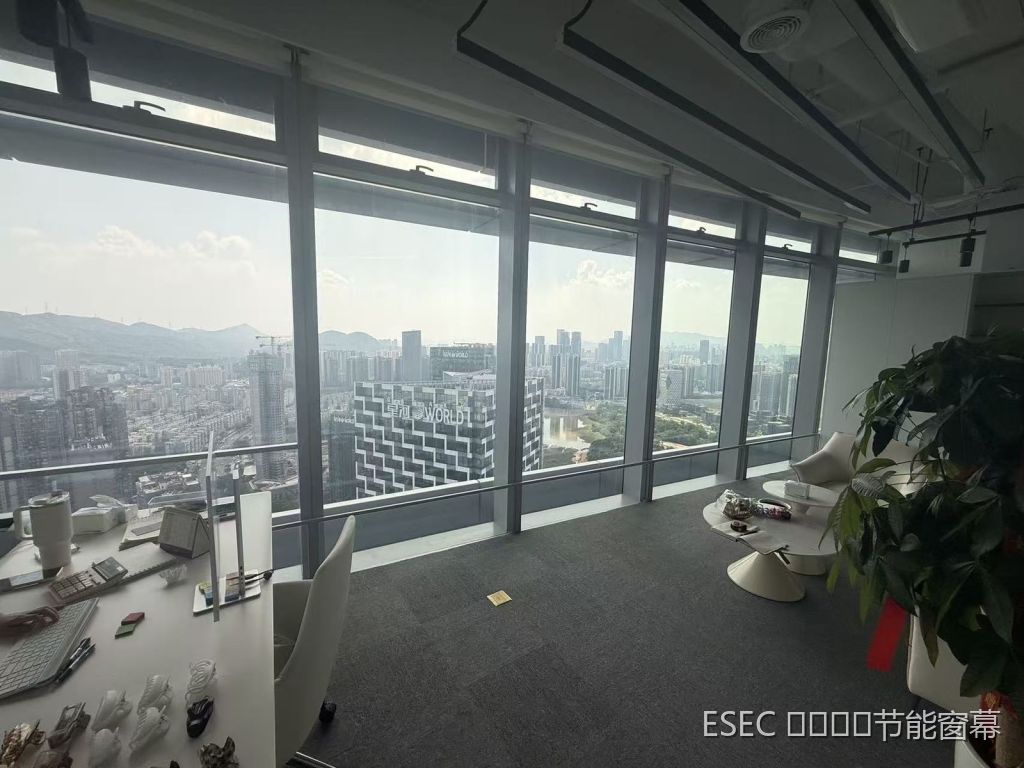
For a high-end serviced apartment curtain-wall retrofit, the owner usually has two concerns: first, touching the structure, with approvals and construction schedules hard to control; second, changing the appearance, which directly affects the tenant experience. For the Raffles Ascott Beijing apartments, the route chosen was a third way — installing the ESEC One-Way View-Through Energy-Saving Window Curtain on the interior side of the glass, with no glass replaced, no curtain wall touched and floor-by-floor installation.
The Starting Point
The apartment building makes extensive use of glass curtain walls, and air-conditioning loads in west-facing rooms stayed high through summer. According to the project team’s measurements, before installation the whole-window U-value was about 3.0 W/(m2.K) and the solar heat gain coefficient (SHGC) about 0.9 — the latter meaning solar radiant heat was coming almost straight in.
Solution Highlights
- The curtain is installed on the interior side of the glass, so 88% of the heat is reflected back outdoors before it enters the room (third-party figure for the fabric)
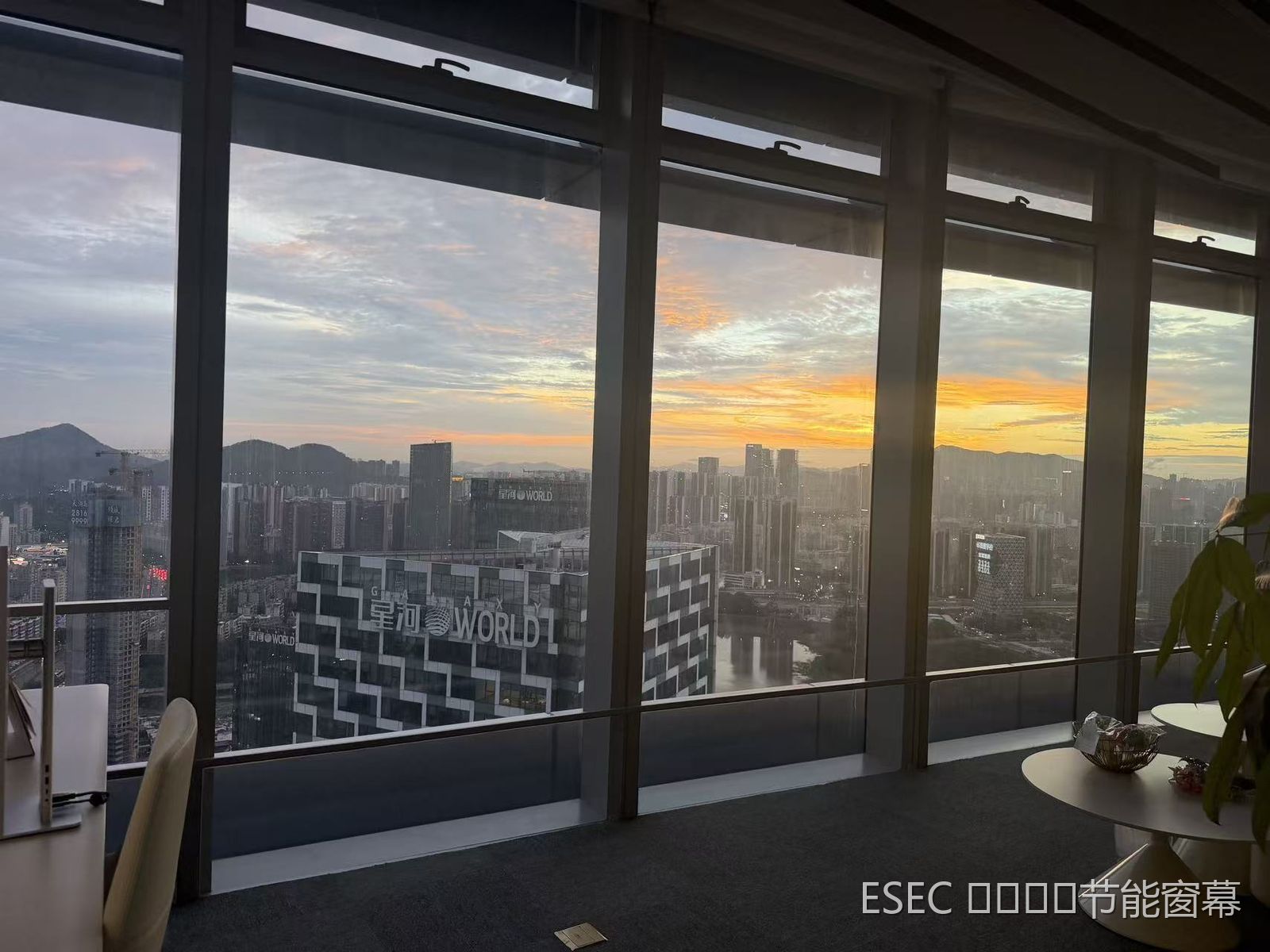
- No obstruction of the view: clear looking out by day, hard to see in from outside
- Adjustable: two settings for daylight and shading, rolled up at night
- Installed floor by floor, without disrupting the apartments’ normal operation
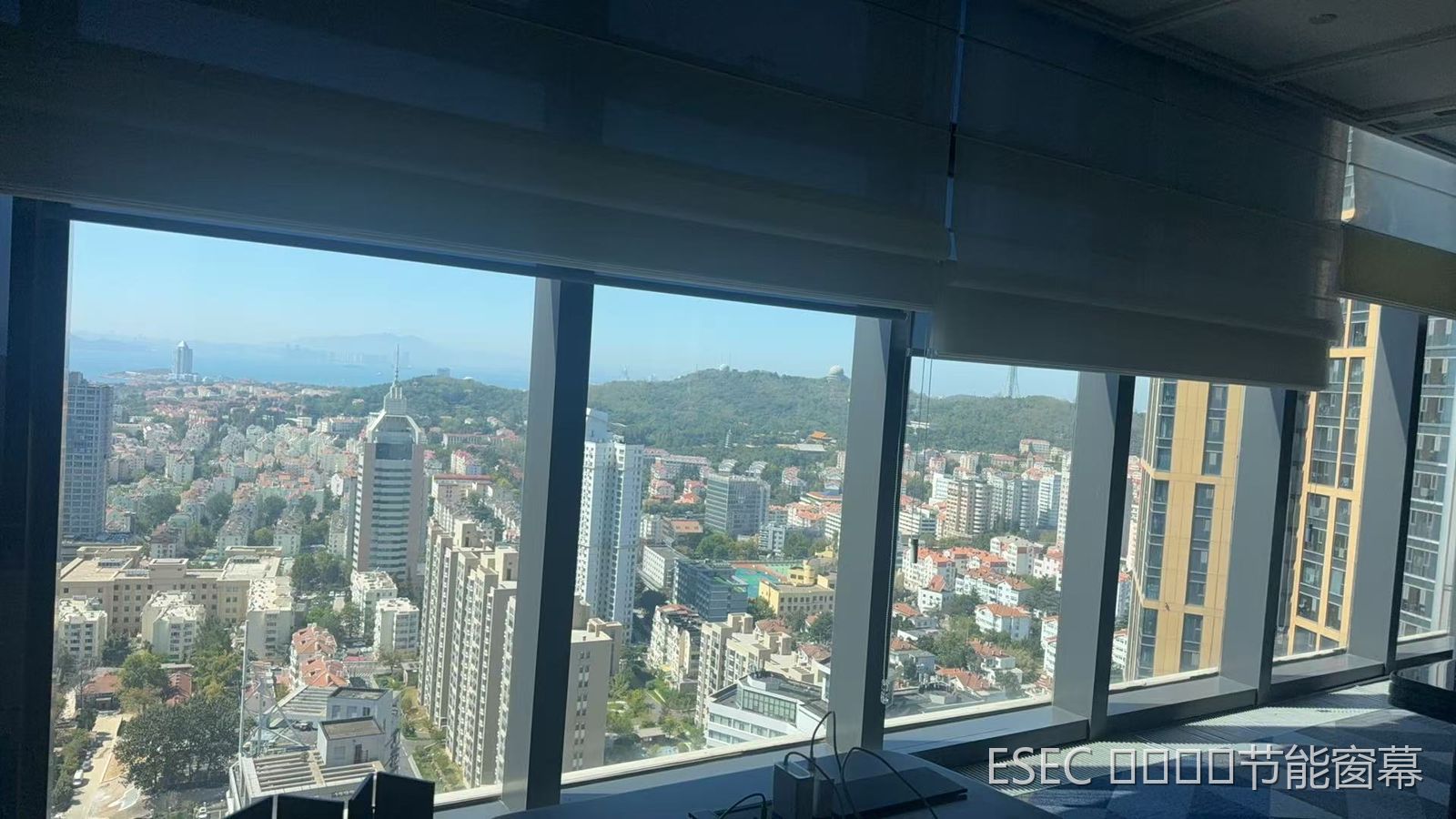
Measured Results After Retrofit
- Whole-window U-value 3.0 to 2.5 W/(m2.K) (lower is better for insulation)
- Solar heat gain coefficient (SHGC) 0.9 to 0.3
- Overall energy use down 35%, as measured by the project team
How the Numbers Add Up
A simultaneous drop in U-value and SHGC means less heat for the air conditioning to remove in summer and less for the heating to replace in winter. For a hotel-style apartment building running 24 hours a day, the annual energy reduction is amplified — which is exactly why the project team measured 35%: for buildings running around the clock, the returns on an energy retrofit are more pronounced than for a nine-to-five office.
What Similar Projects Can Learn
- For high-end apartment or hotel retrofits, prefer the interior-side approach that leaves the structure untouched, avoiding approval and closure costs
- Judge energy performance by two figures — whole-window U-value and SHGC — both backed by a test report number
- Align the floor-by-floor schedule with the property’s operating schedule; that is half of a smooth project
The figures in this project are the project team’s own measurements; details can be found on the ‘Case Studies’ page of the ESEC website.