

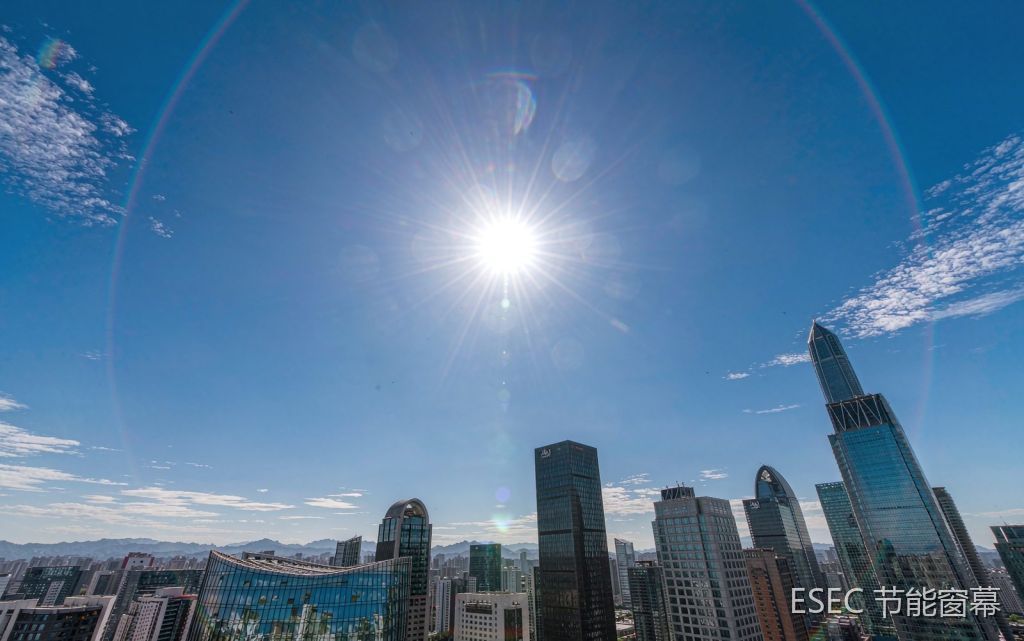
By mid-to-late afternoon, west-facing offices turn into a “greenhouse”: blinds drawn feel stuffy, blinds raised feel scorching, and even with the AC at full blast, workstations by the window stay unbearably hot while the monthly power bill keeps climbing. The problem isn’t weak air conditioning — it’s solar radiation pouring through the glass curtain wall. The Zhongke insulating view-through energy-saving window curtain offers west-sun buildings — offices, schools, hospitals — a heat-insulation and sun-protection retrofit that keeps the glass intact and the view open.
1. West-sun offices: AC can lower air temperature, but not radiant heat
The biggest heat load in a curtain wall building is not outdoor air temperature — it’s solar radiation passing through the glass. Air conditioning treats “air temperature” but cannot stop radiant heat: hence the paradox of a 22°C thermostat with a 28°C feel by the window. To suppress west-sun heat, facility managers often lower the AC for the whole building — and the entire building pays the energy bill for one sunny facade.
The more common fix — curtains and blinds — delivers shade at the cost of daylight and views: lights on all day, staff feeling boxed in, and “energy saving” achieved by sacrificing comfort. What west-sun treatment really needs is to reflect the heat back outside before it enters the room — while keeping daylight and views.
2. Why “keep the glass” is the more practical route for curtain wall retrofits
There are three mainstream routes to improve the thermal performance of existing glass. The difference is not whether they work — it’s whether they touch the original window, whether business must stop, and whether the change can be reversed.
| Retrofit route | Touches original glass? | Installation | Impact on an operating building |
|---|---|---|---|
| Replace with Low-E insulated glass | Yes — glass must be removed | Zoned shutdowns; long schedule | Affects window warranty and structure; hard to coordinate with tenants; high investment |
| Apply window insulation film | No, but permanently bonded | Work directly on the glass | Not adjustable, not reversible; residue on removal; thermal stress risk to the glass |
| Install insulating view-through energy-saving window curtain | No glass removal, no structural change | Interior-side, single-window work | No disruption to business; rolls up fully; fully reversible |
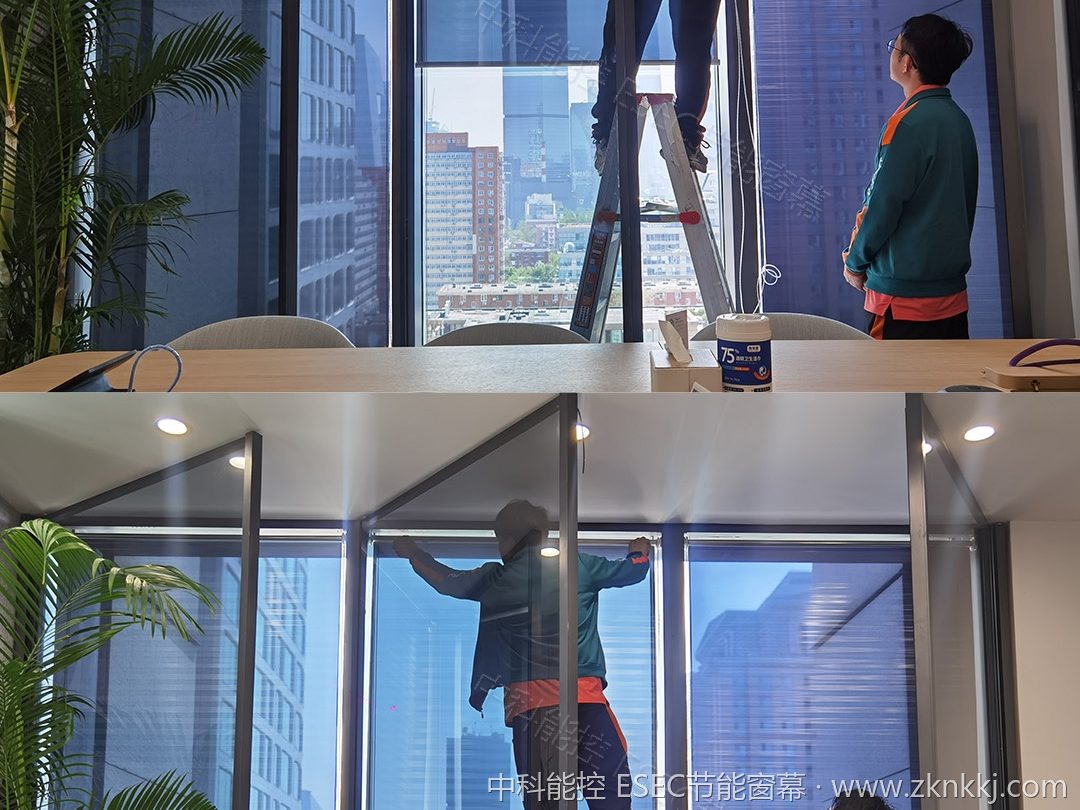
Every step of the window curtain solution happens indoors: tracks fix along the window frame or curtain wall mullions, and the film drape hangs between glass and interior — never touching the original glass or facade structure. Common spaces finish in a single day, without disturbing office work, teaching or medical services — ideal for existing buildings that cannot close.
3. Four core advantages of the Zhongke insulating view-through energy-saving window curtain
1. Hole-free optical film: reflect solar heat back instead of blocking it
The curtain uses hole-free optical film whose precision optical structure selectively reflects solar radiation: about 88% of solar heat is reflected back outside before entering the room, with 95–99% infrared reflectance and 99.99% UV blocking. Heat stays out, cooling loads drop, and summer AC setpoints can rise about 3°C — the system can even stand down at times. In winter, lowered curtains reduce indoor heat loss, lifting room temperature by about 2°C and easing condensation — one system, two-season savings.
2. Shading without blocking the view, insulation without dimming the light
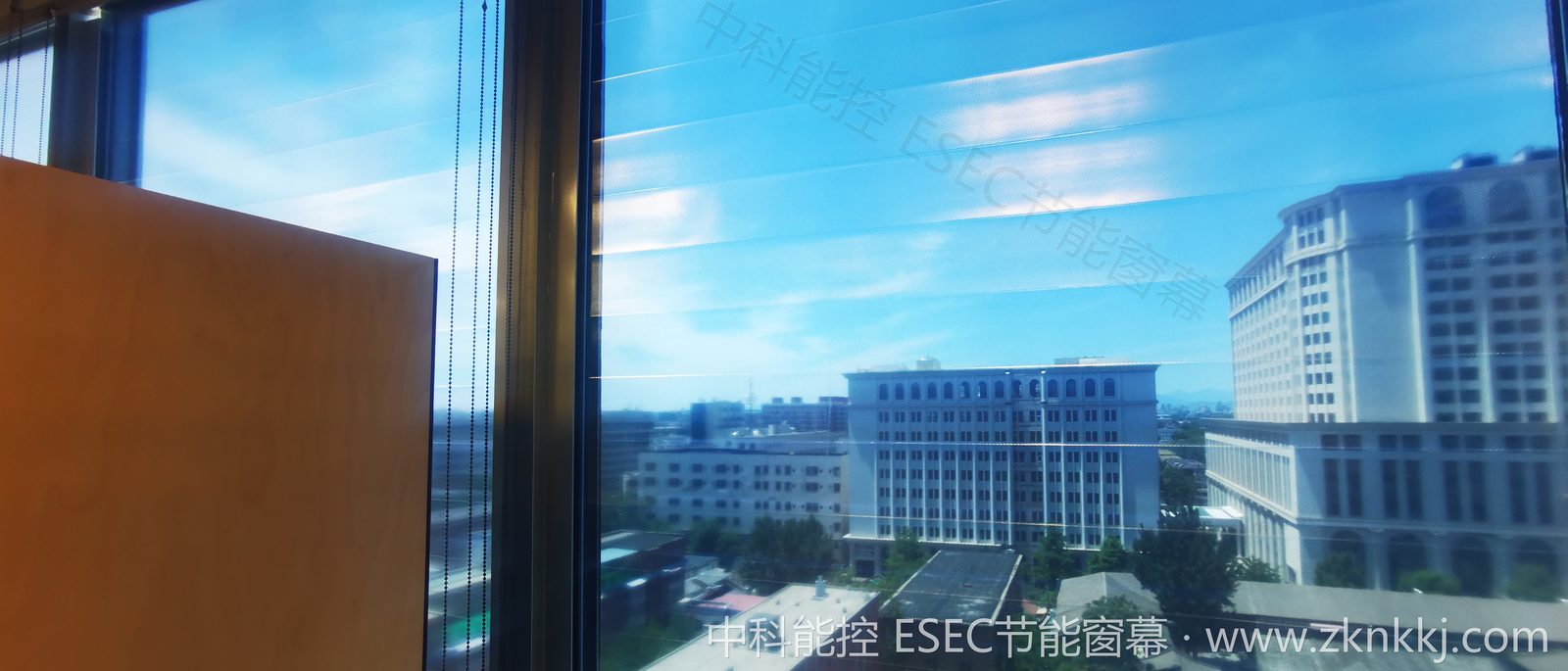
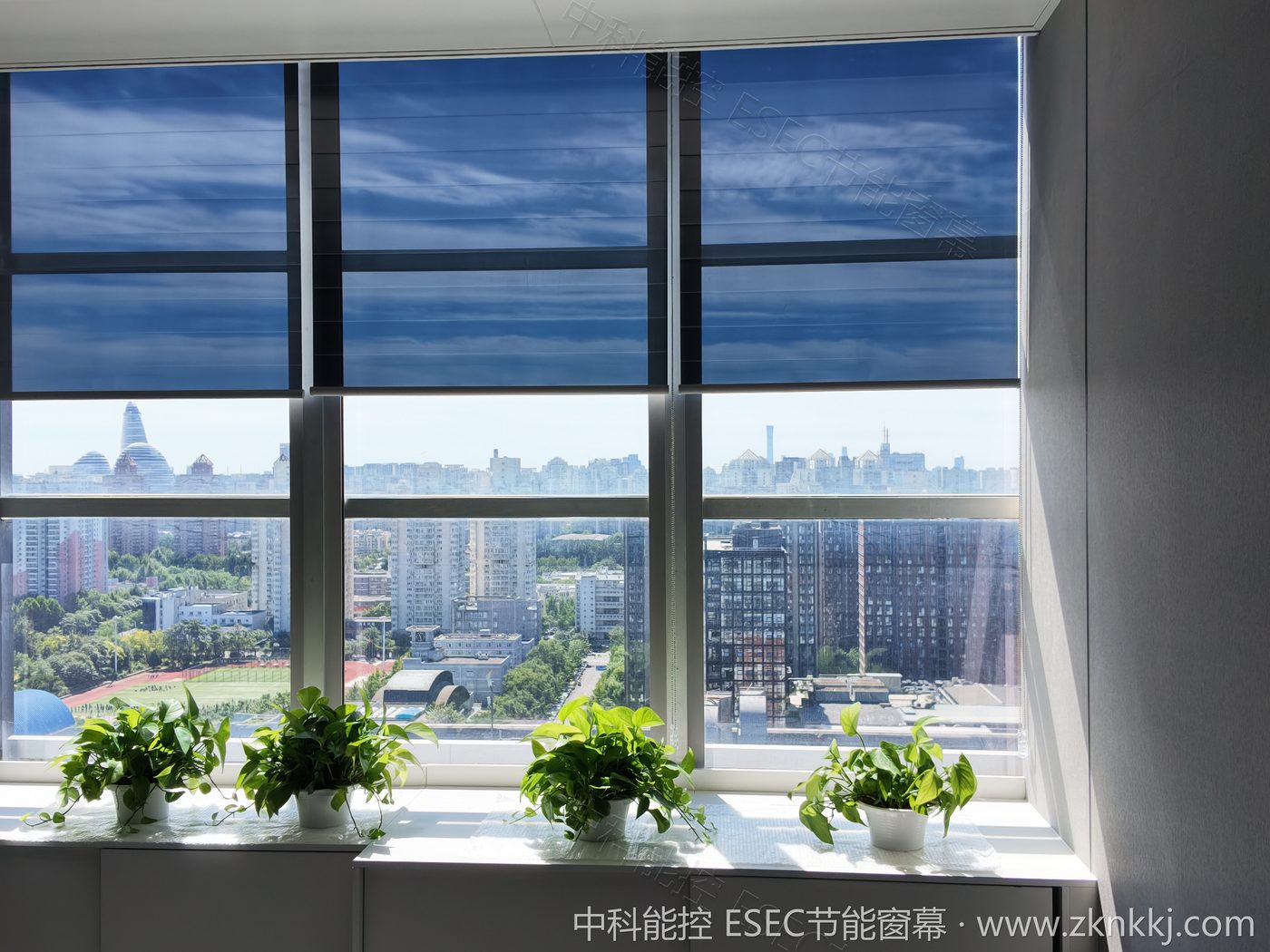
Conventional shading trades shade for view. The insulating view-through curtain reflects heat while keeping sightlines open: lowered by day, the outdoor landscape stays visible, light stays soft and glare-free, and offices don’t need daytime lighting. Shading without blocking the view, insulation without dimming the light — energy savings, daylight and views no longer compete.
3. No-glass-removal installation: interior motorized shading at one touch
The curtain runs as an interior motorized shading system — remote or smart control, one-touch lift, zoned management: lower it during west-sun hours to reflect heat; raise it in the evening and winter for views and daylight. No glass removal, no structural work, no sealant — reversible and even relocatable, easy for tenants and owners alike, and the smoothest route through property and safety approvals.
4. Verifiable data — savings you can audit
Product performance follows third-party test reports. Before retrofit we help owners record an AC energy baseline, then re-test on the same basis afterwards — savings you can calculate and see. Enter your floor area, orientation and electricity tariff in the online energy calculator to estimate summer cooling and winter insulation gains first.
4. Offices, schools, hospitals: priority scenarios for west-sun retrofits
- Offices & commercial complexes: dense workstations on sun-exposed facades and high cooling loads — curtain curtains retrofit floor by floor, facade by facade, without touching interiors or disturbing tenants, sharply cutting AC bills and carbon;
- Schools: west-sun classrooms get stuffy by afternoon and glare hurts blackboard and screen visibility — curtains insulate while keeping daylight for a stable light environment;
- Hospitals: treatment areas cannot close and wards need soft, glare-free light — interior, single-window installation fits perfectly, balancing insulation and view-through.
Under the “dual carbon” policy, existing-building retrofits are shifting from encouraged to target-assessed, with many provinces and cities adding public-building retrofits to task lists. Completing curtain wall heat-insulation retrofits the reversible, keep-the-glass way is the preferred path for existing stock. See more real projects in our project cases.
5. How to start: pick the facade first, then run the numbers
- Start with the worst orientation: retrofit the facades and floors with the most west (and southeast) sun exposure first, rather than the whole building at once;
- Set a baseline first: record 1–2 weeks of orientation-split AC electricity and room-temperature curves before retrofit, as the acceptance benchmark;
- Run the numbers first: use the energy calculator or on-site measurements for a first savings-and-payback estimate, then set the retrofit area and budget.
Zhongke Energy Consumption Control (Beijing) Technology Co., Ltd. focuses on building-envelope energy efficiency, with the insulating view-through energy-saving window curtain as its core product, offering free on-site measurement and energy-plan design. For curtain wall retrofits in offices, schools and hospitals, call 18610685811 or book via the Contact page.