

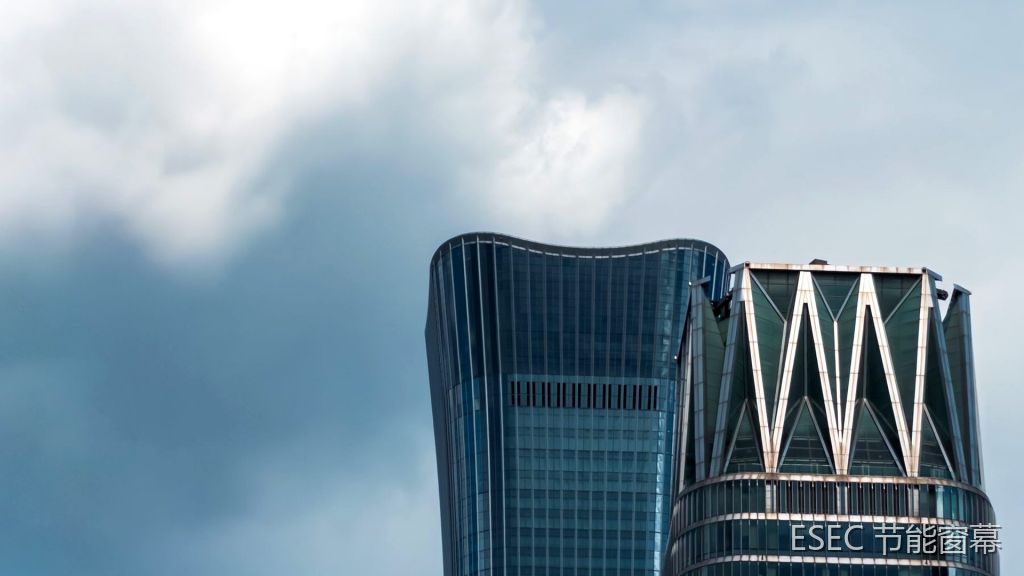
Every year from June to September we get the same feedback: the air conditioning is already set very low, yet desks near the glass still feel scorching and uncomfortable to sit at — while the property’s monthly electricity bill spikes at the same time. These two things are usually treated as separate problems, but they point to one cause: solar radiant heat.
1. Air Conditioning Lowers Air Temperature — It Cannot Stop Radiant Heat
Glass is transparent, so solar radiation passes straight through it onto the floor, desktops and people. Those surfaces absorb the radiation, heat up, and re-release the heat into the room. This produces a familiar paradox:The air conditioning is set to 22 degrees C, yet a desk by the window feels like 28 degrees C — the air temperature is on target, but radiant heat gain keeps pouring in.
Two things then happen at once: employees turn the air conditioning down further, and the property runs more units. The bill goes up while comfort is not solved, because the problem has always been at the glass, not at the air-conditioning vent.
2. Why ‘Just Close the Blind’ Is Not the Answer
Many office areas have blinds, but on-site observation shows they are open most of the time. The reason is simple: a blind blocks the view and the daylight along with the light, so the room needs artificial lighting by day — and desks by the window become even less appealing.
| Approach | Heat blocking | Daylight and view | Adjustability | Employee acceptance |
|---|---|---|---|---|
| Blinds / roller shades | Moderate — the heat has already entered before it is blocked | Markedly blocks light; lights often needed by day | Manual or motorised, but all-or-nothing | On the low side |
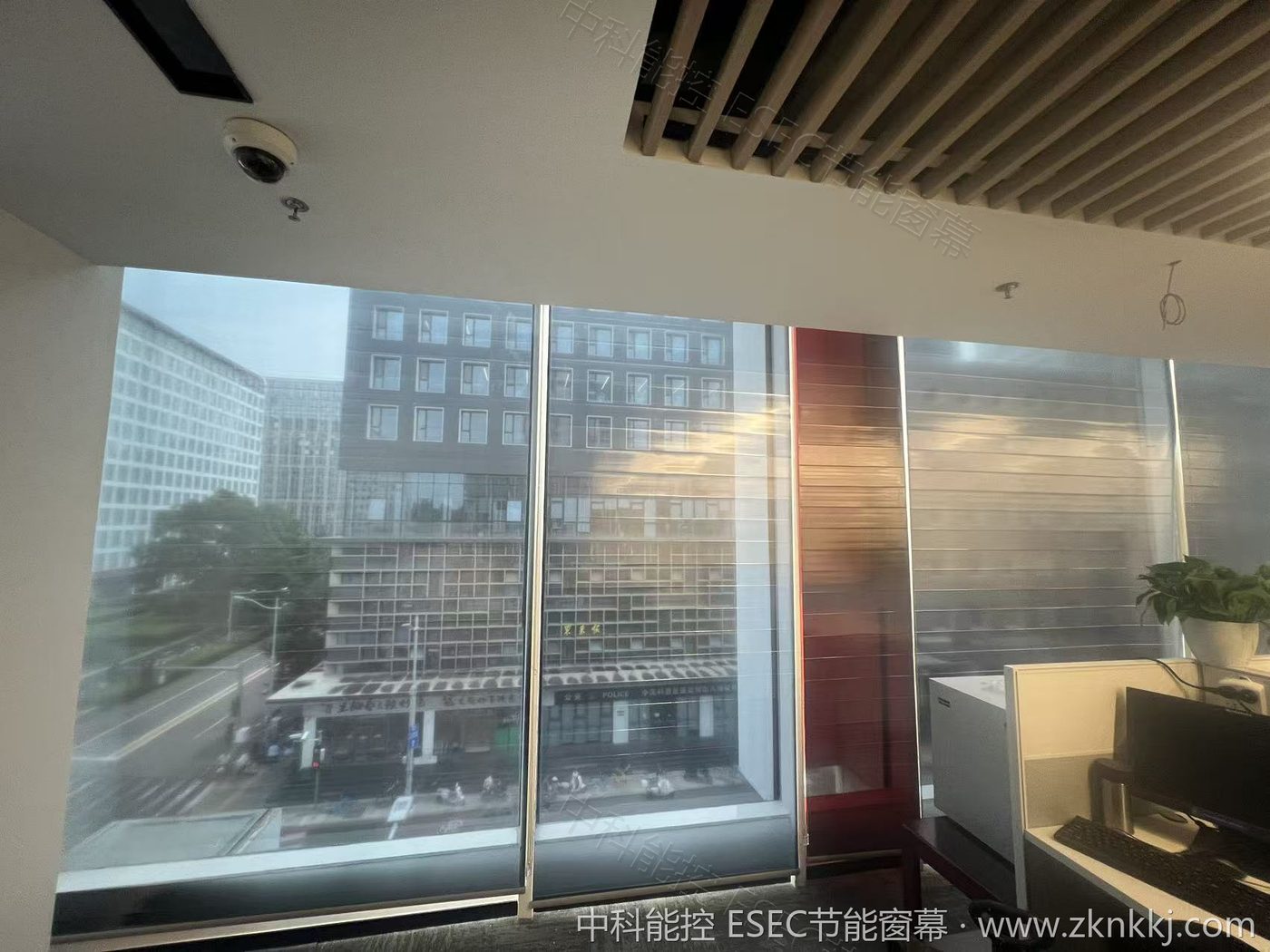
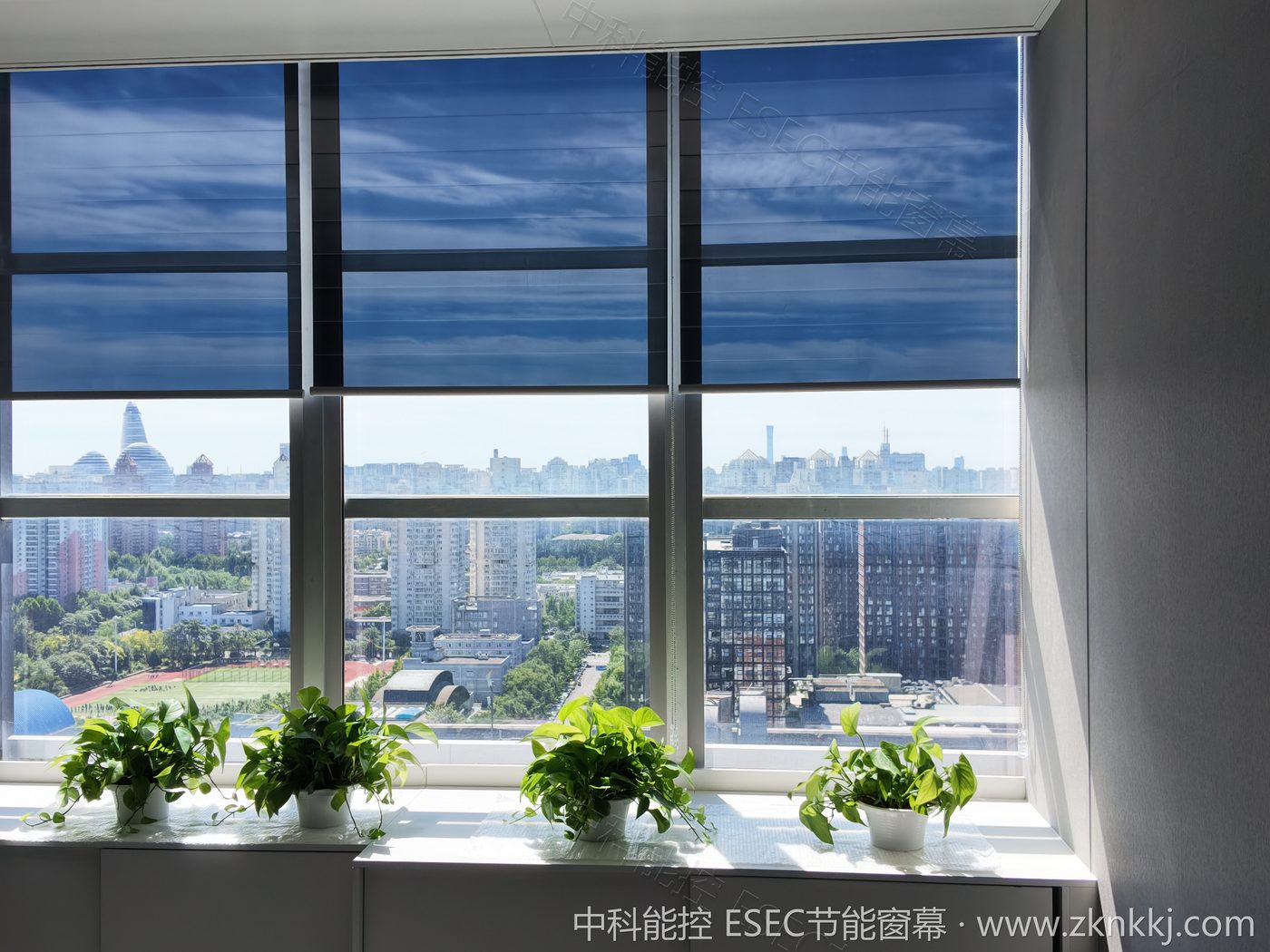
| Add a solar-shading window curtain | High — solar heat is reflected back outdoors before it enters | See-through: view and daylight retained | Lower or raise as needed | High |
The conclusion: shading, daylight and view should not be an either-or choice, especially on floors with dense meeting areas and window-side seating.
3. The Effective Route: Reflect Solar Heat Back, Rather Than Consume It
The effective approach is not to consume that heat indoors (that is the air conditioner’s job, and it costs you electricity) but tosend the heat back before it enters. On third-party test report figures, after adding the One-Way View-Through Energy-Saving Window Curtain:
- About 88% of solar radiant heat is reflected back outdoors, sharply reducing heat gain indoors;
- the summer air-conditioning set point can be raised by about 3 degrees C, it can be switched off at times, and air-conditioning energy use falls by about 35%;
- the inner glass surface is cooler, markedly easing radiant discomfort at window-side desks;
- UV blocking rate 99.9%, reducing ageing and fading of furniture, carpets and equipment.
‘Adjustable’ is the key to this solution: lower it when you need shade, raise it when you want the view — shading with a view, even in daytime, which is what makes employees willing to use it.
4. Three Minutes to Work Out Your Floor’s West-Facing Numbers
A rough estimate takes four steps, with no specialist software:
- (1) Count the sun-exposed glass area (m2) — usually concentrated on west- and south-west-facing elevations or street-facing corners;
- (2) Record how the air conditioning runs during the west-facing hours (set point, number of units on, duration);
- (3) Take your electricity tariff and the length of the cooling season to estimate the annual cost of that load;
- (4) Use ‘88% solar heat reflectance, set point up about 3 degrees C’ to model a before-and-after comparison.
Note that orientation, floor, glass parameters and air-conditioning systems vary widely; the estimate should be cross-checked against measured data after the retrofit and is not recommended as the sole basis for an investment decision.
For a quick estimate based on floor area, orientation and electricity tariff, use the savings calculator on our homepage.
5. An Action Checklist for Admin and Facilities Managers
- Identify the two or three orientations and floors generating the most complaints; there is no need to retrofit the whole building at once;
- Record a one-week baseline: indoor temperature curves during the west-facing hours plus the matching electricity bills, as the basis for later acceptance;
- Work zone by zone: window-by-window, without disrupting normal work, using weekends and evenings;
- Re-measure on the same basis after the retrofit, turning ‘it feels better’ into comparable data you can put in a monthly report.
For an on-site measurement and calculation, call +86 186 1068 5811.