

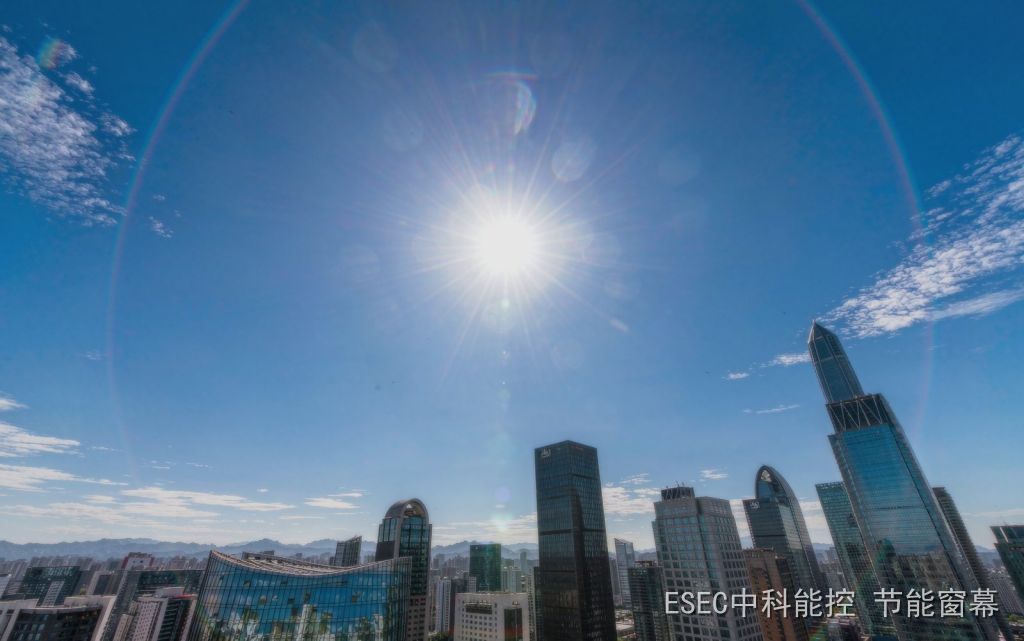
When summer heat and glare become unbearable, the first instinct for many homes and offices is to stick a film on the glass: cheap, quick, and seemingly effective. But after two or three years you find out — film is not a one-time fix. It simply sticks the trouble onto your window.

1. Four drawbacks the sales pitch rarely mentions
1. Adhesive residue. Film ages and turns brittle. When you finally peel it off, the glue layer stays behind, clinging to the glass. Alcohol, adhesive remover, repeated scrubbing — the sticky streaks remain, and even professional cleaners dread it.
2. Persistent odor. Under direct sun, the film and adhesive release smells that make a room feel like a poorly finished show flat. Days of open-window ventilation barely clear it.
3. “No glue, no formaldehyde” is not a joke. Film relies on adhesive, and adhesives inevitably release VOCs and formaldehyde-class compounds. Vendors may say “eco-friendly”, but the glue keeps aging under UV and heat — and indoor air quality pays the price year after year.
4. Dim days cost you light. Film has a fixed transmittance. On overcast days and in winter, when you actually want sunlight, it still blocks a share of the light — rooms turn gloomy and lamps switch on earlier. A “10-year warranty” often means the glue fails and the film yellows long before the decade ends.
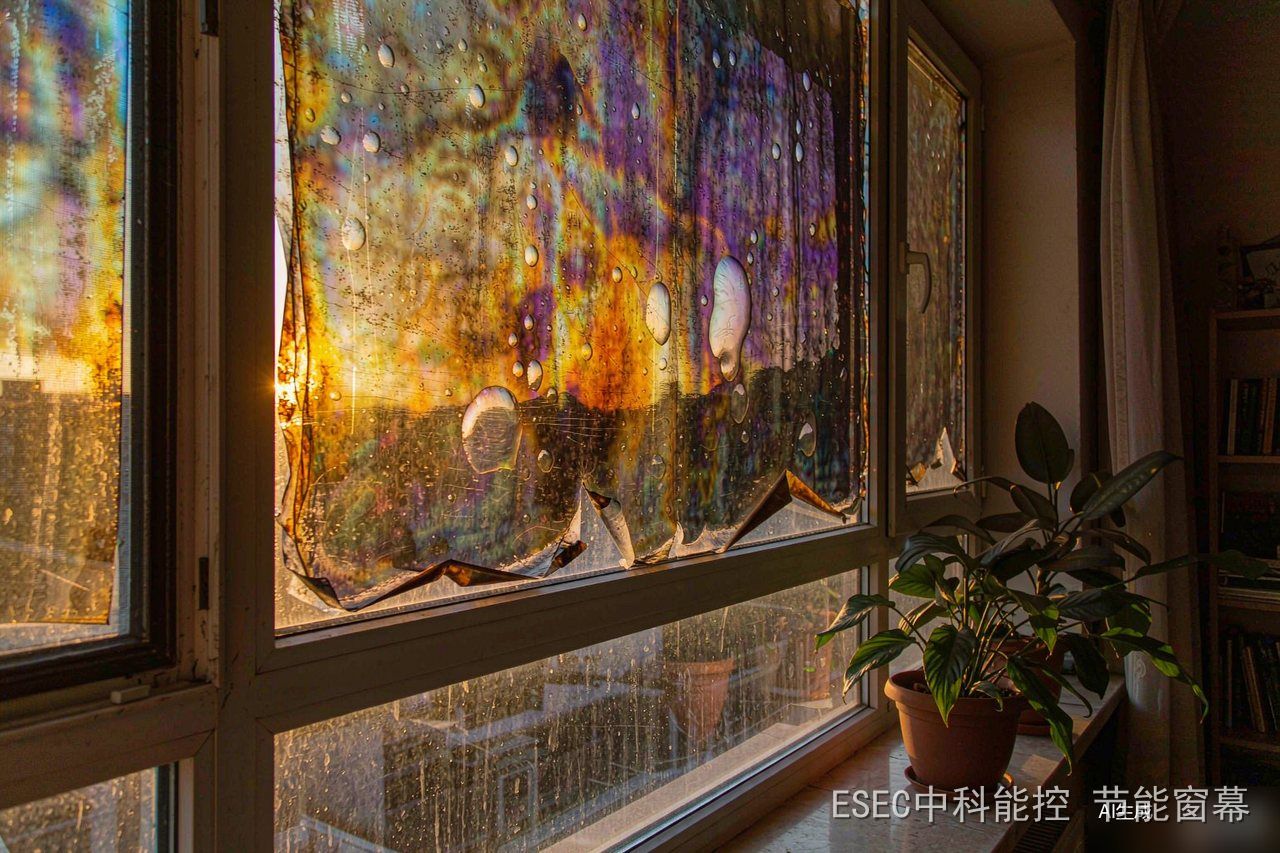
2. The hidden risk: film raises the odds of glass breakage
Architectural glass — tempered glass in particular — already carries an inherent spontaneous-breakage rate, and film amplifies it:
- The film’s thermal expansion coefficient does not match the glass: it heats and expands by day, contracts by night, forever tugging at the pane;
- With film, the glass absorbs more heat and the surface temperature swing grows wider, concentrating stress at the edges;
- If the tempered glass contains nickel sulfide inclusions, the triple stimulus of “film + sunshine + thermal cycling” noticeably raises the probability of spontaneous breakage.
And once glass breaks, replacement is only the visible cost: shard cleanup, leak repairs, curtain-wall sealing, complaints from floors below — the bill keeps growing.

3. The better fix: a dynamic, retractable curtain system
Stop welding “insulation” onto the glass. The professional approach is to let the window breathe and adjust.
Retractable systems such as the ESEC see-through energy-saving curtain from ZKNK take a fundamentally different approach from film:
Dynamic control: lower the curtain under blazing sun to reflect solar radiation while keeping the view; roll it up on overcast days or evenings for full daylight — no winter sun wasted.
No adhesive, kinder to indoor air: mounted on an indoor track, with no drilling into glass, no glass adhesive, no glue-borne odor. It can be removed, washed and replaced — no “peel-off residue” nightmares.

Insulation and transparency together: a high-reflection, high-transmittance fabric blocks the west-sun heat while keeping the skyline in view — far more sensible than film’s “either dark or hot”. Measured solar reflectance is about 88%, with 99.9% of UV blocked.
Lower thermal stress on glass: the glass surface is no longer wrapped in a heat-absorbing film, temperature gradients stay smoother, and the breakage triggers associated with film are effectively mitigated.
Zero-damage retrofit: existing curtain walls in offices, hospitals and schools keep their glass — the curtain system installs on the indoor side. Pair it with the online energy-saving calculator to estimate annual electricity savings and payback period before committing.
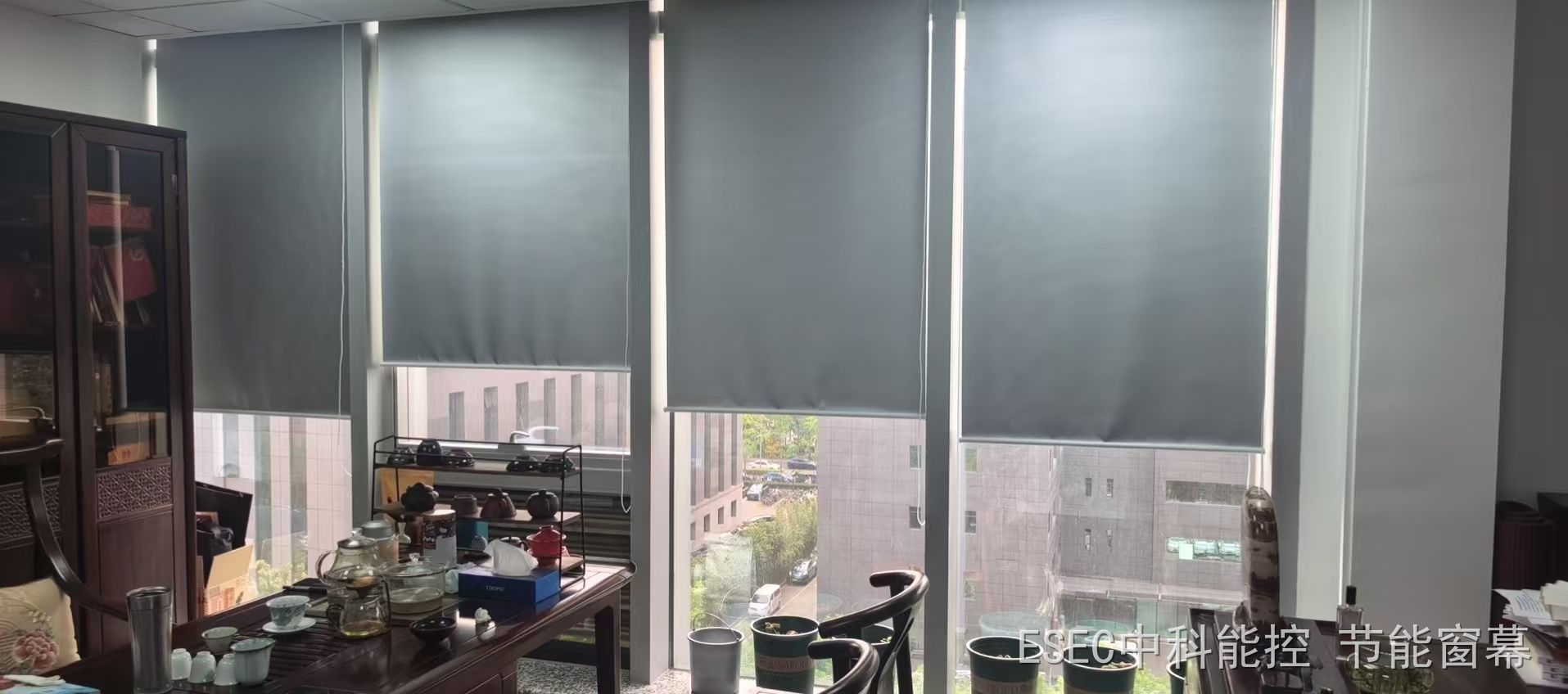

One sentence sums it up: film glues the problem to the glass; a retractable curtain hands control back to you.
Anyone who has been through the film trap knows — for window insulation, stop “sticking it dead”. Learn to roll it down, and roll it back up.
Curious how much electricity your windows could save? Try the 30-second energy-saving calculator on our website, or book a free on-site measurement: hotline 18610685811.