

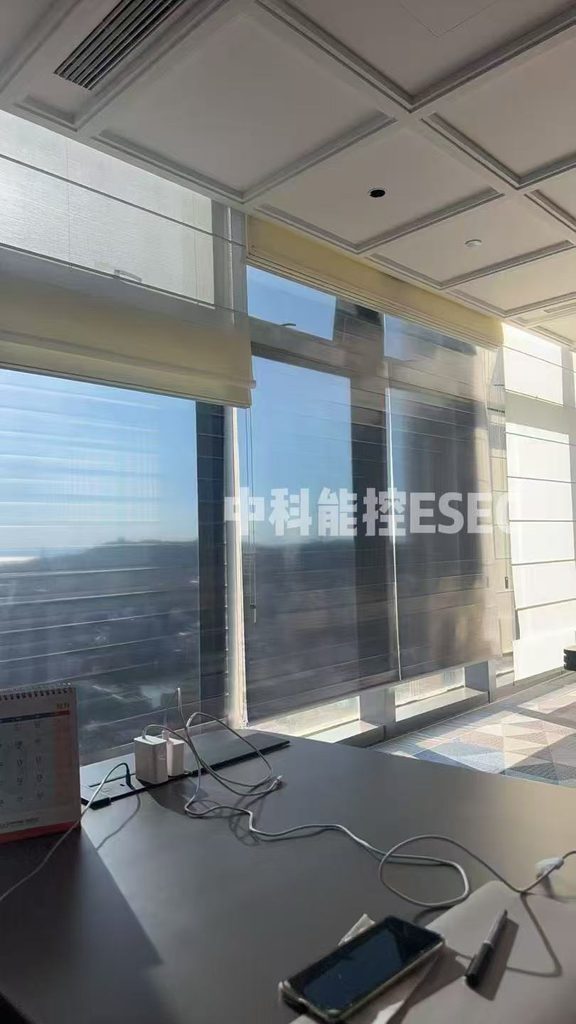
West-facing sun is the hardest problem in an office building to solve — and the one least often tackled seriously.
Standing at the window, you look out over rows of office towers and, in the distance, rolling ridges. That clear view is what gives a glass building its value — and it is also its biggest headache every summer.
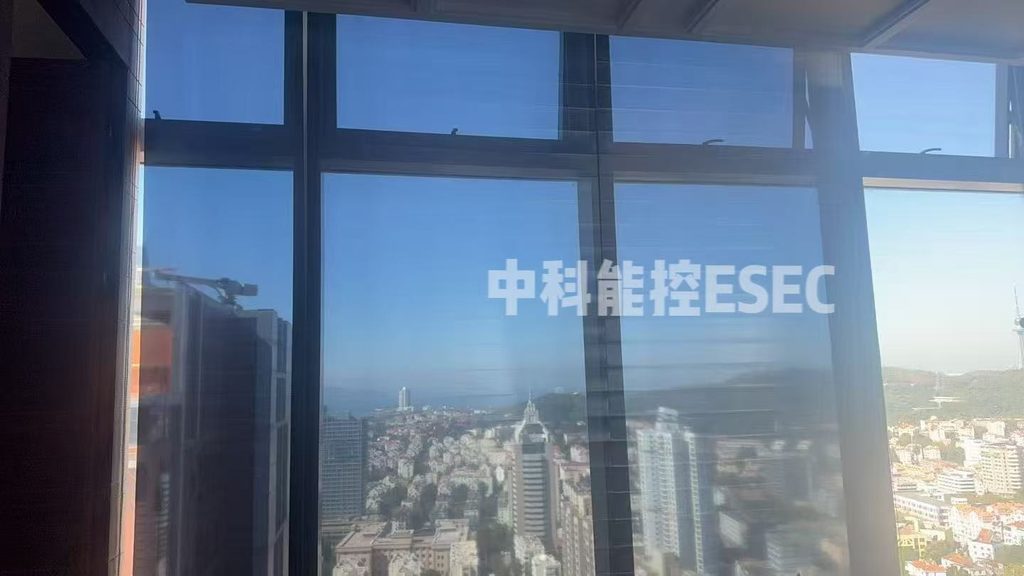
Three Costs of a Large Glass Curtain Wall
The first is comfort.At two in the afternoon, almost nobody wants to sit at desks within three metres of the window in the west-facing office area. The large glazing keeps absorbing solar radiation and re-releasing the heat indoors, and the measured temperature by the window runs 4–6 degrees C above the middle of the floor. In the worst meeting room, afternoon meetings have to start with the air conditioning half an hour early, or nobody can sit through them.
The second is electricity.The central air conditioning is forced to follow the sun — perimeter units run at full load almost all day, while in the core zone people are already pulling on jackets. Over a summer, a sizeable share of the cooling bill for the common areas and tenants goes on fighting solar radiation.
The third is asset value.Under prolonged intense UV, carpets, office furniture and curtains fade to varying degrees; on some floors the venetian blinds have warped and jammed, neither closing properly nor coming down. And for an office building the more practical problem is this: when tenants consider moving out, one of their first questions is often ‘how bad is the west-facing sun on this floor?’
Why We Chose Neither Glass Replacement nor Window Film
The client assessed three routes up front:
| Option | Problem |
| Replace everything with Low-E double glazing | High cost; needs scaffolding or suspended platforms; a long programme; the office would almost have to shut down |
| Apply heat-insulation window film | In a coastal environment of high salt spray and humidity it blisters and peels more easily; metallic film interferes with mobile signals indoors; replacing it later means scraping off adhesive |
| Add conventional solar-shading blinds | Heavy shading, so lights are needed even by day — the advantage of clear daylight is wiped out |
What was finally chosenthe ESEC Energy-Saving Window Curtain — a roll-up window curtain system fitted on theinterior side of the window, in effect adding a layer of ‘roll-up Low-E glass’ to the existing curtain wall.
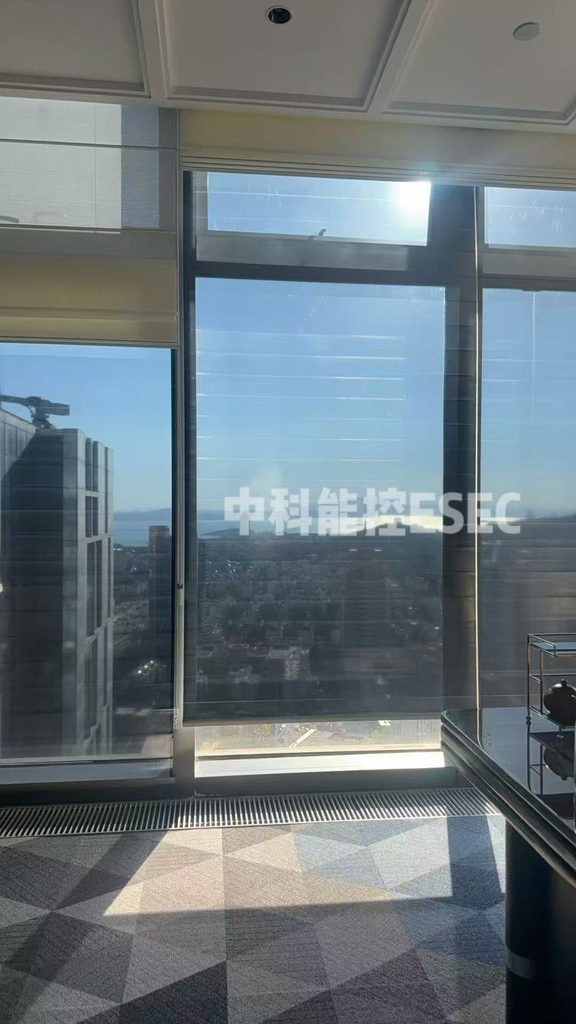
What the Curtain Does: Reflect the Heat, Keep the Light and the View
Its logic is not absorption but reflection.
- Spectral reflectance range 280–2500 nm: a 99.9% UV blocking rate, 95%+ near-infrared reflectance, reflecting about 88% of solar radiant heat;
- High visible-light transmission (with a choice of transmission levels): the city outside stays sharp, while harsh glare is filtered into soft diffused light and screens no longer reflect;
- Works in both summer and winter: it keeps heat out in summer and reflects indoor warmth back into the room in winter. Qingdao’s winters are damp and cold, and wind makes them feel colder still; the curtain also cuts the cold radiation from the glass, so desks by the window no longer feel chilly;
- Safety and environmental performance: B1 flame-retardant, formaldehyde-free with low VOC;
- Installation: recessed or magnetic mounting on the interior side, with no work on the glass or the curtain wall and no adhesive residue; it can be taken down for cleaning and fully restored — especially friendly to leased offices and existing buildings.
After Installation: Changes You Can Feel
- Temperature: measured afternoon temperature in the window zone down by 3–5 degrees C, narrowing the gap between perimeter and core so the air conditioning no longer roasts one half and freezes the other;
- Energy: solar heat gain coefficient improved by more than 65%, curtain-wall heat transfer coefficient improved by about 30%, annual overall energy saving 30%–50%, lower chiller load and a visibly thinner electricity bill;
- Daylight: the west-facing area largely leaves behind the odd habit of ‘close the blind, switch on the light’, and lighting electricity falls too;
- Experience: desks by the window become good desks again, and afternoon meeting-room bookings recover;
- Privacy: one-way vision — the view out is unaffected, while from outside only soft light and shadow are visible, so screen contents are not exposed;
- Programme: installation took a few hours within a single day, entirely indoors, without disrupting the client’s work — zero downtime.
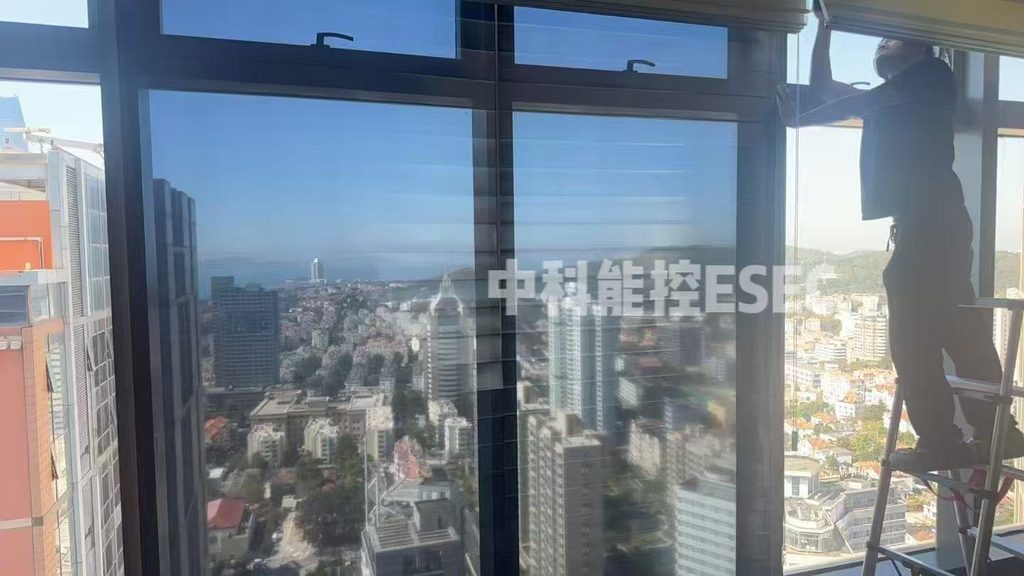
For an Office Building, these Are Numbers You Can Add Up
The curtain is a form of lightweight retrofit: no glass replaced, no structure touched, no change to the building’s facade. The cost is roughly half that of conventional window replacement, and the service life is 10–15 years. For owners and property managers of existing buildings, it is one of the few moves that improves the energy bill, tenant satisfaction and the asset’s green rating at the same time, without upheaval.
ESEC (Zhongke Energy Consumption Control) focuses on upgrading the performance of curtain walls and windows in existing buildings, offering an integrated service from site survey and design to product supply and installation. It has been applied in over a hundred facade-upgrade projects, including work for China Development Bank, and the product is listed in the China Electronic Energy-Saving Technology Association’s National Recommended Catalogue of Demonstrated Energy-Saving and Carbon-Reduction Products and Technologies.
West-facing walls, large glazing areas, coastal salt spray and cold damp winters — the built-in challenges of a Qingdao office building do not need to be torn down and rebuilt. One layer of window curtain can absorb them.