

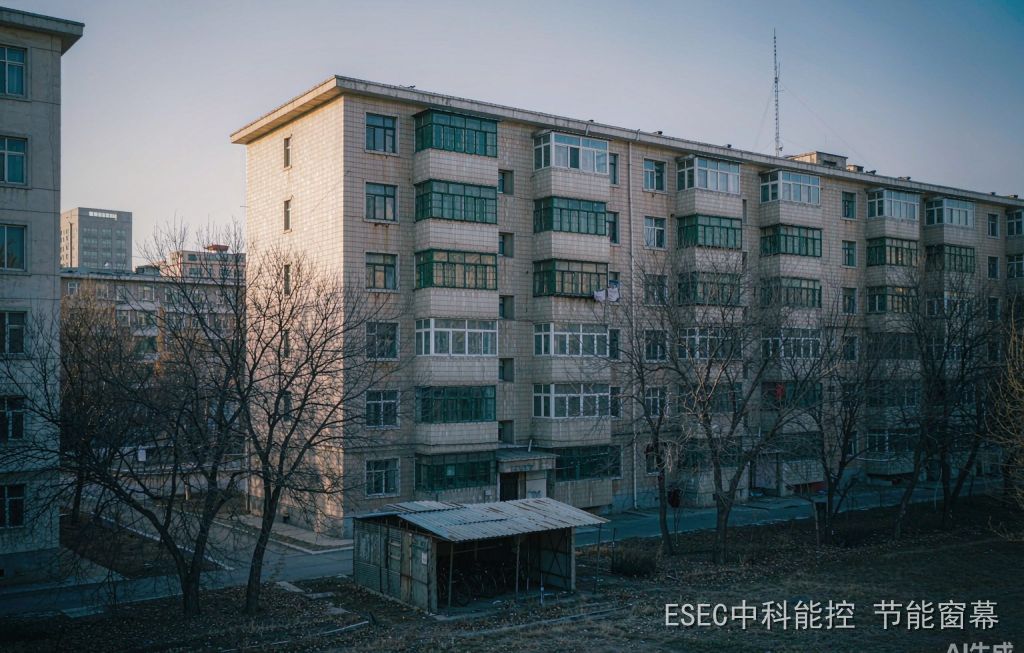
On the afternoon of October 20, the Information Office of the Shandong Provincial Government held a briefing in its “Opening the 15th Five-Year Plan” series, explaining the recently issued Shandong Provincial 15th Five-Year Plan for High-Quality Development of Housing and Urban-Rural Construction. The word that dominated the briefing was “good housing”, and the plan splits it into three tasks: build new housing well, retrofit old housing well, and provide good service. Most coverage focused on the market arrangements, but anyone who works in building efficiency noticed one sentence in the retrofit section — “intensify energy retrofit of existing residential buildings.” Written into a provincial five-year plan, it means that for the next five years, retrofitting the energy performance of the existing housing stock is a planned task in Shandong, not a side note. And the window is the link where a single household sees results first.
1. Why energy retrofit gets its own sentence in the “retrofit old housing well” section
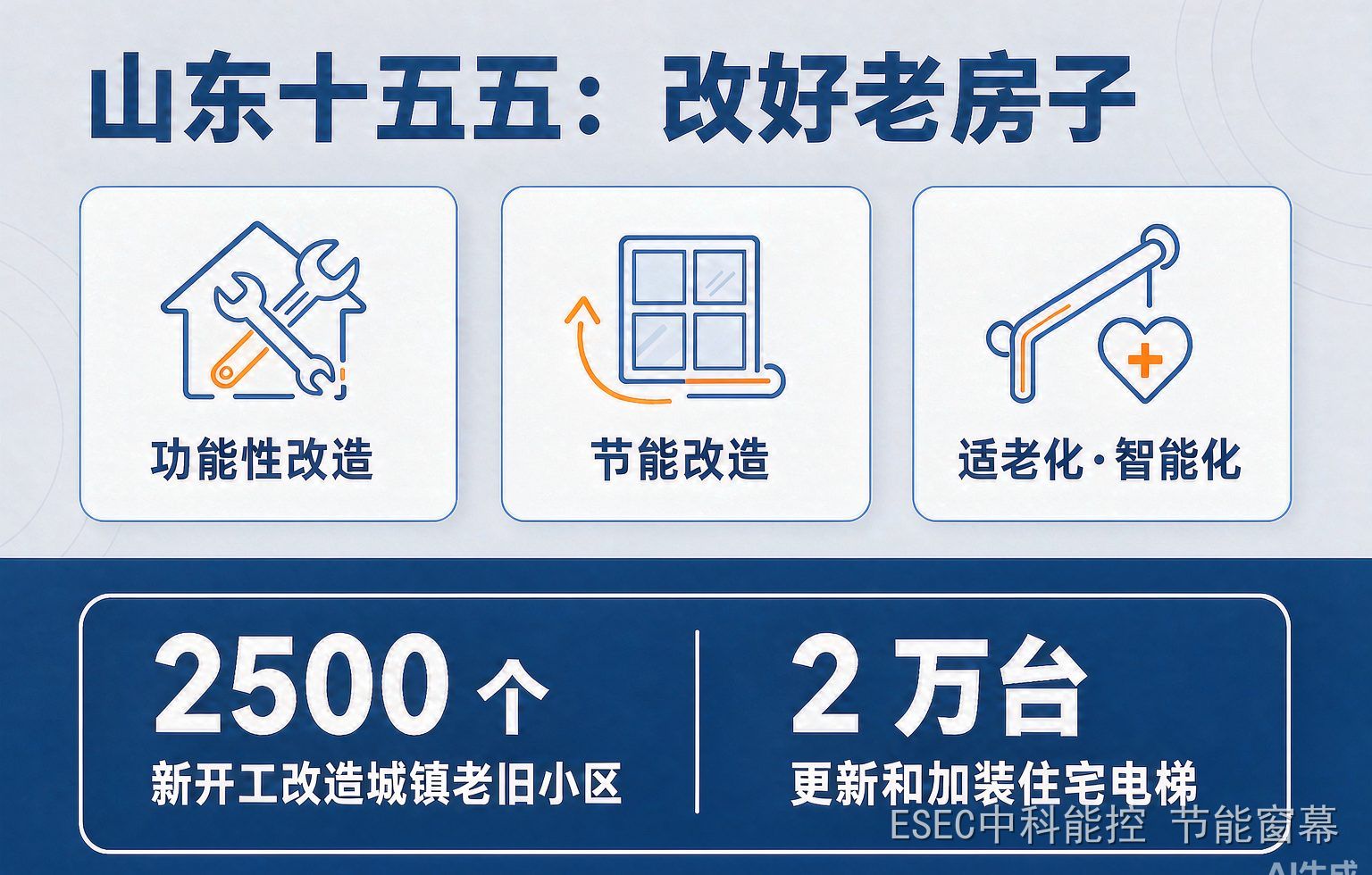
According to Ma Pengfei, deputy director of the provincial Department of Housing and Urban-Rural Development, “retrofitting old housing well” includes: systematically upgrading the function and quality of aging housing; improving the technical standards for retrofit by referencing the “good housing” standard; encouraging residents to carry out renovation and partial upgrades of their existing homes; intensifying energy retrofit of existing residential buildings; and supporting age-friendly and smart upgrades. Only two items carry hard numbers: over the five-year period, 2,500 old urban neighborhoods will start renovation and 20,000 residential elevators will be added or replaced. In addition, 240 old districts, blocks and factory areas are slated for improvement.
Note the drafting: energy retrofit stands as its own sentence, parallel to age-friendly and smart upgrades, not as a modifier of “quality upgrading”. In plan language, a standalone sentence means an independent task — something that must be done, not something done in passing. And the sentence about referencing the “good housing” standard draws a quality line: a retrofitted old home should approach the standard of a new one, not merely “have been renovated”.
2. The residential energy ledger is kept in a different place from the commercial one
Over the past two years we have followed several provincial policies on public-building efficiency: Beijing grades public buildings one to five by energy use and mandates retrofit after two consecutive years at level five; Hangzhou wrote “adding exterior shading systems” into the technology catalogue for public-institution retrofits; Shandong’s own energy-efficiency labelling standard is already in force for public buildings. What these policies share is clear ownership and centralised decision-making — one owner decides, and the whole building moves.
Housing is a different ledger. An old residential building holds dozens or hundreds of households with dispersed ownership, dispersed decisions and self-paid bills; no single owner can commit the whole block. That is why residential retrofit has long moved through government-subsidised neighbourhood renovation, while household-level participation mostly amounted to “changed a window during renovation”.
2.1 The key sentence is “encourage residents to renovate and partially upgrade”
Another easy-to-miss line in the briefing: “encourage residents to carry out renovation and partial upgrades of existing housing”. It formally connects the individual renovation cycle to the policy framework of energy retrofit — a renovation is the cheapest moment to upgrade a home’s efficiency, because insulation, shading and hardware can ride along with work that is happening anyway.
2.2 Heat-price reform makes efficiency gains cashable
Households pay for windows when the savings are visible. Heat-metering reform in northern China — two-part tariffs and billing by heat consumed — pushes exactly in that direction: once heat bills move from flat area-based charges to metered ones, a poorly insulated old window stops being a comfort complaint and becomes a monthly hole in the bill. The plan’s “intensify energy retrofit” and the billing reform pull in the same direction.
3. When the glass cannot be replaced yet, how can the window link still be improved?
For an ordinary residential building completed around 2000, the most expensive single item in an energy retrofit is full window replacement, followed by scaffolding for facade insulation. Replacement performs best, but not every household or neighbourhood can afford it or wait for it. Between “can’t wait” and “can’t afford” there is a practical middle ground:
First, add thermal resistance from the room side without touching the glass. Interior-side products such as shading screens require no frame removal, no glass replacement and no facade change. A roller-type functional fabric mounted on the glass inside keeps solar heat out in summer (third-party tested shading rates: 88%, 95%+ and 99%) and creates an air buffer in winter that lifts the felt temperature near the glass. Its thermal ceiling is lower than full replacement, but its cost, schedule and disruption are an order of magnitude smaller — and the decision belongs to one household, not the whole building.
Second, add adjustable shading first. “Referencing the good-housing standard” also means that the shading-and-insulation integration required of new homes is worth referencing in old ones. For south- and west-facing windows, a raisable interior screen resolves most of the summer heat-gain problem at low cost — the easiest first step a household can take.
Third, keep the boundaries honest. Interior-side additions address the heat and light ledger of the glass itself. They do not replace wall insulation, cannot repair a failed insulating-glass unit (the fog between panes that will not wipe off), and carry no structural-safety duty. Structural matters belong to the plan’s “functional upgrading”; what a household can reach is the inner side of the window.
4. Three things residents and property managers can do now
One: find out whether your neighbourhood is on the 2,500 list. Neighbourhood renovation runs on annual plans and application procedures. For included buildings, roofs, facades and pipe networks are publicly funded, while household-side windows and shading are usually self-financed — knowing early lets renovation plans line up with the retrofit window and avoids doing work twice.
Two: finish everything at the window during renovation. If a refit is already planned, put seal strips, window hardware and interior shading on the same list and install them with the electrical work. Adding them afterwards means paying for the job twice.
Three: keep a winter experience log of your own windows. Sit by the glass for ten minutes, note the inner-surface temperature, any draught, which rooms and which hours feel worst. That log is the basis for choosing a retrofit scheme later — your body has already voted on the ranking.
“Intensify energy retrofit of existing residential buildings” resolves, building by building and household by household, into specific windows. Five years is not long — roughly two renovation cycles for a building. The policy has set the direction; residents can set the order, and the window link can start moving while the elevators and facades are still on the waiting list.
Related reading:
- West-facing window-to-wall ratio above 0.3 without exterior shading: a one-grade penalty in Shandong’s building energy labelling
- Jiangxi’s draft building energy regulation puts exterior shading first on the retrofit list
- Two-part heat tariffs: once heat is billed by consumption, the window is the one item on the bill you can change
- Why windows feel different by floor in the same building
本文由Zhongke Energy Consumption Control (Beijing) Technology Co., Ltd.整理发布。Zhongke Energy Consumption Control (ESEC)专注于隔热透景遮阳Window Curtain的研发与应用,为既有玻璃幕墙与外窗提供不动玻璃、不改立面的室内侧节能遮阳Solution。产品Shading Coefficient指标经第三方检测(遮阳率88%、95%+、99%三档),面料燃烧性能达B1级。Learn More:www.zknkkj.com。