
NEWS

News

Energy efficiency news · Curtain wall retrofit projects · Industry updates

2026-10-21

No Cracked Windows in Winter: Ten Minutes Wide Open Beats a Day-Long Tilted Gap — For Both Heat and Humidity

The most common winter compromise — leaving a window tilted open all day — is actually the worst of both worlds: it loses the most heat and causes the most window condensation. This article separates the two ledgers of winter ventilation: the health ledger, measured against the CO2 and humidity limits of GB/T 18883, and the heat ledger, governed by the difference between air that heats quickly and walls that warm slowly. The verdict is the shock-ventilation method used in Germany for decades: five to ten minutes fully open, two or three times a day. Includes a timing schedule and how to pair ventilation with a retractable window screen.
Read more →
2026-10-21

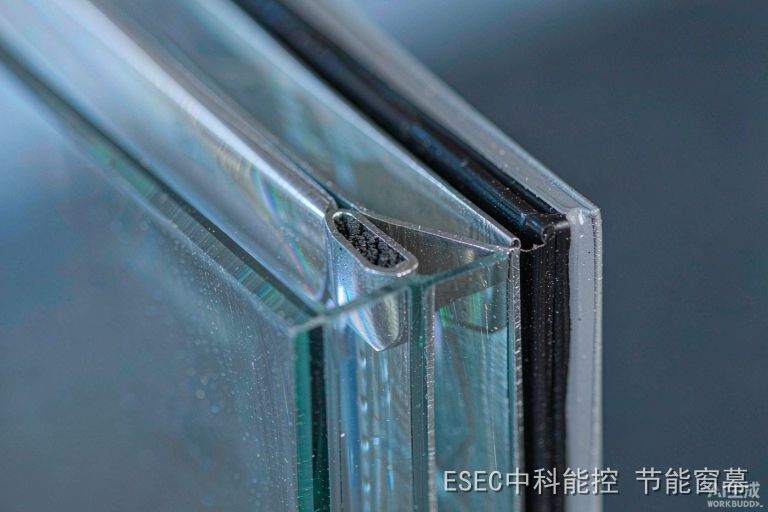
Cold in the Center, Condensation at the Edge: Understanding the Thermal Bridge Around an Insulating Glass Unit — and What “Warm Edge” Spacers Actually Cost

Many windows behave the same way in winter: the center of the glass feels fine, but the perimeter near the frame is noticeably cold, and condensation always starts at the edge. The cause is often not the frame but the spacer hidden between the two panes. This article dissects the edge construction of an insulating glass unit: what the spacer does, how an aluminum spacer becomes a thermal bridge, what the warm-edge criterion of Σ(d×λ) ≤ 0.007 W/K means, and which interior-side options exist for existing curtain walls that cannot replace glass.
Read more →
2026-10-21

“Exterior Shading” Ranks First on the Retrofit Priority List, “Curtain-Wall Heat-Radiation Control” Written into the Preferred-Technology List: Jiangxi Building Energy Efficiency Regulation Draft Passes First Reading — Public Comments Due October 23

A provincial regulation draft has ranked "exterior shading" first among preferred retrofit measures for existing buildings, and written "curtain-wall heat-radiation control" separately into its preferred-technology list. From the February consultation draft to the September first reading by the Provincial People's Congress Standing Committee, from energy-saving diagnostics to ESCO contracts, the list-style legislation sends a clear signal: envelope retrofits do not have to start with replacing glass. Public comments close October 23.
Read more →
2026-10-21

A Curtain-Wall Inspection Report Circled Eight Issues: Only Two Needed Glass Work — A Graded Retrofit Record After a Periodic Inspection

A periodic curtain-wall inspection report circled eight issues, yet only two pieces of glass actually had to be replaced. This article breaks down the graded retrofit of a ten-year-old curtain wall: safety issues handled with panel replacement, sealant issues fixed without touching glass, and performance issues solved by adding interior-side energy-saving window screens — one report, two non-conflicting work streams, all finished before the heating season.
Read more →
2026-10-21

Window Glass Sweats in Autumn and Blooms in Deep Winter: The Zero-Degree Line Between Condensation and Frost - and Why It Decides Whose Problem the Water on Your Window Is

The same pane of glass that beads with droplets on autumn mornings grows feather-like ice crystals in deep winter. Frost is not simply "frozen dew" - the two follow entirely different phase-change paths: condensation into liquid, or deposition straight into ice. This article explains how to tell them apart with a four-quadrant method - first ask which side of the glass the water is on, then whether the surface temperature is above or below zero - and why window frost always starts at the edges, why the melted water causes more trouble than the frost itself, and what the only two directions of improvement are.
Read more →
2026-10-21

Energy Review Counts the Total Score Too: Can a Building Still Pass with One Weak Subject? Understanding the Trade-off Path in GB 55015 - and Why Windows Are Always the Element Chosen to Fix the Ledger

China's national building energy code GB 55015-2021 lists a table of envelope parameters, but failing one parameter is not an automatic rejection - Appendix C opens a performance-based path that judges the building by total annual energy consumption, known as the trade-off method. It allows a weaker wall to be compensated by a stronger window, yet explicitly forbids using efficient HVAC equipment to make up for a poor envelope. This article explains the entry requirements, the reference building and the judgement rules, and answers a related question: why the window is almost always the first element designers optimise.
Read more →
2026-10-21

Understanding the Two-Part Heat Tariff Before the Heating Season: Once Bills Shift from Floor Area to Measured Heat, Windows Become the One Item You Can Still Change

The national framework for two-part heat tariffs was written years ago, but ahead of the 2026 heating season, adoption of "pay-by-heat" billing is visibly accelerating, from county-level price notices to official replies to policy proposals. For residents, this changes more than the billing formula: once the bill is tied to actual heat consumed, the weakest link in the building envelope - and the only one that can be upgraded later without touching the structure, the window - becomes a variable on the bill that you can actually do something about.
Read more →